• Login
Upgrade
JStories
  • 日本語
  • 中文 (中国)
No Result
View All Result
  • Home
  • AI
    • Artificial Intelligence
    • Robotics
    • Mobility
    • FinTech
    • Quantum
  • Earth
    • AgriTech
    • Green Innovation
    • Disaster Tech
    • SpaceTech
    • Materials
  • Life Sciences
    • BioTech
    • HealthTech
    • MedTech
    • AgeTech
  • Society
    • Media
    • EdTech
    • Diversity
    • FemTech
    • Social Impact
  • Lifestyle
    • FoodTech
    • Beauty & Fashion
    • Wellbeing
    • Arts & Music
    • Anime
  • Travel
    • Adventure Travel
    • Luxury Travel
    • Wellness & Medical Tourism
    • Culture
  • Video
  • Deals
    • Venture Capital
    • M&A
    • Events
    • Pitch
    • Growth Support
    • Legal & IP
  • Interview
  • Opinion
  • Home
  • AI
    • Artificial Intelligence
    • Robotics
    • Mobility
    • FinTech
    • Quantum
  • Earth
    • AgriTech
    • Green Innovation
    • Disaster Tech
    • SpaceTech
    • Materials
  • Life Sciences
    • BioTech
    • HealthTech
    • MedTech
    • AgeTech
  • Society
    • Media
    • EdTech
    • Diversity
    • FemTech
    • Social Impact
  • Lifestyle
    • FoodTech
    • Beauty & Fashion
    • Wellbeing
    • Arts & Music
    • Anime
  • Travel
    • Adventure Travel
    • Luxury Travel
    • Wellness & Medical Tourism
    • Culture
  • Video
  • Deals
    • Venture Capital
    • M&A
    • Events
    • Pitch
    • Growth Support
    • Legal & IP
  • Interview
  • Opinion
en English ja 日本語 zh 中文 (中国)
JStories
No Result
View All Result

‘Smart’ panties put periods first

Yui Sawada by Yui Sawada
10/12/2022
in HealthTech, Life Sciences, News
0
Home Life Sciences HealthTech
Share on FacebookShare on Twitter

J-STORIES – A Japanese joint venture is bringing wearable tech to women’s health with the world’s first “smart” underwear.

The ultra-absorbent “period panties,” which were developed by Tokyo femtech startup Bé-A Japan and Kyoto-based wearable device developer, Mitsufuji, make use of conductive fibers in the underwear’s crotch to detect the amount of menstrual blood absorbed. This data is sent to the cloud via an ultracompact transmitter and can then be viewed on the wearer’s smartphone.

Menstrual blood loss volume can be a crucial health indicator, and measuring it helps to identify potential menstrual disorders and prevent uterine fibroids and diseases such as endometriosis.
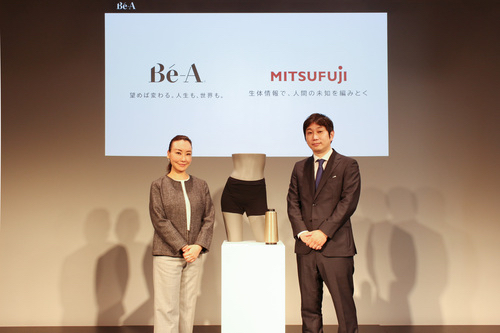
Bé-A Japan CEO Kumi Takahashi (left) and Mitsufuji CEO Hideyuki Mitera, whose companies co-developed the shorts-style briefs.     Source: Bé-A Japan

But the briefs are far more than just a femtech product. While there are widespread calls for the promotion of diversity and gender equality, there is still a strong sense in society that menstruation is a “women’s problem,” when it is in fact an issue for everyone, said Kumi Takahashi, CEO of Bé-A Japan, which was founded in 2020 with ¥100 million in crowdfunding.

Furthermore, the development of the new product was motivated by the desire to improve an unusual situation in which many of the world’s menstruating women don’t know exactly what amount of menstrual blood loss is “normal” for themselves, she added. Indeed, a variety of factors can mean that the amount of blood loss and menstruation cycle duration can vary from individual to individual, further complicating the matter.

“We want to use the topic of periods to change society,” Takahashi said.

In this regard, Bé-A is working to increase awareness about menstruation through various activities, such as events in Tokyo and Osaka department stores, and talks to both female and male high school students.
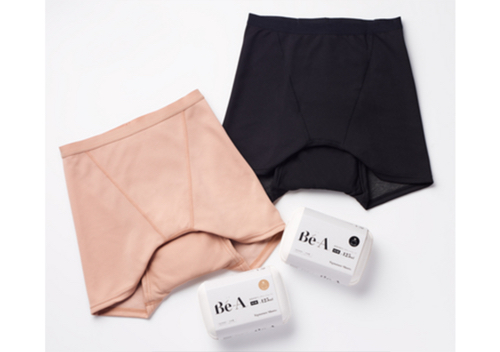
Bé-A’s most popular range of period panties. They can absorb approximately three times the amount of discharge from a heavy period and retain that level of absorbency for 100 washes.      Source: Bé-A Japan

Femtech products and services focusing on women’s health have been increasing in recent years to create a market that is expected to grow to around ¥5 trillion (US$34.3 billion) by 2025. Among them “smart” tampons that send data to the cloud to monitor health are already available in the United States and Israel.

However, Be-A’s product is a world-first in the “wearable device” category. In an effort to further distinguish its product, Bé-A Japan has also focused on the less high-tech aspects of its underwear, including fluid absorption, leakage prevention and odor reduction.

To aid product development, the company interviewed 7,000 people, including product purchasers, staff from Zipair — a subsidiary of Japan’s flag carrier Japan Airlines — nursery school teachers, and medical professionals.
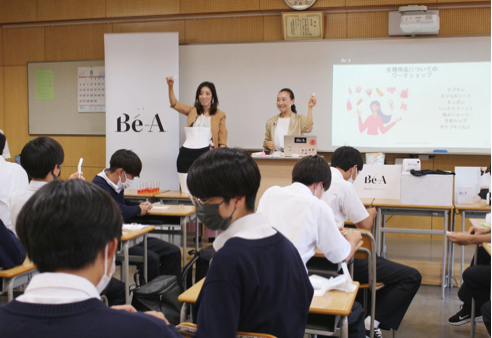
Takahashi holds up a tampon during a presentation on periods at a school near Yokohama.     Source: Bé-A Japan

Bé-A’s smart panties will be among the products and services targeting women’s health on display at Femtech Tokyo later this month, and then from next year the company plans to start testing the panties to put the new technology to practical use.

Translation by Tony McNicol

Top page photo by matskevichtanya / Envato

For inquires about this article, please contact us at jstories@pacificbridge.jp


Click here for the Japanese version of the article.



Tags: dataDiversityEducationHealthInclusionLiving
Previous Post

Round-up Video #29

Next Post

Bringing cherry salmon to the masses

Yui Sawada

Yui Sawada

Related Posts

When digital and physical worlds meet – Interview with Yoichi Ochiai 何がすごい? 〜 現実とデジタルを融合する、落合陽一の世界
Video

When digital and physical worlds meet – Interview with Yoichi Ochiai 何がすごい? 〜 現実とデジタルを融合する、落合陽一の世界

by JStories_Admin
04/01/2026
Ai Heart Japan
Pitch

Ai Heart Japan

by JStories_Admin
04/01/2026
Assist motion
Pitch

Assist motion

by JStories_Admin
04/01/2026
Aster
Pitch

Aster

by JStories_Admin
04/01/2026
Challenergy
Pitch

Challenergy

by JStories_Admin
04/01/2026
Next Post

Bringing cherry salmon to the masses

Leave a Reply Cancel reply

Your email address will not be published. Required fields are marked *

Videos

Round-up Video #29

10/06/2022

Round-up Video #25

09/01/2022

Round-Up Video #34

11/17/2022

Browse by Tags

#Startup Aging Society Ai Alternative Energy biotechnology Climate Change Community Education Event Food foodtech Health Inclusion Infrastructure Innovation Interview J-Stories Japan Japan-Taiwan Innovation Summit Japan startups Japan Tech Labor Living Nature Podcast Recycling Refugees robotics Society Space Startup Ecosystem Startups SusHI Tech Tokyo Sustainability Sustainable Society Taiwan Technology Tokyo Tokyo Innovation Base Tokyo Metropolitan Government Tokyo Updates venture capital video Wealth Zero Waste
JStories

©Articles and photos published on JSTORIES are protected by Japanese copyright law and international treaties. They cannot be reproduced without the permission of the copyright holders

Explore JStories

  • About Jstories
  • Company
  • Contact
  • Home
  • Partner Press Releases
  • Privacy Policy
  • Team

Follow Us

Welcome Back!

Login to your account below

Forgotten Password?

Retrieve your password

Please enter your username or email address to reset your password.

Log In
No Result
View All Result
  • Home
  • AI
    • Artificial Intelligence
    • Robotics
    • Mobility
    • FinTech
    • Quantum
  • Earth
    • AgriTech
    • Green Innovation
    • Disaster Tech
    • SpaceTech
    • Materials
  • Life Sciences
    • BioTech
    • HealthTech
    • MedTech
    • AgeTech
  • Society
    • Media
    • EdTech
    • Diversity
    • FemTech
    • Social Impact
  • Lifestyle
    • FoodTech
    • Beauty & Fashion
    • Wellbeing
    • Arts & Music
    • Anime
  • Travel
    • Adventure Travel
    • Luxury Travel
    • Wellness & Medical Tourism
    • Culture
  • Video
  • Deals
    • Venture Capital
    • M&A
    • Events
    • Growth Support
    • Legal & IP
  • Interview
  • Opinion

©Articles and photos published on JSTORIES are protected by Japanese copyright law and international treaties. They cannot be reproduced without the permission of the copyright holders

Are you sure want to unlock this post?
Unlock left : 0
Are you sure want to cancel subscription?