• Login
Upgrade
JStories
  • 日本語
  • 繁体字中文
No Result
View All Result
  • Home
  • AI
    • Artificial Intelligence
    • Robotics
    • Mobility
    • FinTech
    • Quantum
  • Earth
    • AgriTech
    • Green Innovation
    • Disaster Tech
    • SpaceTech
    • Materials
  • Life Sciences
    • BioTech
    • HealthTech
    • MedTech
    • AgeTech
  • Society
    • Media
    • EdTech
    • Diversity
    • FemTech
    • Social Impact
  • Lifestyle
    • FoodTech
    • Beauty & Fashion
    • Wellbeing
    • Arts & Music
    • Anime
  • Travel
    • Adventure Travel
    • Luxury Travel
    • Wellness & Medical Tourism
    • Culture
  • Video
  • Deals
    • Venture Capital
    • M&A
    • Events
    • Pitch
    • Growth Support
    • Legal & IP
  • Interview
  • Opinion
  • Home
  • AI
    • Artificial Intelligence
    • Robotics
    • Mobility
    • FinTech
    • Quantum
  • Earth
    • AgriTech
    • Green Innovation
    • Disaster Tech
    • SpaceTech
    • Materials
  • Life Sciences
    • BioTech
    • HealthTech
    • MedTech
    • AgeTech
  • Society
    • Media
    • EdTech
    • Diversity
    • FemTech
    • Social Impact
  • Lifestyle
    • FoodTech
    • Beauty & Fashion
    • Wellbeing
    • Arts & Music
    • Anime
  • Travel
    • Adventure Travel
    • Luxury Travel
    • Wellness & Medical Tourism
    • Culture
  • Video
  • Deals
    • Venture Capital
    • M&A
    • Events
    • Pitch
    • Growth Support
    • Legal & IP
  • Interview
  • Opinion
en English ja 日本語 zh 繁体字中文
JStories
No Result
View All Result

Mice cloned from freeze-dried cells

Yui Sawada by Yui Sawada
08/31/2022
in BioTech, Life Sciences, News
0
Home Life Sciences BioTech
Share on FacebookShare on Twitter

J-STORIES – Researchers at a university in central Japan have developed a new way to preserve genetic material, pathing the way for the protection of even the most endangered species and potentially protecting animals against new diseases and environmental change.

In its search for an alternative to existing methods for storing reproductive cells, such as cryopreservation, the University of Yamanashi scientists developed a simple and inexpensive alternative. Instead of preserving sperm and egg cells using liquid nitrogen, which is cooled to minus 196 Celsius in cryopreservation, the Yamanashi researchers used non-reproductive cells and a freeze-drying and storage method that can take place at the relatively warm temperature of minus 30 degrees, and possibly warmer.

Previously developed techniques focusing on the preservation of sperm and eggs are costly and face particular difficulties when it comes to rare species, where harvesting reproductive cells can harm the animals. The Yamanashi scientists were able to get around this problem by using the somatic cells, which are essentially any cell other than reproductive cells, meaning they can come from virtually any part of an organism.
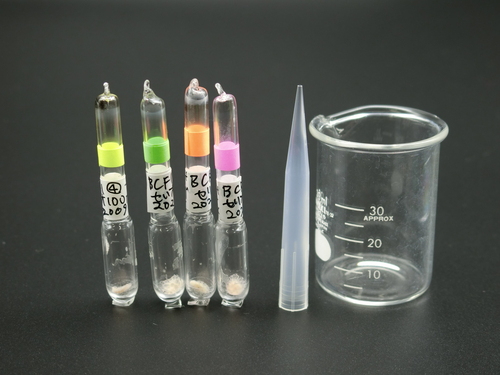
The four ampules pictured contain freeze-dried cells.      Source: University of Yamanashi

And the team has put the method to the test tube. As reported in the British science journal, Nature Communications, the university’s researchers harvested somatic cells from mice, freeze-dried them and stored them for up to nine months. They then used those cells to create clones, including a mouse with a normal lifespan and the ability to reproduce.
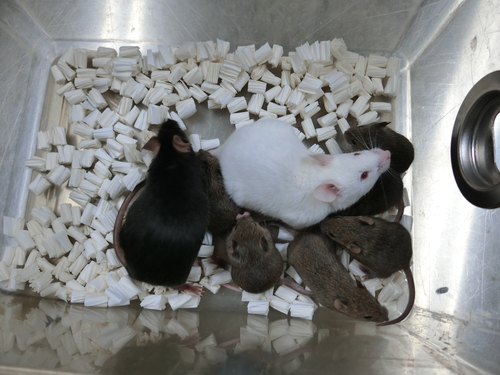
A black female mouse, nicknamed “Dorami,” was cloned using freeze-dried cells. The white mouse is an ordinary male mouse that successfully mated with Dorami.     Source: University of Yamanashi

Sayaka Wakayama, one the University of Yamanashi researchers, explained how somatic cells can be harvested from anywhere in an animal’s body, and even from its feces. Unlike when using reproductive cells, the sex, age and health of the subject make no difference when using somatic cells, she said.“ That means we can preserve genes without harming endangered animals,” she said.

The research team has suggested that the technology might even be a step toward creating clones from the preserved remains of extinct animals, such as Japanese wolves and Japanese otters.

A challenge for the team is to improve the cloning success rate, which is currently only 0.2 percent to 5.4 percent. The team also hopes to be able to store cells at room temperature. That would make it easier to preserve genetic material during natural disasters, or other situations when power is disrupted, which can impact existing methods using liquid nitrogen.

Previously, the team created baby mice from freeze-dried sperm stored at room temperature for over a year, and for around six months on the International Space Station. It has also created clones from somatic cells that were harvested from the body and urine of a dead mouse stored in a freezer for 16 years.

And the technique could have other far-reaching implications. “Some individual living creatures have genes that are not currently in use, such as genes that can resist unknown diseases, or that can withstand heat,” the research group’s leader, Teruhiko Wakayama, told J-Stories. “If we can preserve as many genes as possible, one day we can use the resistant genes to help animals survive new diseases, or environmental change.”

Translation and Editing by Tony McNicol

Top page photo by Stockcentral / Envato

For inquires about this article, please contact us at jstories@pacificbridge.jp


Click here for the Japanese version of the article.

Tags: BiodiversityTechnologyWild Life
Previous Post

The Brief #24 “Edible” houses, Traditional wool recycling

Next Post

Students develop device to detect dementia

Yui Sawada

Yui Sawada

Related Posts

ディープテックとAI、地球課題に挑む新興10社の「実装力」
Artificial Intelligence

Deep Tech and AI: 10 Startups Tackling Global Challenges With Market Execution

by JStories Editorial Team
09/15/2026
Japan looks to Latin America for the minerals powering AI — and the IDB offers to be the bridge
Deals

Japan looks to Latin America for the minerals powering AI — and the IDB offers to be the bridge

by Toshi Maeda
08/29/2026
What matters is not what you build, but who you build it with
Events

What matters is not what you build, but who you build it with

by Ikeda Masaru
08/28/2026
Taiwan’s startups get a Kansai front door — and it swings both ways
Events

Taiwan’s startups get a Kansai front door — and it swings both ways

by Toshi Maeda
08/27/2026
台湾スタートアップ 46社中30社超が、すでに日本に進出 〜 2026 日台イノベーション・サミット
Deals

The introductions are over: Taiwan’s startups are already in Japan

by Ikeda Masaru
08/26/2026
Next Post

Students develop device to detect dementia

Leave a Reply Cancel reply

Your email address will not be published. Required fields are marked *

Trending

Greening the desert with trash

by Yui Sawada
03/23/2023
0

KYOTO (JStories) - The sight of local Niger women throwing kitchen waste out into the African desert inspired a project...

Japan looks to Latin America for the minerals powering AI — and the IDB offers to be the bridge

Japan looks to Latin America for the minerals powering AI — and the IDB offers to be the bridge

by Toshi Maeda
08/29/2026
0

TOKYO — Japan's search for stable supplies of lithium, copper and rare earths — the raw materials behind electric vehicles,...

What matters is not what you build, but who you build it with

What matters is not what you build, but who you build it with

by Ikeda Masaru
08/28/2026
0

Tokyo  - The event that once introduced Taiwanese startups to Japan has changed its role over five years. The biggest...

Eco-friendly next-generation laundromat that doesn’t use detergent

by Riku Kobayashi
11/10/2023
0

J-STORIES - Laundry drainage is said to account for 10% of all domestic wastewater. A Japanese startup has developed a...

Taiwan’s startups get a Kansai front door — and it swings both ways

Taiwan’s startups get a Kansai front door — and it swings both ways

by Toshi Maeda
08/27/2026
0

OSAKA — Taiwanese startups have visited Kansai for years. What they have not had is a door with a handle...

JStories

©Articles and photos published on JStories are protected by Japanese copyright law and international treaties. They cannot be reproduced without the permission of the copyright holders

Explore JStories

  • Home
  • About JStories
  • JStories Newsletter Sign-Up
  • Company
  • Team
  • Contact
  • Privacy Policy
  • Partner Press Releases

Follow Us

Welcome Back!

Login to your account below

Forgotten Password?

Retrieve your password

Please enter your username or email address to reset your password.

Log In
No Result
View All Result
  • TOP STORIES
  • AI
    • Artificial Intelligence
    • Robotics
    • Mobility
    • FinTech
    • Quantum
  • Earth
    • AgriTech
    • Green Innovation
    • Disaster Tech
    • SpaceTech
    • Materials
  • Life Sciences
    • BioTech
    • HealthTech
    • MedTech
    • AgeTech
  • Society
    • Media
    • EdTech
    • Diversity
    • FemTech
    • Social Impact
  • Lifestyle
    • FoodTech
    • Beauty & Fashion
    • Wellbeing
    • Arts & Music
    • Anime
  • Travel
    • Adventure Travel
    • Luxury Travel
    • Wellness & Medical Tourism
    • Culture
  • Video
  • Deals
    • Venture Capital
    • M&A
    • Events
    • Growth Support
    • Legal & IP
  • Interview
  • Opinion

©Articles and photos published on JStories are protected by Japanese copyright law and international treaties. They cannot be reproduced without the permission of the copyright holders

Not enough quota to unlock this post
Unlock left : 0
Are you sure want to cancel subscription?