
• Login
Upgrade
JStories
  • 日本語
  • 中文 (中国)
No Result
View All Result
  • Home
  • AI
    • Artificial Intelligence
    • Robotics
    • Mobility
    • FinTech
    • Quantum EN
  • Earth
    • Energy
    • Climate Tech
    • AgriTech
    • Clean Tech
    • Disaster Tech
    • SpaceTech
    • Materials EN
  • Life Sciences
    • BioTech
    • HealthTech
    • MedTech
    • AgeTech
  • Society
    • Media
    • EdTech
    • Diversity
    • FemTech
    • Social Impact
  • Lifestyle
    • FoodTech
    • Beauty & Fashion
    • Wellbeing
    • Arts & Music
    • Anime
  • Travel
    • Adventure Travel
    • Luxury Travel
    • Wellness & Medical Tourism
    • Culture
  • Video
  • Deals
    • Venture Capital
    • M&A
    • Events
    • Pitch
    • Growth Support
    • Legal & IP
  • Interview
  • Opinion
  • Home
  • AI
    • Artificial Intelligence
    • Robotics
    • Mobility
    • FinTech
    • Quantum EN
  • Earth
    • Energy
    • Climate Tech
    • AgriTech
    • Clean Tech
    • Disaster Tech
    • SpaceTech
    • Materials EN
  • Life Sciences
    • BioTech
    • HealthTech
    • MedTech
    • AgeTech
  • Society
    • Media
    • EdTech
    • Diversity
    • FemTech
    • Social Impact
  • Lifestyle
    • FoodTech
    • Beauty & Fashion
    • Wellbeing
    • Arts & Music
    • Anime
  • Travel
    • Adventure Travel
    • Luxury Travel
    • Wellness & Medical Tourism
    • Culture
  • Video
  • Deals
    • Venture Capital
    • M&A
    • Events
    • Pitch
    • Growth Support
    • Legal & IP
  • Interview
  • Opinion
en English ja 日本語 zh 中文 (中国)
JStories
No Result
View All Result

Customized mobility

Yoshiko Ohira by Yoshiko Ohira
12/08/2022
in AI, Mobility, News, Robotics
0
Home AI
Share on FacebookShare on Twitter

J-STORIES – A badly fitting wheelchair isn’t just difficult to use. Over time, the user’s posture can worsen, damaging both physical and mental health. Now a Japanese company is developing a way to customize these mobility devices to precisely fit each user’s body shape, physical function, and level of disability, thus reducing heath risks and improving quality of life (QOL).

Tokyo-based company RDS achieved this life-changing step by improving “off the shelf” wheelchairs and tapping into expertise from other fields, including advanced robotics, motorsports, medical and welfare devices, and parasports, such as wheelchair athletics and skiing, not to mention a unique seating simulator.
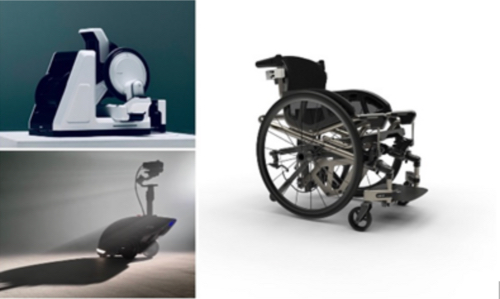
RDS’s bespo simulator (left) is used to collect data for personalized wheelchairs. The Migra manual wheelchair (right) is used to confirm measurements.     Source: RDS

The company’s “bespo” simulator utilizes a system that electrically adjusts the position of the seat and wheels of a wheelchair to ensure optimal comfort and mobility for each individual user. At the same time, various sensors record data on the user’s seating positions. Furthermore the system is designed to enable the user to find an optimal seating configuration without the need for help from a carer.

After the data is collected, a special manual wheelchair called “Migra” is used to check that the data is correct. The Migra’s seat angle, backrest angle, and length of frame can all be adjusted to further fine-tune the chair to the user’s requirements and their particular disability.

RDS is now staging tests using these two devices, with the aim of creating a base wheelchair design that can be personalized for each user. In the future, the company hopes this data can be used to manufacture wheelchairs more quickly and optimally tailored to the individual.

RDS’s robot can be used to detect disease biomarkers, such as the characteristic small steps of those suffering from diabetes or dementia.     Source: RDS

This October, the company presented its technology at the International Home Care and Rehabilitation Exhibition, but these weren’t the only two pieces of equipment it took to the Tokyo iteration of the annual exhibition. RDS also exhibited a robot that collects data to analyze how people walk. According to the company, the data gathered by the bot can be used to detect “biomarkers” of dementia, diabetes, strokes and other conditions, potentially enabling early diagnosis.

RDS CEO Anri Sugihara told J-Stories that such medical and welfare devices being developed in Japan are likely to find use in countries that face a similar demographic dilemma as Japan, whose “super-aging” society is the oldest in the world.

RDS CEO Anri Sugihara.     Source: RDS

He points out that each wheelchair user is unique in terms of body size and shape, disability, stage of rehabilitation, and lifestyle. So, tailoring a wheelchair to each user can dramatically improve their QOL.

“It’s very likely that physical data [collection] will lead to the development of effective products, and be the key to solving social problems,” he said.

Translation by Tony McNicol

Top page photo by gaysorn1442/Envato

For inquiries about this article, please contact us at jstories@pacificbridge.jp


Click here for the Japanese version of the article.

Tags: HealthInclusionLivingMinority
Previous Post

New earphones a real brainwave

Next Post

Round-Up Video #37

Yoshiko Ohira

Yoshiko Ohira

Related Posts

When digital and physical worlds meet – Interview with Yoichi Ochiai 何がすごい? 〜 現実とデジタルを融合する、落合陽一の世界
Video

When digital and physical worlds meet – Interview with Yoichi Ochiai 何がすごい? 〜 現実とデジタルを融合する、落合陽一の世界

by JStories_Admin
04/01/2026
Ai Heart Japan
Pitch

Ai Heart Japan

by JStories_Admin
04/01/2026
Assist motion
Pitch

Assist motion

by JStories_Admin
04/01/2026
Aster
Pitch

Aster

by JStories_Admin
04/01/2026
Challenergy
Pitch

Challenergy

by JStories_Admin
04/01/2026
Next Post

Round-Up Video #37

Leave a Reply Cancel reply

Your email address will not be published. Required fields are marked *

Videos

Round-Up Video #39

12/22/2022

Taking action for peace

11/30/2022

Round-Up Video #34

11/17/2022

Browse by Tags

#Startup Aging Society Ai Alternative Energy biotechnology Climate Change Community Education Event Food foodtech Health Inclusion Infrastructure Innovation Interview J-Stories Japan Japan-Taiwan Innovation Summit Japan startups Japan Tech Labor Living Nature Podcast Recycling Refugees robotics Society Space Startup Ecosystem Startups SusHI Tech Tokyo Sustainability Sustainable Society Taiwan Technology Tokyo Tokyo Innovation Base Tokyo Metropolitan Government Tokyo Updates venture capital video Wealth Zero Waste
JStories

©Articles and photos published on JSTORIES are protected by Japanese copyright law and international treaties. They cannot be reproduced without the permission of the copyright holders

Explore JStories

  • About Jstories
  • Company
  • Contact
  • Home
  • Partner Press Releases
  • Privacy Policy
  • Team

Follow Us

Welcome Back!

Login to your account below

Forgotten Password?

Retrieve your password

Please enter your username or email address to reset your password.

Log In
No Result
View All Result
  • Home
  • AI
    • Artificial Intelligence
    • Robotics
    • Mobility
    • FinTech
    • Quantum EN
  • Earth
    • Energy
    • Climate Tech
    • AgriTech
    • Clean Tech
    • Disaster Tech
    • SpaceTech
    • Materials EN
  • Life Sciences
    • BioTech
    • HealthTech
    • MedTech
    • AgeTech
  • Society
    • Media
    • EdTech
    • Diversity
    • FemTech
    • Social Impact
  • Lifestyle
    • FoodTech
    • Beauty & Fashion
    • Wellbeing
    • Arts & Music
    • Anime
  • Travel
    • Adventure Travel
    • Luxury Travel
    • Wellness & Medical Tourism
    • Culture
  • Video
  • Deals
    • Venture Capital
    • M&A
    • Events
    • Growth Support
    • Legal & IP
  • Interview
  • Opinion

©Articles and photos published on JSTORIES are protected by Japanese copyright law and international treaties. They cannot be reproduced without the permission of the copyright holders

Are you sure want to unlock this post?
Unlock left : 0
Are you sure want to cancel subscription?