
• Login
Upgrade
JStories
  • 日本語
  • 中文 (中国)
No Result
View All Result
  • Home
  • AI
    • Artificial Intelligence
    • Robotics
    • Mobility
    • FinTech
    • Quantum EN
  • Earth
    • Energy
    • Climate Tech
    • AgriTech
    • Clean Tech
    • Disaster Tech
    • SpaceTech
    • Materials EN
  • Life Sciences
    • BioTech
    • HealthTech
    • MedTech
    • AgeTech
  • Society
    • Media
    • EdTech
    • Diversity
    • FemTech
    • Social Impact
  • Lifestyle
    • FoodTech
    • Beauty & Fashion
    • Wellbeing
    • Arts & Music
    • Anime
  • Travel
    • Adventure Travel
    • Luxury Travel
    • Wellness & Medical Tourism
    • Culture
  • Video
  • Deals
    • Venture Capital
    • M&A
    • Events
    • Pitch
    • Growth Support
    • Legal & IP
  • Interview
  • Opinion
  • Home
  • AI
    • Artificial Intelligence
    • Robotics
    • Mobility
    • FinTech
    • Quantum EN
  • Earth
    • Energy
    • Climate Tech
    • AgriTech
    • Clean Tech
    • Disaster Tech
    • SpaceTech
    • Materials EN
  • Life Sciences
    • BioTech
    • HealthTech
    • MedTech
    • AgeTech
  • Society
    • Media
    • EdTech
    • Diversity
    • FemTech
    • Social Impact
  • Lifestyle
    • FoodTech
    • Beauty & Fashion
    • Wellbeing
    • Arts & Music
    • Anime
  • Travel
    • Adventure Travel
    • Luxury Travel
    • Wellness & Medical Tourism
    • Culture
  • Video
  • Deals
    • Venture Capital
    • M&A
    • Events
    • Pitch
    • Growth Support
    • Legal & IP
  • Interview
  • Opinion
en English ja 日本語 zh 中文 (中国)
JStories
No Result
View All Result

Japanese company shares “self-healing” concrete tech

Yui Sawada by Yui Sawada
05/12/2022
in BioTech, Clean Tech, Earth, Energy, Life Sciences, News
0
Home Life Sciences BioTech
Share on FacebookShare on Twitter

J-STORIES – A Japanese company was the world’s first to successfully mass-produce “self-healing concrete” that can repair its own cracks with the help of bacteria. Now, the same firm is promoting industry-wide decarbonization by licensing its technology to other companies.

Aizawa Concrete Corporation (Tomakomai, Hokkaido), a concrete manufacturer founded more than 85 years ago, acquired the exclusive rights to sell self-healing concrete in Japan from a Dutch university research group in 2017. After conducting a number of demonstration experiments with its Dutch partners, it began mass production.

Self-healing concrete contains bacteria and a food source for them, polylactic acid. When the concrete cracks, water and oxygen enter and activate the dormant bacteria. The bacteria then feed and produce calcium carbonate, which fills the cracks. Many buildings made with concrete need to be rebuilt after 50 to 60 years, but the life of the bacteria individual is said to be 200 years, but ability for healing is kept consistently in the self-healing concrete inside to repeat division each activation, and to be reborn, and it is to a virtual “eternity structure.”
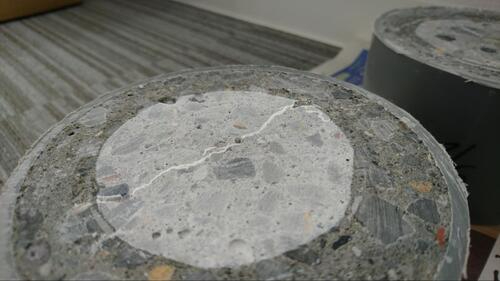
Researchers at Aizawa Concrete Corp. say that during the initial stage of their research into self-healing concrete, they experimented with a bacteria used to make fermented soybeans, or natto in Japanese, among other microbes.        Source: Aizawa Concrete Corp.

Cracks are a major cause of concrete deterioration and it’s essential to repair them to extend the life of a building. Meanwhile, carbon dioxide produced during the manufacture of cement, (the material used to make concrete), accounts for about 8 percent of global emissions. By helping buildings last longer, the company’s self-healing concrete could be a key way to reduce carbon emissions.

Aizawa wants to expand these efforts to its entire industry. So, this January, the company’s board of directors set a “Net Zero 2035” goal of virtually zero carbon emissions in all product supply chains — including suppliers, distributors and recyclers — by 2035, the 100th anniversary of the company’s founding.

The company has stated in a news release that it will enable comprehensive technology transfer of its proprietary efforts, such as its own materials-based decarbonization technology and blockchain-based greenhouse gas emissions management, when requested by other companies in its industry. The supply chain covered by Net Zero 2035 includes many companies overseas as well as in Japan.
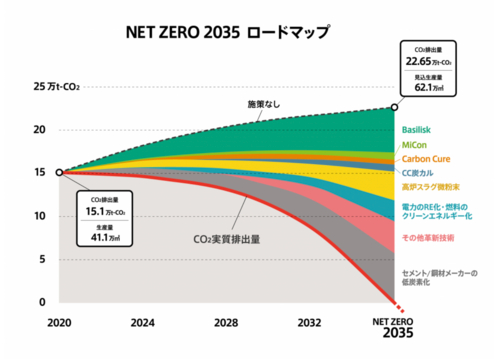
“It’s relatively easy for one single company to reduce its own carbon emissions, “ says CEO Yoshihiro Aizawa. “However,  it’ll be important to get the entire supply chain of its business partners involved and make them all responsible in order to achieve carbon neutrality in the industry.”      Source: Aizawa Concrete Corp.

CEO Yoshihiro Aizawa explained the meaning behind the company’s actions to J-Stories. In the process of trying to achieve decarbonization, “it is the responsibility of those who first become aware of the issue to tell as many people as possible, and not only to talk about it, but also take action themselves,” he said. “By expanding this group of partners, the world will gradually change.” He said that he wants the cement concrete industry to become “an absolutely indispensable industry” in this era of decarbonization.

Translation and Editing by Tony McNicol

Top page photo by bilanol/Envato

For inquires about this article, please contact us at jstories@pacificbridge.jp


Click here for the Japanese version of the article.

Tags: RecyclingSustainabilitySustainable SocietyTechnologyWild Life
Previous Post

Round-up Video #11

Next Post

Test home will be powered by artificial photosynthesis

Yui Sawada

Yui Sawada

Related Posts

When digital and physical worlds meet – Interview with Yoichi Ochiai 何がすごい? 〜 現実とデジタルを融合する、落合陽一の世界
Video

When digital and physical worlds meet – Interview with Yoichi Ochiai 何がすごい? 〜 現実とデジタルを融合する、落合陽一の世界

by JStories_Admin
04/01/2026
Ai Heart Japan
Pitch

Ai Heart Japan

by JStories_Admin
04/01/2026
Assist motion
Pitch

Assist motion

by JStories_Admin
04/01/2026
Aster
Pitch

Aster

by JStories_Admin
04/01/2026
Challenergy
Pitch

Challenergy

by JStories_Admin
04/01/2026
Next Post

Test home will be powered by artificial photosynthesis

Leave a Reply Cancel reply

Your email address will not be published. Required fields are marked *

Videos

Round-Up Video #34

11/17/2022

Round-Up Video #38

12/15/2022

Round-up Video #27

09/22/2022

Browse by Tags

#Startup Aging Society Ai Alternative Energy biotechnology Climate Change Community Education Event Food foodtech Health Inclusion Infrastructure Innovation Interview J-Stories Japan Japan-Taiwan Innovation Summit Japan startups Japan Tech Labor Living Nature Podcast Recycling Refugees robotics Society Space Startup Ecosystem Startups SusHI Tech Tokyo Sustainability Sustainable Society Taiwan Technology Tokyo Tokyo Innovation Base Tokyo Metropolitan Government Tokyo Updates venture capital video Wealth Zero Waste
JStories

©Articles and photos published on JSTORIES are protected by Japanese copyright law and international treaties. They cannot be reproduced without the permission of the copyright holders

Explore JStories

  • About Jstories
  • Company
  • Contact
  • Home
  • Partner Press Releases
  • Privacy Policy
  • Team

Follow Us

Welcome Back!

Login to your account below

Forgotten Password?

Retrieve your password

Please enter your username or email address to reset your password.

Log In
No Result
View All Result
  • Home
  • AI
    • Artificial Intelligence
    • Robotics
    • Mobility
    • FinTech
    • Quantum EN
  • Earth
    • Energy
    • Climate Tech
    • AgriTech
    • Clean Tech
    • Disaster Tech
    • SpaceTech
    • Materials EN
  • Life Sciences
    • BioTech
    • HealthTech
    • MedTech
    • AgeTech
  • Society
    • Media
    • EdTech
    • Diversity
    • FemTech
    • Social Impact
  • Lifestyle
    • FoodTech
    • Beauty & Fashion
    • Wellbeing
    • Arts & Music
    • Anime
  • Travel
    • Adventure Travel
    • Luxury Travel
    • Wellness & Medical Tourism
    • Culture
  • Video
  • Deals
    • Venture Capital
    • M&A
    • Events
    • Growth Support
    • Legal & IP
  • Interview
  • Opinion

©Articles and photos published on JSTORIES are protected by Japanese copyright law and international treaties. They cannot be reproduced without the permission of the copyright holders

Are you sure want to unlock this post?
Unlock left : 0
Are you sure want to cancel subscription?