
• Login
Upgrade
JStories
  • 日本語
  • 中文 (中国)
No Result
View All Result
  • Home
  • AI
    • Artificial Intelligence
    • Robotics
    • Mobility
    • FinTech
    • Quantum
  • Earth
    • AgriTech
    • Green Innovation
    • Disaster Tech
    • SpaceTech
    • Materials
  • Life Sciences
    • BioTech
    • HealthTech
    • MedTech
    • AgeTech
  • Society
    • Media
    • EdTech
    • Diversity
    • FemTech
    • Social Impact
  • Lifestyle
    • FoodTech
    • Beauty & Fashion
    • Wellbeing
    • Arts & Music
    • Anime
  • Travel
    • Adventure Travel
    • Luxury Travel
    • Wellness & Medical Tourism
    • Culture
  • Video
  • Deals
    • Venture Capital
    • M&A
    • Events
    • Pitch
    • Growth Support
    • Legal & IP
  • Interview
  • Opinion
  • Home
  • AI
    • Artificial Intelligence
    • Robotics
    • Mobility
    • FinTech
    • Quantum
  • Earth
    • AgriTech
    • Green Innovation
    • Disaster Tech
    • SpaceTech
    • Materials
  • Life Sciences
    • BioTech
    • HealthTech
    • MedTech
    • AgeTech
  • Society
    • Media
    • EdTech
    • Diversity
    • FemTech
    • Social Impact
  • Lifestyle
    • FoodTech
    • Beauty & Fashion
    • Wellbeing
    • Arts & Music
    • Anime
  • Travel
    • Adventure Travel
    • Luxury Travel
    • Wellness & Medical Tourism
    • Culture
  • Video
  • Deals
    • Venture Capital
    • M&A
    • Events
    • Pitch
    • Growth Support
    • Legal & IP
  • Interview
  • Opinion
en English ja 日本語 zh 中文 (中国)
JStories
No Result
View All Result

Japan-Luxembourg startup bets on AC battery breakthrough for EVs — and beyond

With roots in Japan and Europe, the company pursues global green solutions

Nithin Coca by Nithin Coca
09/03/2025
in AI, Earth, Green Innovation, Mobility, News
0
Home AI
Share on FacebookShare on Twitter

JStories ー AC Biode has set its sights on revamping the future of electric vehicles (EVs). The Japan-Luxembourg startup has developed the world’s first standalone AC battery, a technology the company says is 15% more efficient than existing DC batteries and can last twice as long.

That innovation could change the future of electric vehicles, although it will be some time before AC Biode’s batteries find their way into next-generation EVs. “We’re working with some of the leading EV companies,” said co-founder Robert Kunzmann in an interview with JStories. “But AC batteries are an ambitious technology. They will take at least five more years before they reach the market.”
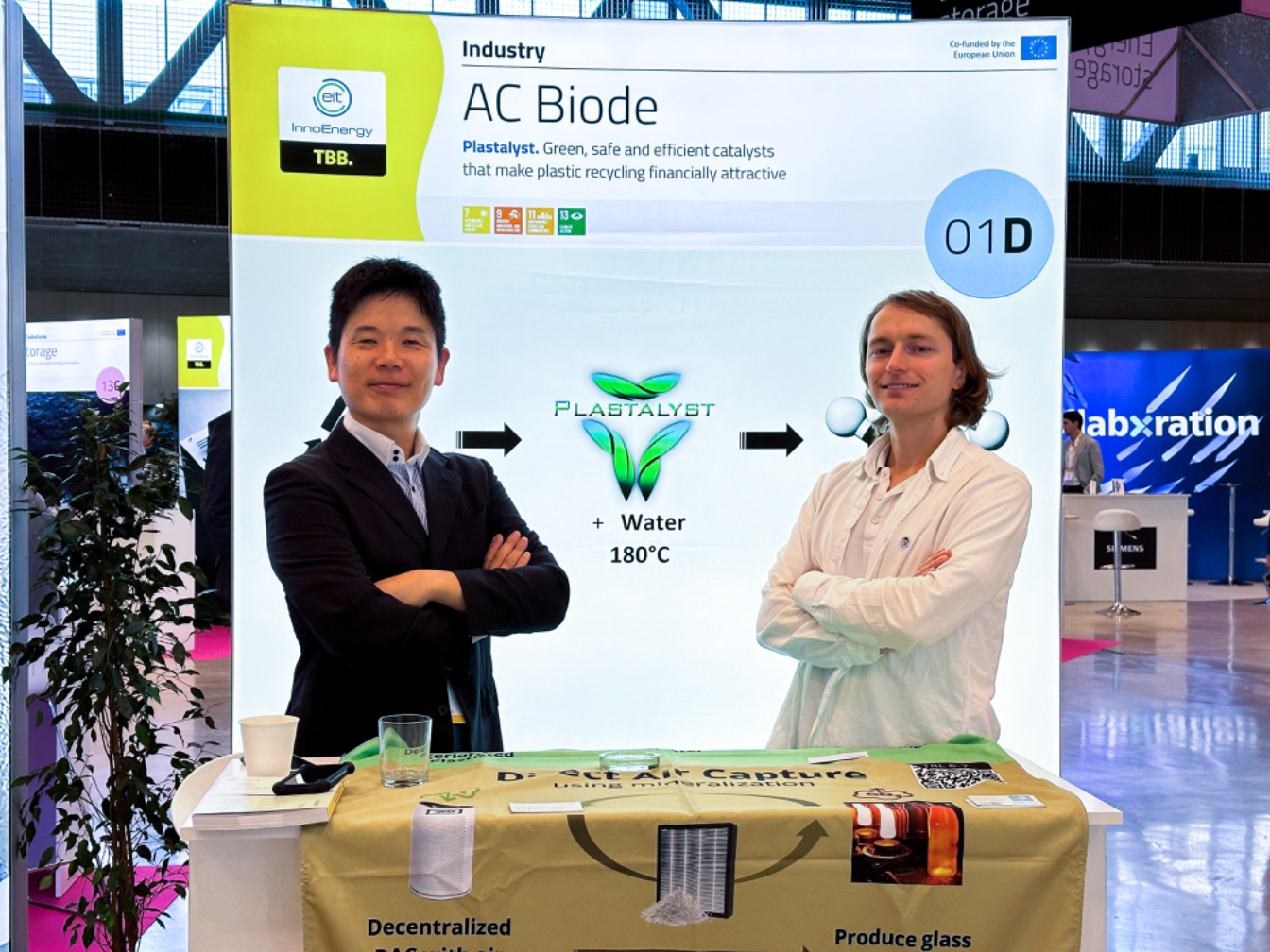
AC Biode Co-founders Tadashi Kubo and Robert Kunzmann        Photo courtesy of AC Biode (Same below)

Unlike conventional EV batteries, which must store direct current (DC), AC Biode’s system can safely store alternating current (AC) — the form of electricity used for transmission across power grids.

Today, most EVs rely on lithium-ion batteries that average about 377 kilometers of range — far less than gasoline or diesel cars. They are also heavy, which makes EVs significantly weightier than combustion-engine vehicles. If batteries can be smaller, more efficient, and longer lasting, more customers could be persuaded to switch to EVs.

Expanding beyond batteries

Even as AC Biode refines its AC battery, the start-up is developing other green technologies aimed at waste reduction, recycling, and renewable energy. “Sustainability is not a single country’s problem but a global problem,” said Kunzmann. “Creating a world where we live in harmony with the planet earth may be the most meaningful mission.”

At the International Solar Festival held at the Osaka World Expo in July 2025, CEO Tadashi Kubo presented a new process to recycle solar panels. “Our technology can mechanically recycle solar panels and contribute to increasing recycling rates of solar panels after their use,” said Kubo. The company has already demonstrated its ability to separate and break down plastics in panels made by a major manufacturer, a step toward tackling the mounting problem of solar panel waste.
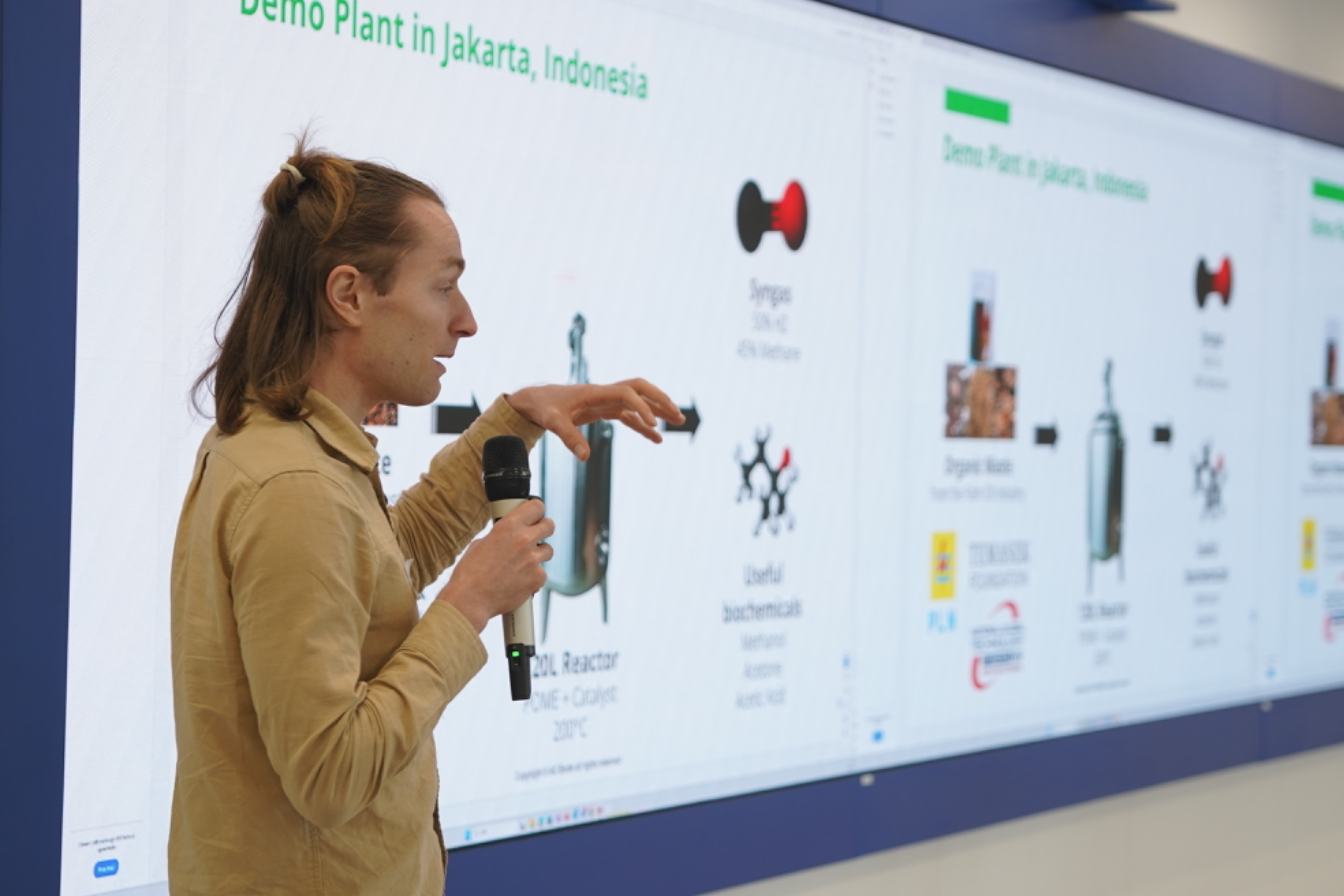
AC Biode Co-founder Robert Kunzmann giving a presentation about their various technologies

Old panels, which can contain harmful chemicals, are becoming a global issue. In India, a leading solar power generator, some 600 kilotonnes of solar waste are expected by 2030. Recycling technologies will be essential to prevent this renewable energy source from creating harmful side effects.

Beyond solar, AC Biode is advancing projects that include capturing CO2 and turning it into glass, converting plastic waste into oil feedstock, and replacing PFAS with fluorine-free alternatives. One of the closest to commercial use is Plastalyst, a chemical recycling technology.
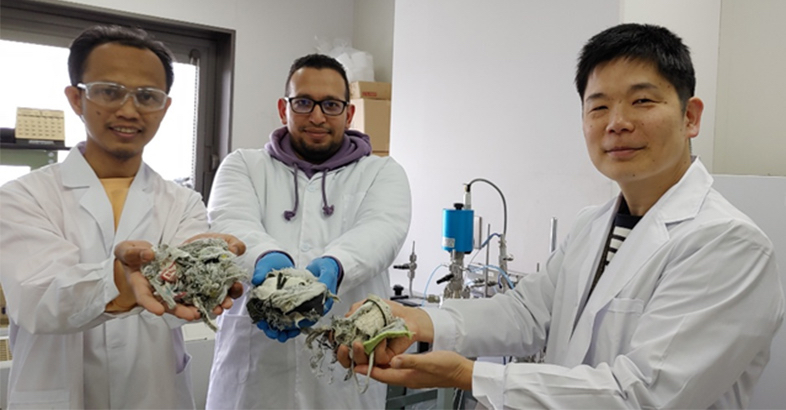
AC Biode’s lab team holding samples of mixed textile and shoe waste, which they are testing for chemical recycling

“We are completing our first demonstration plant in Indonesia with PLN and Temasek Foundation,” said Kunzmann. “This will be the first time in the world to produce hydrogen from palm oil waste.”

A global start-up with global ambitions

Founded in 2019, AC Biode is headquartered in Luxembourg with operations in Japan. The company was established by Kubo, Chief Technical Officer Atsushi Mizusawa—who met when they were students at Cambridge University in the UK–and Kunzmann.

Kubo previously spent 12 years at Sojitz Corp., focusing on business development and project finance in batteries, machinery, infrastructure, and renewable energy across Africa and Latin America. Mizusawa, who holds a Ph.D. in material science, conducted research at Kyoto University and worked with Daikin and US-based IM&T Research. Kunzmann, with an engineering background, was a researcher at the Centre for Sustainable Road Freight in Europe.

“From day one, AC Biode has been a global startup,” said Kunzmann. “Our sustainability mission perfectly matches the backgrounds of the three founders.” With Mizusawa running the research lab in Japan, Kunzmann in Europe, and Kubo representing the company at conferences such as Tokyo Innovation Base’s Pitch Global 2025, AC Biode is able to operate across markets.

“In Japan we are leveraging the access to talent,” said Kunzmann. “Whereas Luxembourg gives us access to the European market and European Union grants.”
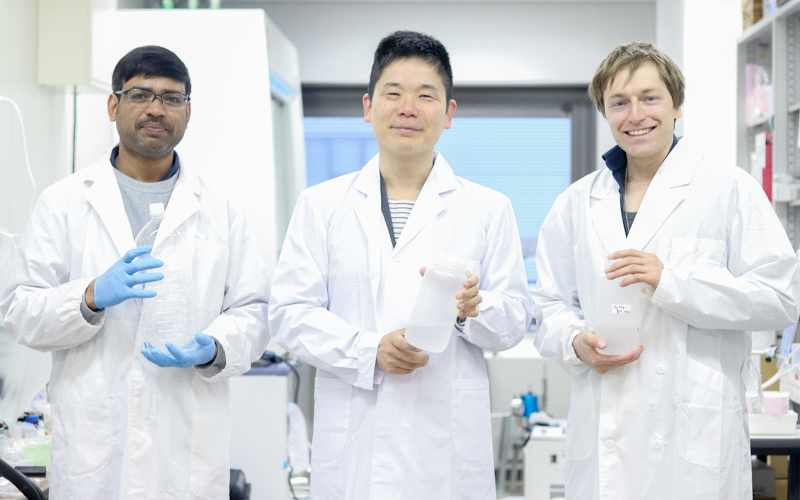
AC Biode’s team at their Kyoto laboratory

The future will almost certainly be electric.

Industries worldwide increasingly agree that batteries will power transportation and heating, while alternative fuels like hydrogen and e-methane will be used mainly in heavy industry and steelmaking, where electrification is harder to achieve.

By focusing on innovations such as the standalone AC battery, solar panel recycling, Plastalyst, and sustainable hydrogen, AC Biode is pursuing a broad but consistent mission: to move the world closer to a sustainable, circular economy.

Written by Nithin Coca

Edited by Kwee Chuan Yeo | JStories

Top photo: Envato

For inquiries regarding this article, please contact jstories@pacificbridge.jp

Tags: Battery InnovationCleantechEvHydrogenInterviewJapanKyotolithium ionLuxembourgRecyclingStartups
Previous Post

Largest Japan-Taiwan startup events wrap up in Osaka, Tokyo

Next Post

Water supply independent of plumbing: A new normal for sustainable water infrastructure

Nithin Coca

Nithin Coca

Related Posts

世界が渇望する日本発バイオ素材、2026年6月以降に市場投入へ
BioTech

Evolutionary artificial protein slated for market debut as early as June 2026

by Yoshiko Ohira
04/17/2026
Ai Heart Japan
Pitch

Ai Heart Japan

by JStories_Admin
04/01/2026
Assist motion
Pitch

Assist motion

by JStories_Admin
04/01/2026
Aster
Pitch

Aster

by JStories_Admin
04/01/2026
Challenergy
Pitch

Challenergy

by JStories_Admin
04/01/2026
Next Post

Water supply independent of plumbing: A new normal for sustainable water infrastructure

Leave a Reply Cancel reply

Your email address will not be published. Required fields are marked *

Videos

The Brief #25 Freeze-dried genes, Kids’ letters to Ukraine, Detecting dementia

09/01/2022

INTERVIEW | Taking action for peace

11/30/2022

The Brief #22 Fermented fabric, Online learning for refugees, Vegetable sheets

07/28/2022

Browse by Tags

#Startup Aging Society Ai Alternative Energy biotechnology Climate Change Community Education Event Food foodtech Health Inclusion Infrastructure Innovation Interview J-Stories Japan Japan-Taiwan Innovation Summit Japan startups Japan Tech Labor Living Nature Podcast Recycling Refugees robotics Society Space Startup Ecosystem Startups SusHI Tech Tokyo Sustainability Sustainable Society Taiwan Technology Tokyo Tokyo Innovation Base Tokyo Metropolitan Government Tokyo Updates venture capital video Wealth Zero Waste
JStories

©Articles and photos published on JStories are protected by Japanese copyright law and international treaties. They cannot be reproduced without the permission of the copyright holders

Explore JStories

  • Home
  • About JStories
  • Company
  • Team
  • Contact
  • Privacy Policy
  • Partner Press Releases

Follow Us

Welcome Back!

Login to your account below

Forgotten Password?

Retrieve your password

Please enter your username or email address to reset your password.

Log In
No Result
View All Result
  • Home
  • AI
    • Artificial Intelligence
    • Robotics
    • Mobility
    • FinTech
    • Quantum
  • Earth
    • AgriTech
    • Green Innovation
    • Disaster Tech
    • SpaceTech
    • Materials
  • Life Sciences
    • BioTech
    • HealthTech
    • MedTech
    • AgeTech
  • Society
    • Media
    • EdTech
    • Diversity
    • FemTech
    • Social Impact
  • Lifestyle
    • FoodTech
    • Beauty & Fashion
    • Wellbeing
    • Arts & Music
    • Anime
  • Travel
    • Adventure Travel
    • Luxury Travel
    • Wellness & Medical Tourism
    • Culture
  • Video
  • Deals
    • Venture Capital
    • M&A
    • Events
    • Growth Support
    • Legal & IP
  • Interview
  • Opinion

©Articles and photos published on JStories are protected by Japanese copyright law and international treaties. They cannot be reproduced without the permission of the copyright holders

Are you sure want to unlock this post?
Unlock left : 0
Are you sure want to cancel subscription?