


OSAKA — Taiwanese startups have visited Kansai for years. What they have not had is a door with a handle on it.
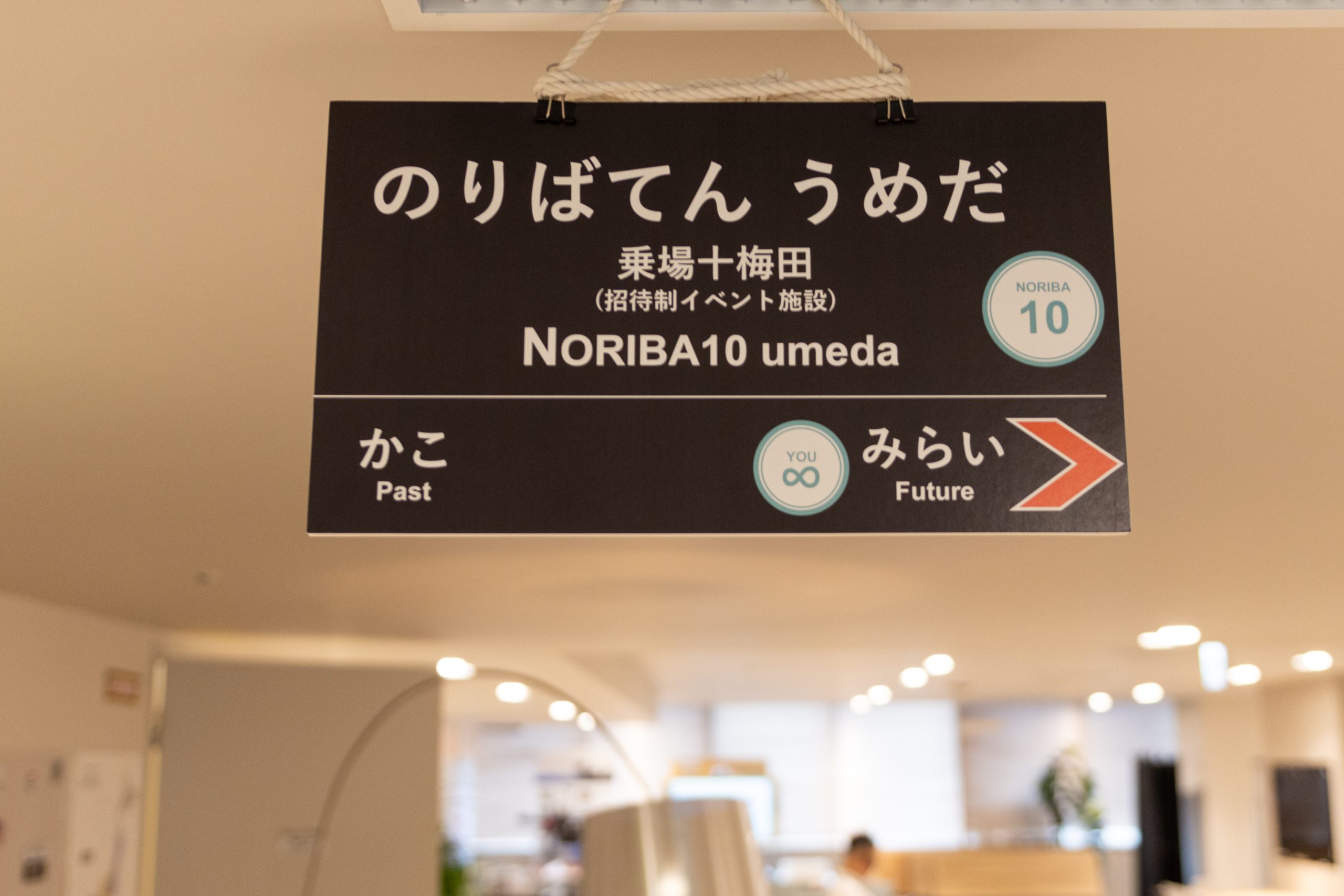
On Aug. 17, Startup Island TAIWAN (SIT), the national startup brand backed by Taiwan’s National Development Council, and Hankyu Hanshin Properties signed a memorandum of understanding at Noriba 10 Umeda, an invitation-based event space nestled inside Hankyu’s landmark Osaka-umeda Station.
The station is Japan’s largest private-railway terminal, where much of Kansai — the western Japan region encompassing Osaka, Kyoto and Kobe — changes trains every morning.
The agreement puts Taiwan’s startup ecosystem and a core company of a major Kansai conglomerate on a standing footing for the first time.
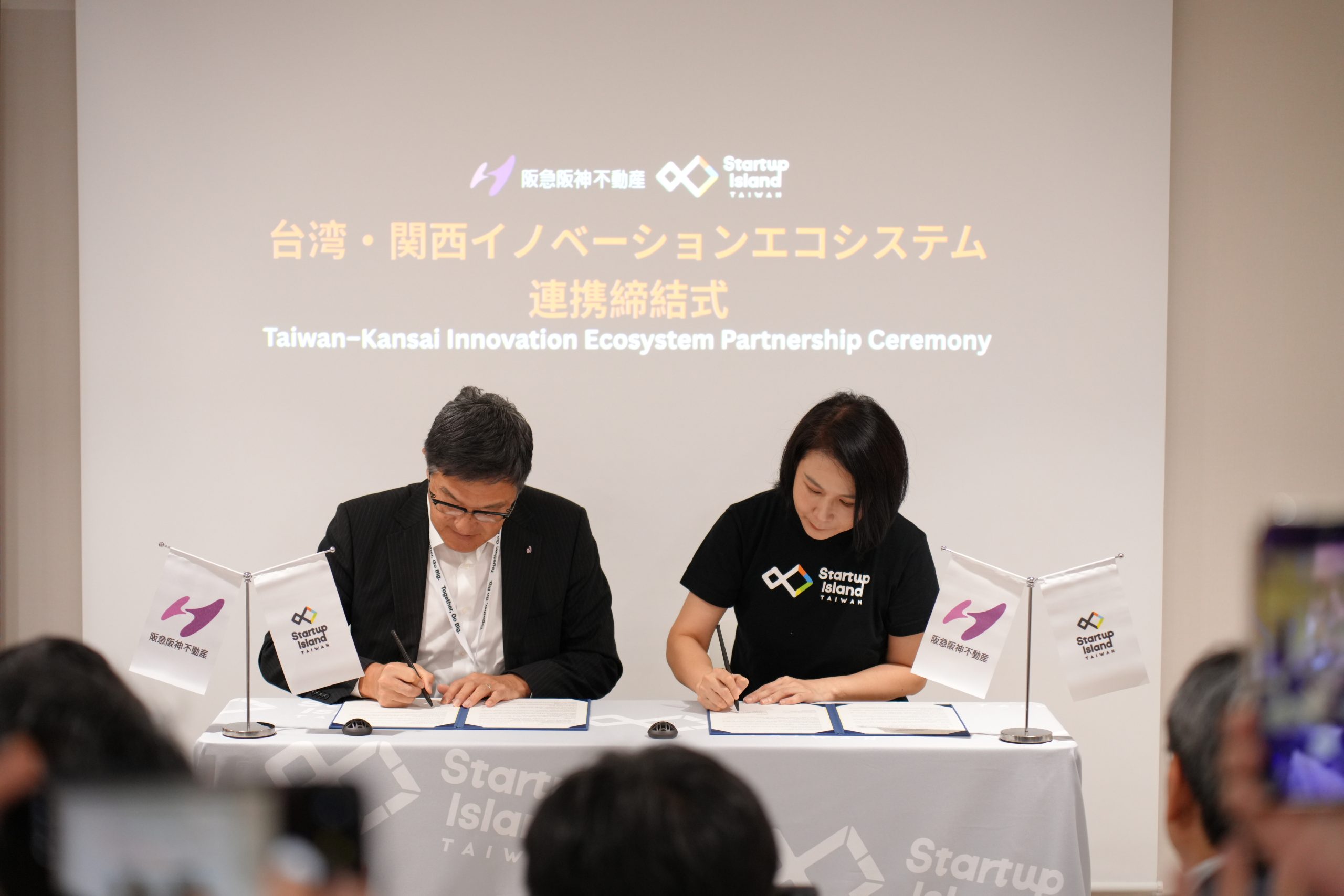
The memorandum itself is short. Each side will refer companies — startups included — suited to collaboration, investment, joint R&D and pilot projects in the other’s region, and the two will co-host events to keep business moving. The real shape of the deal is in who does what where: Hankyu Hanshin opens venues and doors across Kansai, defined in the document as six prefectures from Osaka to Shiga, while SIT puts its network behind companies headed the other way — Japanese startups included. The front door, in other words, swings both ways.
What makes it more than a photo opportunity is that the receiving infrastructure already exists. Hankyu Hanshin Properties operates FutureWorks as a workplace where Taiwanese companies can base their Osaka activity, Noriba 10 Umeda as a venue for events and proof-of-concept trials, and the Jam Base network linking universities, support organizations and Kansai corporates. The group’s businesses — railways, retail, hotels, IT — could also open the way to future pilot projects along its rail lines.
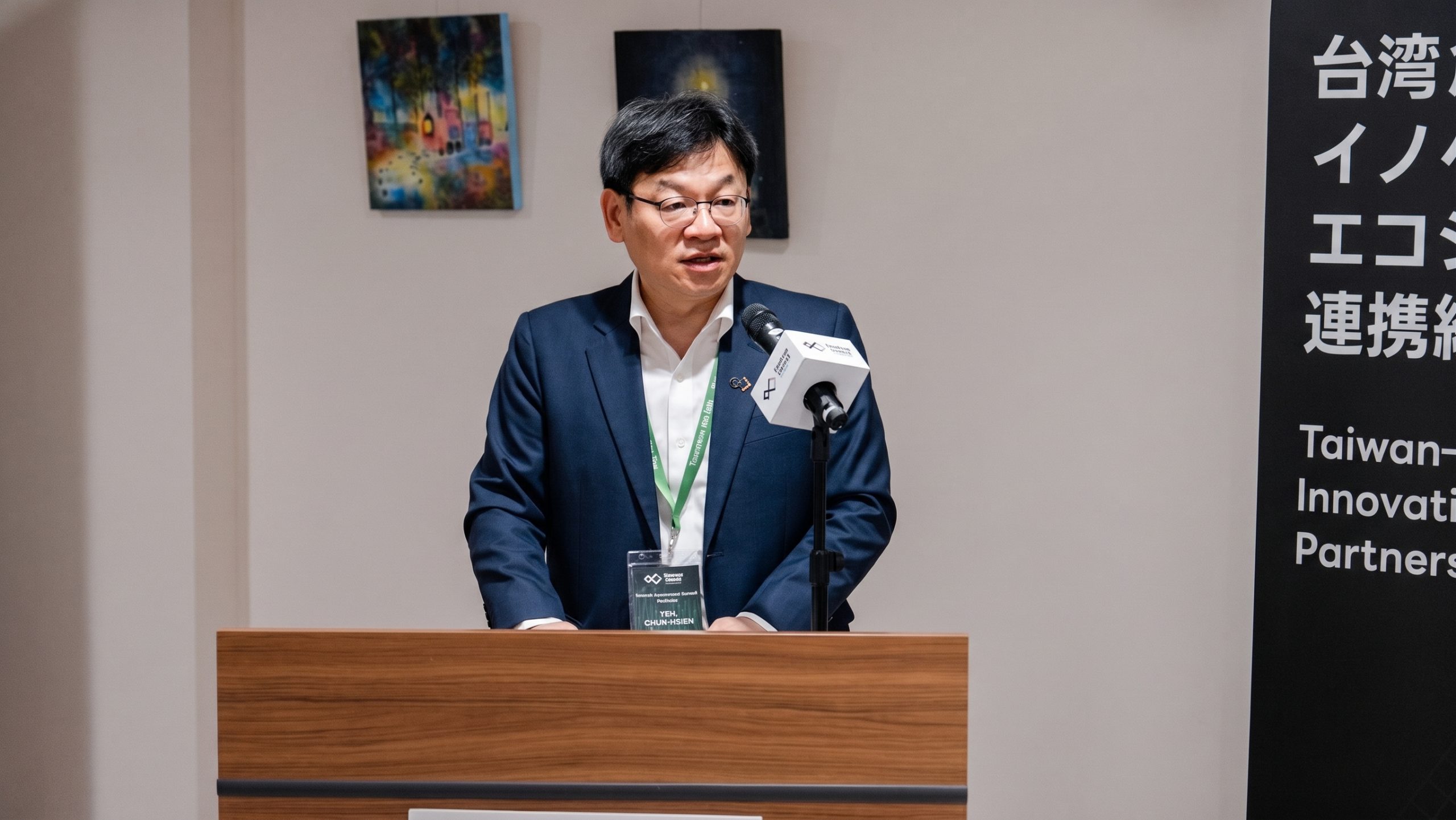
“This MOU is an important milestone in Taiwan-Japan startup cooperation, and a new starting point for building a long-term industrial partnership between Taiwan and the Kansai region,” NDC Minister Yeh Chun-hsien said, adding that Taiwan would use the Hankyu Hanshin group’s industrial networks across Osaka, Kyoto and Kobe to help Taiwanese startups open the Japanese market.
Yasuki Fukui, president of Hankyu Hanshin Properties, framed the partnership within the company’s Umeda Vision, which positions Osaka Umeda as an international exchange hub that keeps generating new value. The tie-up, he said, deepens the company’s connection to Taiwan’s innovation ecosystem, and he voiced hope that energetic Taiwanese startups would come to Osaka and Kansai and widen their networks among local operating companies and investors.
A second MOU was signed the same day between Turn Cloud Technology Service, a Taiwanese digital transformation provider listed in 2024, and ITEC Hankyu Hanshin, the group’s IT arm. The two will jointly explore smart commerce, smart venue operation and AI solutions for department stores, shopping centers and the wider retail and distribution sector.
The signings rest on groundwork laid since 2023, when SIT began leading Taiwanese startups to Osaka to expand their market presence and connect with local enterprises and innovation resources. In 2024, SIT launched the Go Kansai Alliance, which brings together Taiwan’s venture capital firms, accelerators, incubators and industry associations. The alliance changed the model: instead of assisting startups one by one, its partners now lead the companies they invest in, nurture or serve into the Kansai region as a group.
In 2025, the alliance pooled that collective capacity to win official certification for an Expo 2025 Osaka-Kansai event, gathering more than 40 Taiwanese startups at Noriba 10 Umeda for exhibitions, exchanges and business matching. This year’s agreement with Hankyu Hanshin Properties marks the next stage: what began as project-based collaboration has evolved into a long-term platform connecting Taiwan’s innovation ecosystem with Kansai’s major enterprises, government bodies, chambers of commerce and investment networks — so that Taiwanese startups enter Japan not as individual companies, but as an ecosystem.
Results are starting to surface. Asia Pathogenomics, a pre-IPO firm using metagenomic next-generation sequencing to identify infectious-disease pathogens in a day rather than a week or two, set up its Japanese subsidiary in Tokyo’s Nihonbashi and announced joint research results with Osaka University Hospital in May. Other Taiwanese startups have landed in Kobe and Kyoto in fintech, foodtech and healthcare.
Seventeen AI startups traveled with the delegation, which also included Lin Chun-hsiu, director general of the Administration for Digital Industries at Taiwan’s Ministry of Digital Affairs. Roughly 100 people from both countries attended.
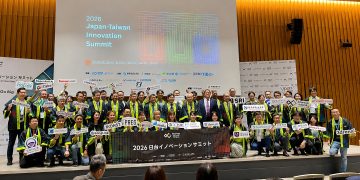
The Osaka session opened the 2026 Japan-Taiwan Innovation Summit, which moved to Tokyo on Aug. 18-19 under the slogan “Together, Go Big.” Now in its fifth year, the summit is reaching beyond its bilateral frame: for the first time, a U.S. government technology-policy official took the stage.
Hankyu Hanshin Properties is the real estate core of Hankyu Hanshin Holdings, the century-old group that runs the railways converging on Umeda and — in the classic Japanese private-railway model — built the department stores, offices and hotels around its own terminal.
Umeda, the district fanning out from the station, is western Japan’s largest business hub, which is why the venue’s name carries a message: the station’s tracks are numbered 1 through 9, and NORIBA10 — “Platform 10” — is the imagined next platform, reserved for departures that don’t exist yet — in either direction.
This article was published in partnership with Startup Island TAIWAN.