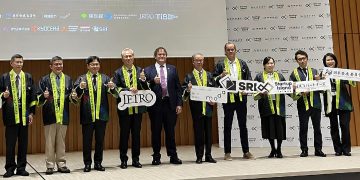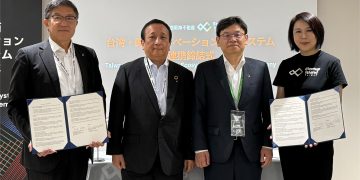



For Japanese startups with strong technology, turning that technology into a business in overseas markets is a major challenge. Entering the EU in particular requires navigating regulations and building local networks. Luxembourg sits at the heart of Europe and is known as an international financial hub. In recent years it has also been investing heavily in nurturing startups and attracting advanced industries. With generous government support and easy access to European markets, the country has become one of the footholds Japanese startups use to expand into Europe.
In June 2026, Japanese startups made a strong showing at Luxembourg’s largest international tech event, Nexus 2026.Luxembourg is also where IT giant Rakuten has its European headquarters. A record 14 Japanese deep-tech companies exhibited there through a government-invited delegation. They won a category of the pitch competition and placed near the top in others, giving Japan a strong presence at the event. For Japanese companies with proprietary technology and solutions to social problems, overseas expansion is fast becoming a necessary next step. This article looks at how Japanese startups performed at the event, and at the support that has helped clear their path into the European market.
Results in a pitch contest of 247 startups, and attention from senior officials
Nexus 2026, an AI and advanced technology event, drew 9,600 attendees, up 14% from the previous year. It brought together 765 speakers from more than 80 countries and 247 startups.
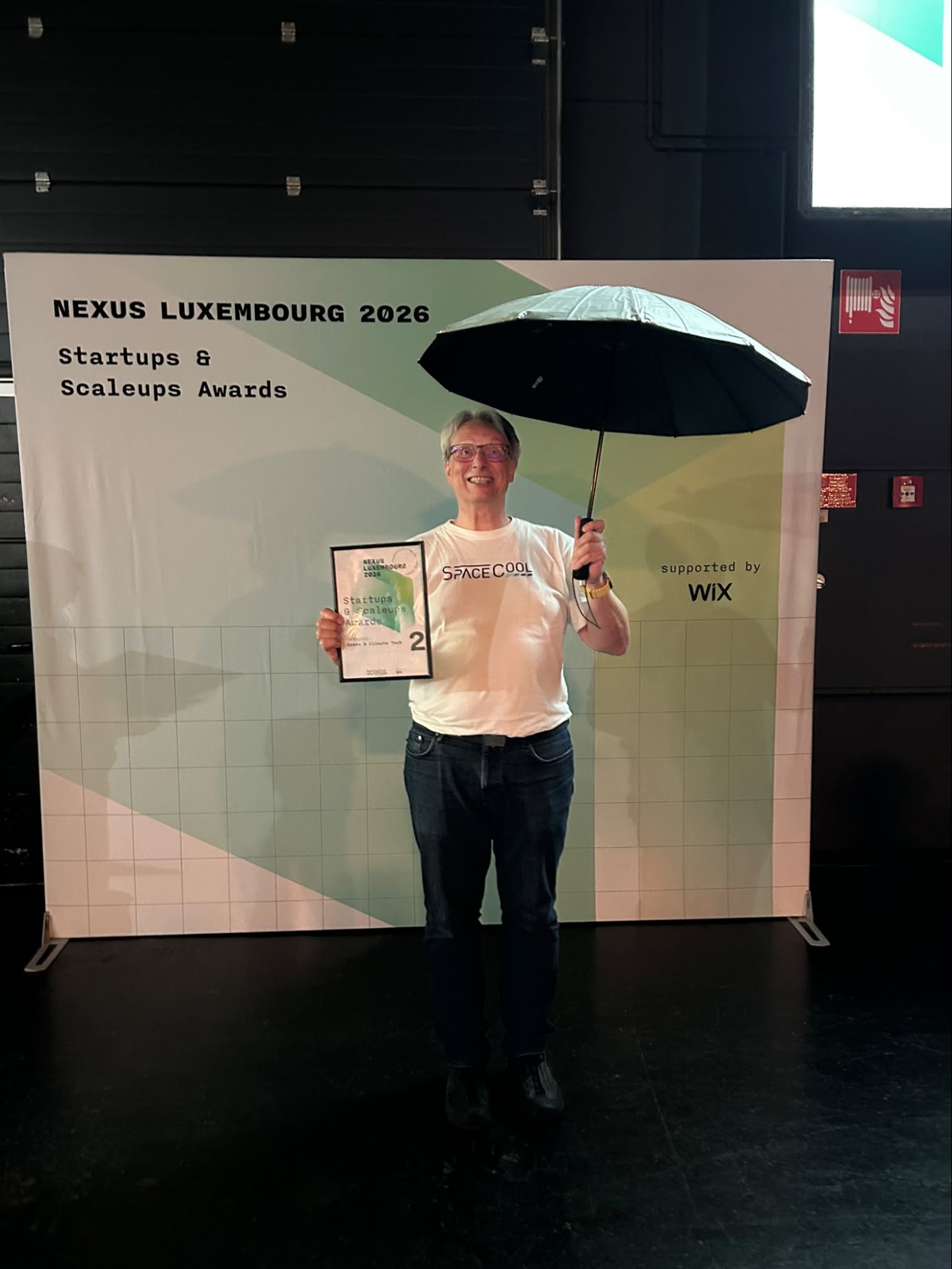
At the awards ceremony, held during a 1,000-guest seated dinner that closed the event, Japanese companies were highly recognized. QunaSys Inc., a quantum computing software company, won the AI Platforms & Data category. Meanwhile, in the Green & Climate Tech category, SPACECOOL INC., which makes radiative cooling materials based on optical control technology, took second place.
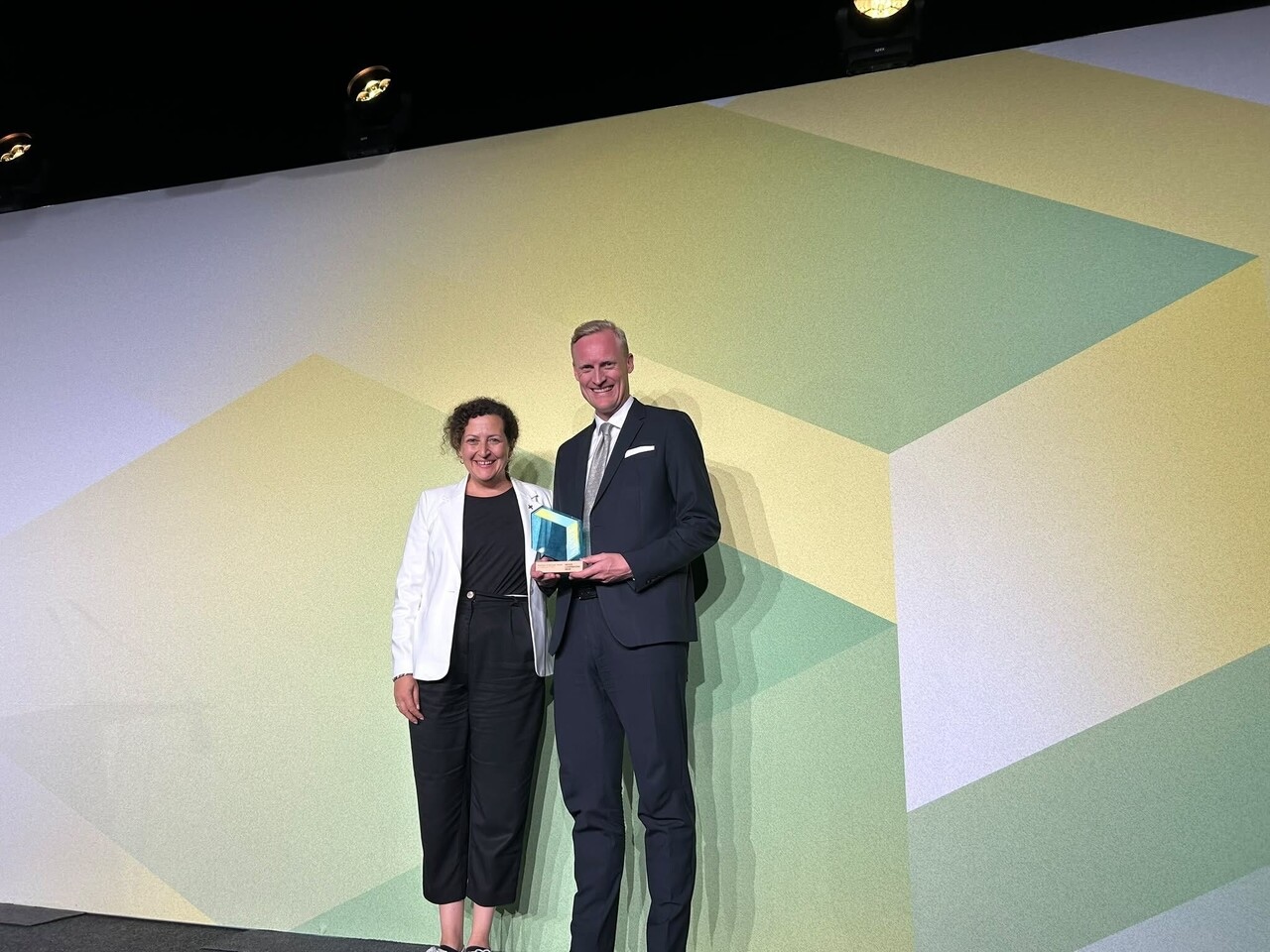
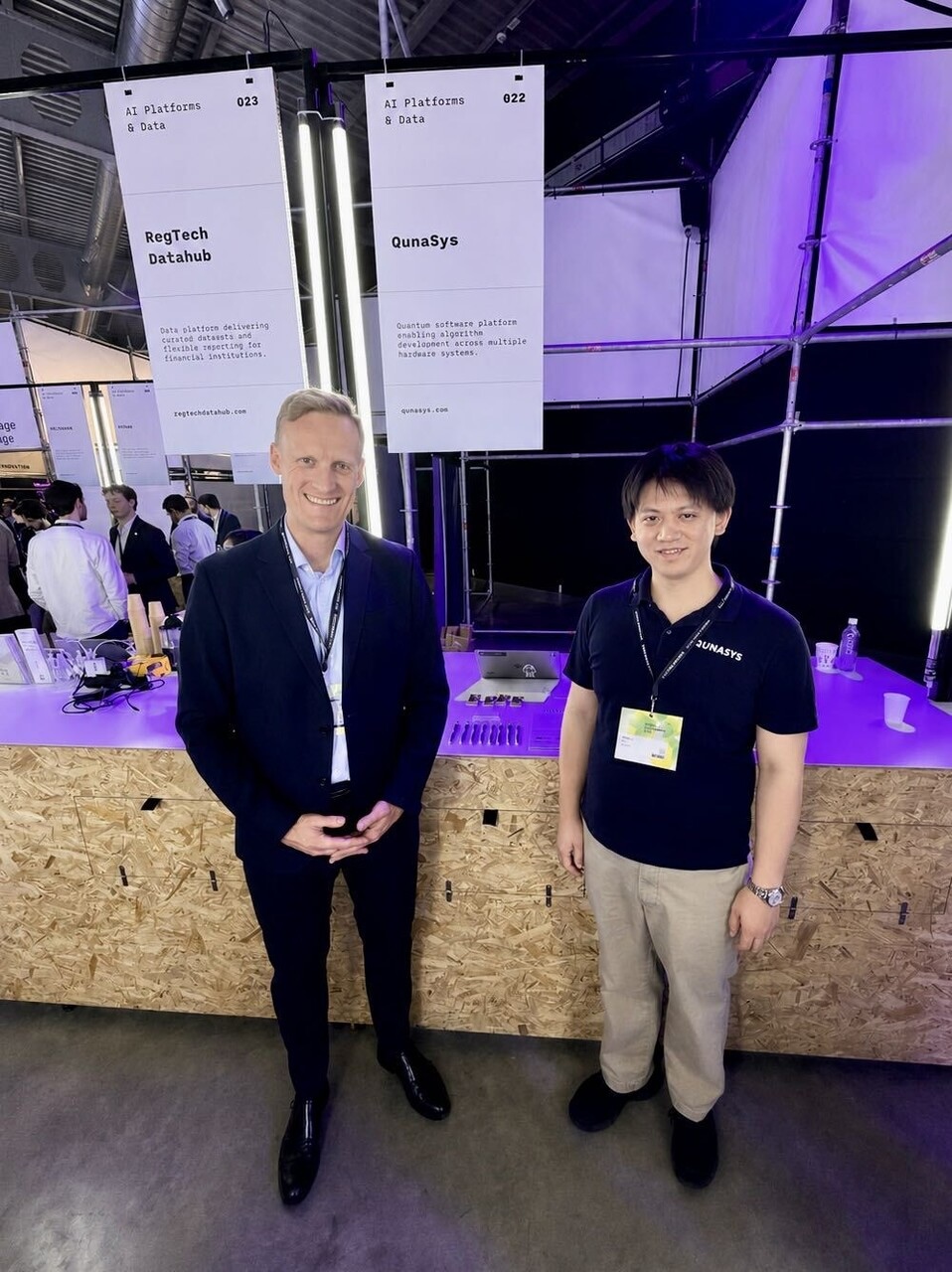
“People tend to frame it as a choice between doing AI or doing quantum computing,” said QunaSys CEO Tennin Yan. “We have always argued that quantum computing has an important place within AI, and we are honored that this view was recognized.” QunaSys is working with LuxProvide, Luxembourg’s supercomputing center, to expand its technology across Europe. The company also held a technical demonstration event involving local businesses, running a quantum simulator on LuxProvide’s supercomputer to explore potential applications for future quantum computers and develop relationships with prospective partners and customers. In late September, QunaSys also dispatched a researcher to Luxembourg to advance technical validation in quantum computer-aided engineering (quantum CAE) and explore business opportunities in the European market.
Jikan Techno Inc., an environmental materials startup led by Representative Director Takahiro Kinoshita that produces high-performance carbon materials from unused resources such as agricultural residues, also made concrete progress on site. The company has previously been selected for the LVMH Innovation Award, run by the world’s largest luxury group. At the venue, a representative from global tire manufacturer Goodyear visited its booth in advance, leading directly to business talks.
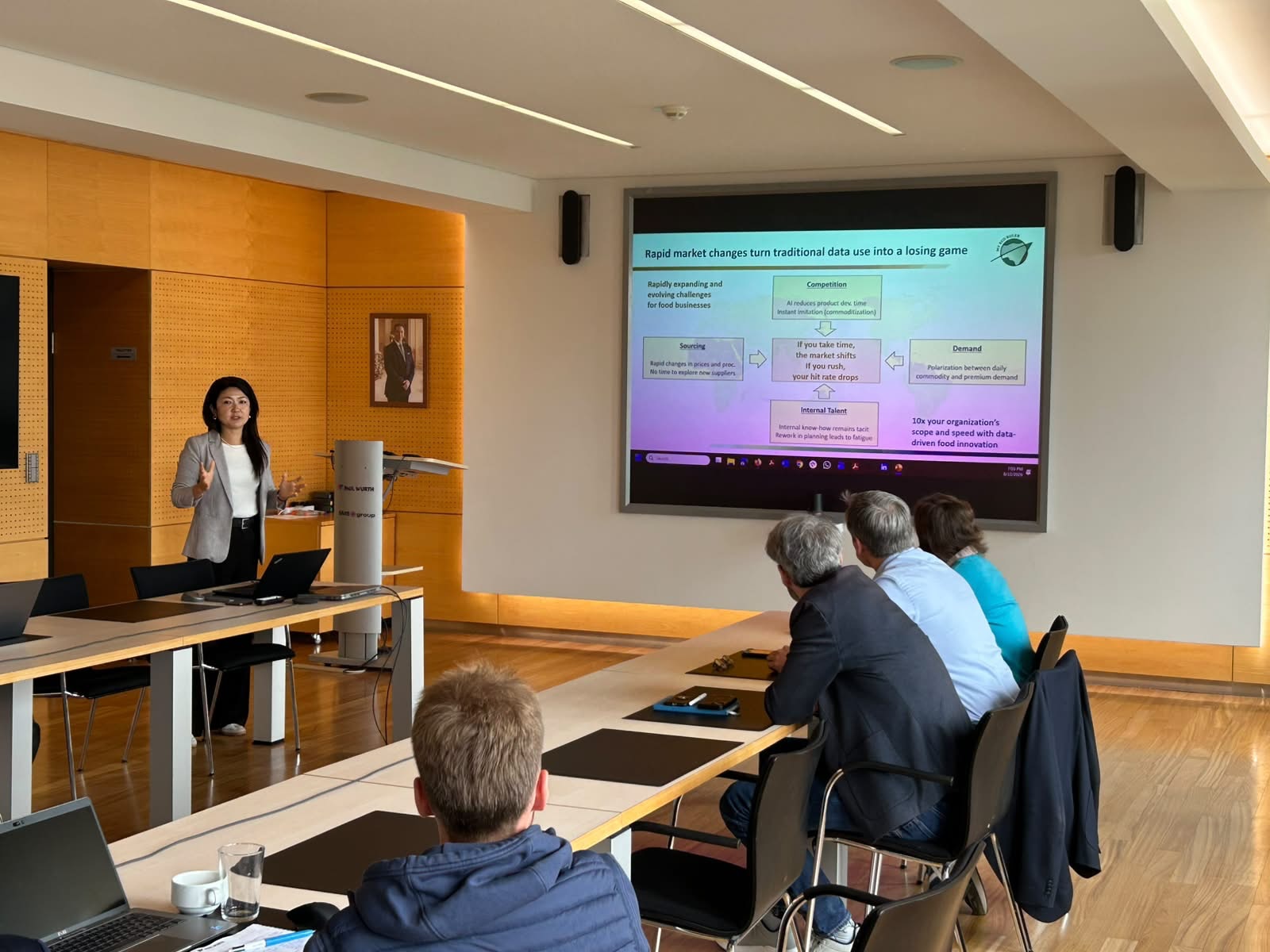
Sebastian Wiertz, who heads new business development and startup support at local engineering firm Paul Wurth, praised the caliber of Japanese startups. “The Japanese startups coming to Europe now already have prototypes and a track record in the Japanese market. Their level is very high,” he said. “They are not simply pitching technology. They have clear solutions to real problems in society.”
A support system that accelerates business launches, across a wide range of fields
This year’s exhibitors spanned a diverse range of deep-tech fields: autonomous driving (TIER IV,Inc.), agricultural technology (cuoncrop inc.), AI (Definer Inc. and Gigalogy Inc.), extraction technology (Emulsion Flow Technologies Ltd.), biotech (miibio, Inc.), clean tech (MK PLUS Co., Ltd.), medical devices (Physiologas Technologies Inc.), and Industry 4.0 (Archilys Corporation, ARUM Inc. and MetaSensing Co., Ltd.). Naoya Nakamaru, Deputy Director of the Luxembourg Trade and Investment Office (LTIO) Tokyo, explained how the 14 companies were chosen: “The government selected them based on their growth potential in the European market, as well as their fit with Luxembourg’s ecosystem and priority economic sectors.”
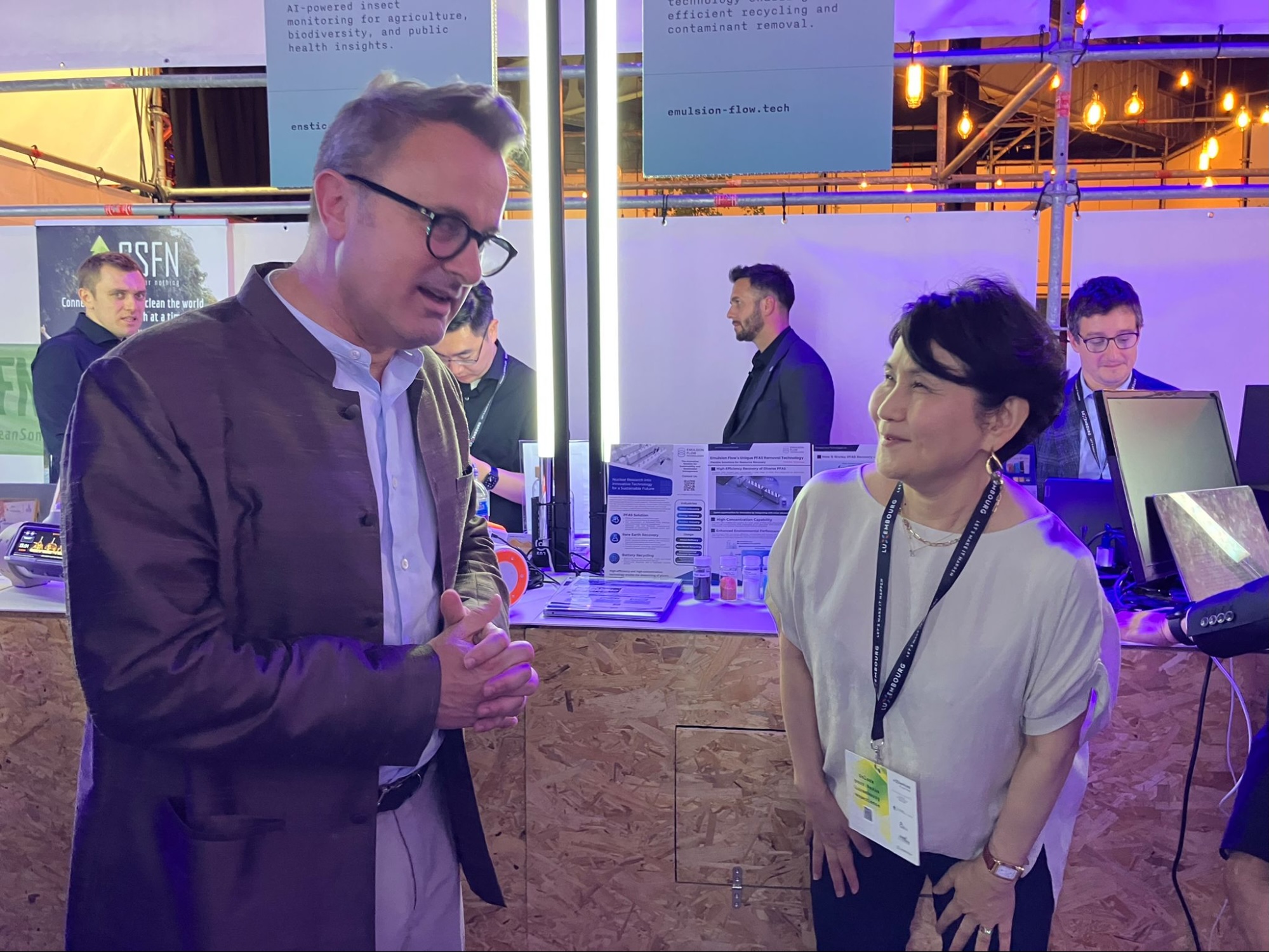
In other words, these are startups that met Luxembourg’s own standards. Luxembourg cabinet members, including Deputy Prime Minister Xavier Bettel and Minister of the Economy Lex Delles, visited the Japanese booths and listened closely to each company’s presentation. Mike Koedinger, one of the organizers of Nexus and owner of Luxembourg business media outlet PAPERJAM, also has high expectations for Japanese startups. “I look forward to building a strong bridge between Luxembourg and Japan’s innovative startups and large companies,” he said.
Part of what makes Luxembourg work as a gateway to Europe is a system that quickly supports companies in the practical work of launching their business. Japanese Ambassador Nomura notes that “the support is generous, with the whole Luxembourg government behind it.”
When ispace, inc., which leads a lunar exploration program, was first looking to expand into Europe, the company said it needed space to carry out development work in Europe. Wiertz and his colleagues immediately arranged an office. Building on that quick support, ispace’s European base has grown into an organization of 40 to 50 people from more than 20 countries, and now leads missions in partnership with the European Space Agency (ESA).
Fintech and crypto startups are also heading to Luxembourg
About two weeks after Nexus 2026, on June 23, a party celebrating Luxembourg’s National Day was held in Tokyo. Among the guests was Noritaka Okabe, CEO of JPYC Inc., the first company in Japan to issue a yen-pegged stablecoin. On X, he expressed his enthusiasm, writing that he aims to connect with global finance through Luxembourg. bitFlyer, one of Japan’s major crypto exchanges, has already set up its European base in Luxembourg and operates there. In fintech, crypto assets and blockchain as well, Luxembourg serves as a beachhead for Japanese startups entering Europe. Its transparent regulatory environment and its role as an international financial hub are driving their expansion.
A path to Luxembourg that dates back to 2012
Luxembourg’s support for Japanese startups exhibiting at local events dates back to 2012. At the time, major European tech events such as VivaTech in Paris had not yet begun, while Slush in Helsinki had not yet reached its current scale. The Japanese government had no overseas expansion support programs like J-Startup. For Japanese startups, the path into Europe was unclear.
During this period, Yuriko Matsuno, Executive Director of the LTIO Tokyo, negotiated with event organizers in Luxembourg and created a route for Japanese startups to exhibit, positioning their “Asian flavor” as added value. She has continued to support their participation in Luxembourg tech events ever since.
These efforts to engage Japanese companies continue today. In early October, the LTIO Tokyo held seminars and networking events focused on the space sector at Global Startup EXPO 2026 in Osaka. The initiative aimed to build relationships with Japanese startups and major corporations and encourage their expansion into Luxembourg.
Japanese startups that took part in Nexus 2026 have been consistently positive about the country’s strong support system and the real traction they found in pursuing European markets.
Yusuke Nakayama, General Manager of Global Projects at TIER IV, which develops open-source software for autonomous driving, pointed to a strength he says no other country offers: “Because the community is compact, it is extremely easy to approach high-level government officials.” He added that legislation in autonomous driving has not yet caught up with the technology, and he is increasingly convinced that using Luxembourg, which has strong influence over EU rulemaking, as a foothold will be a major advantage for future expansion in Europe.
Mosleh Uddin, CEO of Gigalogy, which provides an AI application platform, also praised the abundance of free support from incubators and others, describing Luxembourg as “an environment where talented people can put their ideas into action.” Takao Fukuoka, Representative of Archilys, which develops technology based on its proprietary control of gold nanoparticle aggregation, was struck by the enthusiasm of local support organizations. He called Luxembourg “a country that takes risks to create new industries for the future, a country that takes on challenges.” He said he received advice that led to concrete changes in his business model, and that he has applied to move into a local incubation facility.
The way Nexus 2026 itself organized its exhibits also helped participating companies succeed. Exhibition areas were arranged by industry, such as AI and green tech, rather than by country. Takahiro Kinoshita, Representative Director of Jikan Techno, which produces industrial silica from agricultural residues, said this “made our position and uniqueness within the industry very clear.” TIER IV’s Nakayama said the biggest takeaway was being able to have in-depth conversations with neighboring competitors about how to break into the European market. Archilys’s Fukuoka added that presenting on the 360-degree open pitch stage was a very exciting experience.
Despite the short stay, concrete business results have already emerged. Jikan Techno, whose work in sustainability matched local needs, received a nondisclosure agreement (NDA) template from U.S. tire giant Goodyear and has begun concrete discussions. It also received an inquiry from a European semiconductor manufacturer about evaluating its materials. Gigalogy met two potential sales partners and is in positive negotiations, and TIER IV gained pipeline candidates likely to lead to specific projects. Each company has firmly established a foothold for full-scale expansion into the European market.
It has been 14 years since the early days of feeling the way forward. The day before the event, this year’s 14 exhibitors joined a program that included visits to the science city of Esch and the House of Startups incubation facility, and deepened their understanding of the European ecosystem through networking events. Looking back on the full program, Matsuno said: “It was a pleasure for our office to welcome technology startups from Japan aiming to expand into Europe, and to have them take part in Nexus 2026 and the programs we arranged around it. It was also an invaluable opportunity for us to understand each company’s vision and challenges.” Expectations for European expansion via Luxembourg continue to grow.