
• Login
Upgrade
JStories
  • 日本語
  • 中文 (中国)
No Result
View All Result
  • Home
  • AI
    • Artificial Intelligence
    • Robotics
    • Mobility
    • FinTech
    • Quantum
  • Earth
    • AgriTech
    • Green Innovation
    • Disaster Tech
    • SpaceTech
    • Materials
  • Life Sciences
    • BioTech
    • HealthTech
    • MedTech
    • AgeTech
  • Society
    • Media
    • EdTech
    • Diversity
    • FemTech
    • Social Impact
  • Lifestyle
    • FoodTech
    • Beauty & Fashion
    • Wellbeing
    • Arts & Music
    • Anime
  • Travel
    • Adventure Travel
    • Luxury Travel
    • Wellness & Medical Tourism
    • Culture
  • Video
  • Deals
    • Venture Capital
    • M&A
    • Events
    • Pitch
    • Growth Support
    • Legal & IP
  • Interview
  • Opinion
  • Home
  • AI
    • Artificial Intelligence
    • Robotics
    • Mobility
    • FinTech
    • Quantum
  • Earth
    • AgriTech
    • Green Innovation
    • Disaster Tech
    • SpaceTech
    • Materials
  • Life Sciences
    • BioTech
    • HealthTech
    • MedTech
    • AgeTech
  • Society
    • Media
    • EdTech
    • Diversity
    • FemTech
    • Social Impact
  • Lifestyle
    • FoodTech
    • Beauty & Fashion
    • Wellbeing
    • Arts & Music
    • Anime
  • Travel
    • Adventure Travel
    • Luxury Travel
    • Wellness & Medical Tourism
    • Culture
  • Video
  • Deals
    • Venture Capital
    • M&A
    • Events
    • Pitch
    • Growth Support
    • Legal & IP
  • Interview
  • Opinion
en English ja 日本語 zh 中文 (中国)
JStories
No Result
View All Result

INTERVIEW | The shape of corporate investment born from problem-solving: What is CVC 4.0?

Silicon Valley investor Anis Uzzaman practices “VC as a Service (VCaaS)” as a matchmaker between Japan and the rest of the world.

Toshi Maeda by Toshi Maeda
08/03/2025
in Deals, Growth Support, News, Social Impact, Society, Venture Capital
0
Home Deals
Share on FacebookShare on Twitter

JStories ー Seven to eight years ago, amid a series of accidents in Japan where children left in cars died from heatstroke, Aisin, a major Japanese automotive parts manufacturer, reached out to a Silicon Valley venture capital firm with a crucial request: “Is there technology that can reliably detect children left behind in vehicles?”

For Anis Uzzaman, founder and CEO of Pegasus Tech Ventures, this was more than just a technology investment opportunity — it was an approach to solving social issues. He took the initiative to contact sensor companies worldwide and began his investigation.

“We contacted all sensor companies around the world to see who could solve this problem,” Uzzaman reflected.

Anis Uzzaman, founder and CEO of Pegasus Tech Ventures, speaks to JStories during a recent interview in Tokyo     Photo by Emi Takahata | JStories 

Through this global survey, they discovered that Vayyar, an Israeli startup, had a technology that could detect human heartbeats inside vehicles, even if covered by blankets on seats.

In 2018, Pegasus introduced this technology to Aisin. After five years of demonstration testing, they announced a partnership in 2023, with investment completed in 2024. Currently, this “in-vehicle occupant detection system” is installed in actual vehicles.

“It can detect even the slightest chest movements,” Uzzaman explained. This system, which prevents children from being left in the car using a single ceiling-mounted sensor, became a case study of technology addressing social issues.

However, there’s another story behind this success.

Aisin’s factories were facing a separate serious problem: AI systems were making overly strict judgments, causing most manufactured parts to be deemed “defective.”

To solve this, Uzzaman turned to Element AI, a startup in Montreal, Canada. Founded by Yoshua Bengio, known as the father of AI, it was an unparalleled technical team with 500 AI engineers, 120 of whom held PhDs.

In September 2019, with an initial investment of 50 million yen, Element AI dispatched two engineers to Aichi Prefecture, where Aisin’s headquarters is located. Using “explainable AI,” they they identified which stage of the seven manufacturing processes flagged the parts as defective and why.
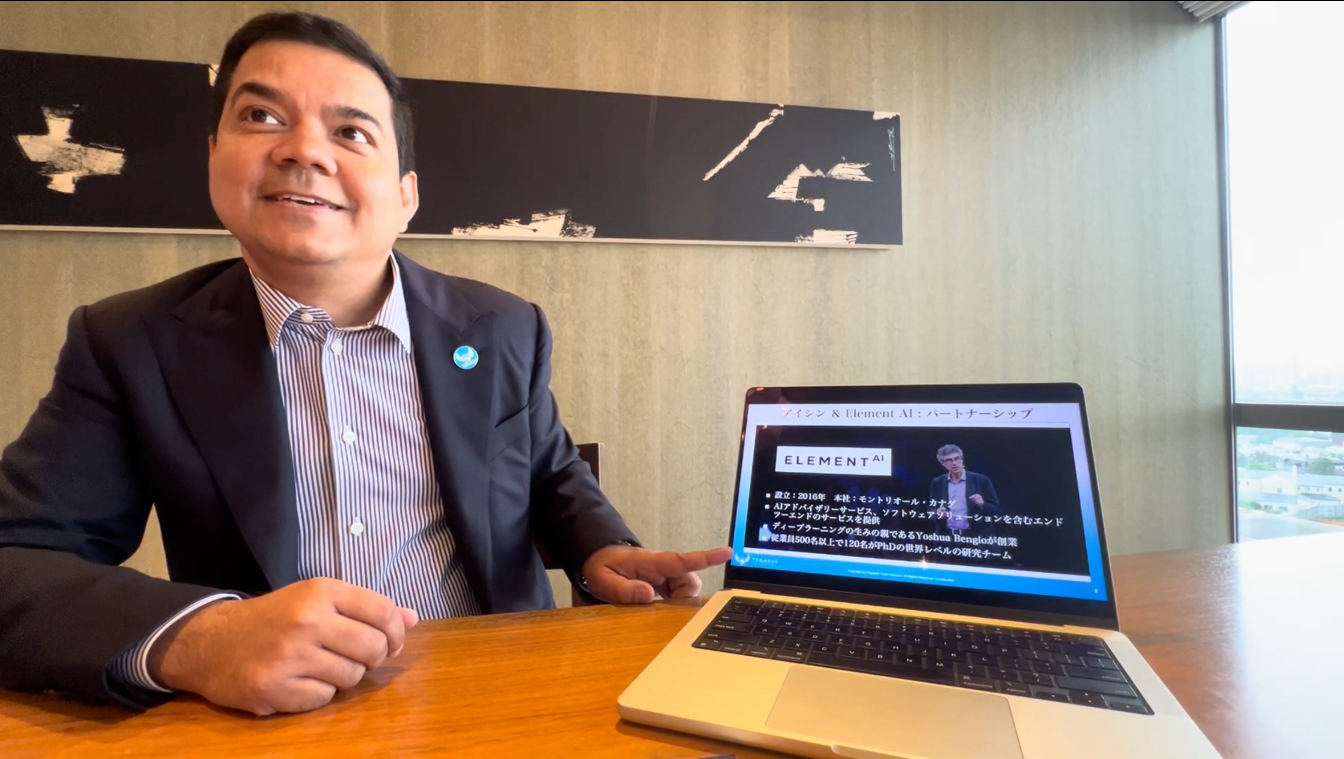
Uzzaman explains a partnership Pegasus Tech Ventures helped create between a Japanese company and a Canadian AI startup      Photo by Toshi Maeda | JStories (Same below)

The results were dramatic. The yield rate (the proportion of good products among finished products) improved by about 10%, which meant value creation worth hundreds of billions of yen for Aisin, a company with annual revenues of 4 trillion yen.

“Eventually, we achieved business value returns of about seven times the invested amount,”  Uzzaman said. Rather than “investment first,” Uzzaman prioritizes setting up “matching” as business partners.

Philosophy of prioritizing value creation over investment

These Aisin case studies characterize “CVC 4.0” advocated by Pegasus Tech Ventures. While traditional venture capitalists pursue financial returns, the company prioritizes business value creation and partnerships.

“We partner before investing, not after,” Uzzaman said. “The basic concept of CVC 4.0 is that investment doesn’t come before partnership.”

Currently, Pegasus Tech Ventures manages approximately 300 billion yen across 41 funds, with over 35 Japanese partner companies such as Aisin, Denka, Calbee, Sojitz, and Sega Sammy.

What’s important is that these funds are “evergreen,” according to Uzzaman.
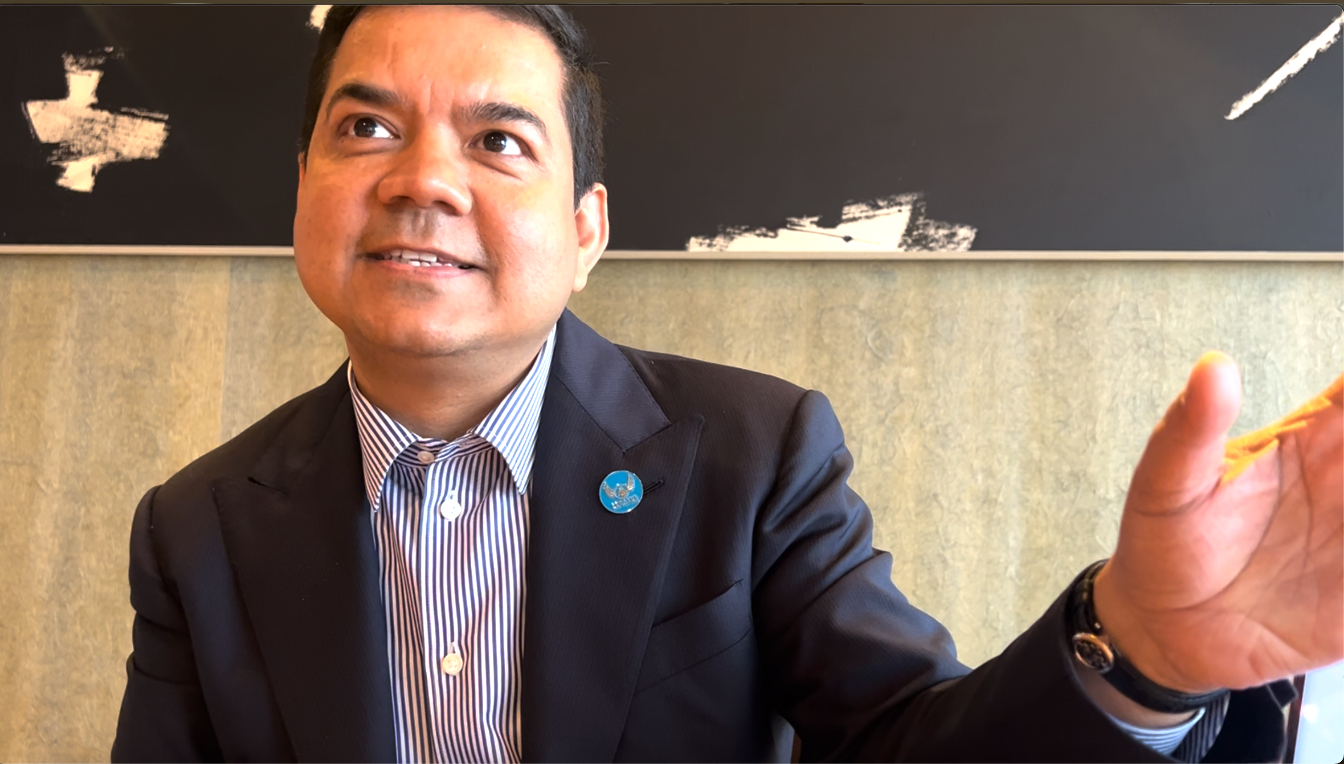
Uzzaman discusses his philosophy of ‘CVC 4.0,’ which emphasizes creating business value and partnerships before making investments

“Financial returns are not the goal. Business returns are the main focus,” said Uzzaman, who obtained his bachelor’s and doctoral degrees in Japan and speaks fluent Japanese.

This philosophical shift in CVC investment also stems from the limitations of traditional merger and acquisition (M&A)-centered approaches.

“The old way was acquisition, but you can’t acquire companies like OpenAI  They’re too big for Japanese companies,” Uzzaman noted. “But with investment, you can invest from 1 million dollars and still create good partnerships.”

The four stages of CVC evolution: Why 4.0?

Uzzaman categorizes the evolution of Corporate Venture Capital into four distinct stages. His explanation is as follows:

CVC 1.0 was a format where large corporations invested in existing funds. However, in situations where “automotive manufacturers are investing, and healthcare companies are also investing,” there was a fundamental problem that “fund managers couldn’t provide good information to everyone.”

In CVC 2.0, companies established funds internally, but failures occurred repeatedly because “employees lacked venture investment knowledge and global networks.”

In CVC 3.0, companies hired venture capital professionals from outside, but challenges remained with “hiring only one or two people” and “people constantly changing through rotation.”

CVC 4.0 means outsourcing the VC function itself to specialized teams. It’s a concept where companies use VC as a Service (VCaaS) as a service.
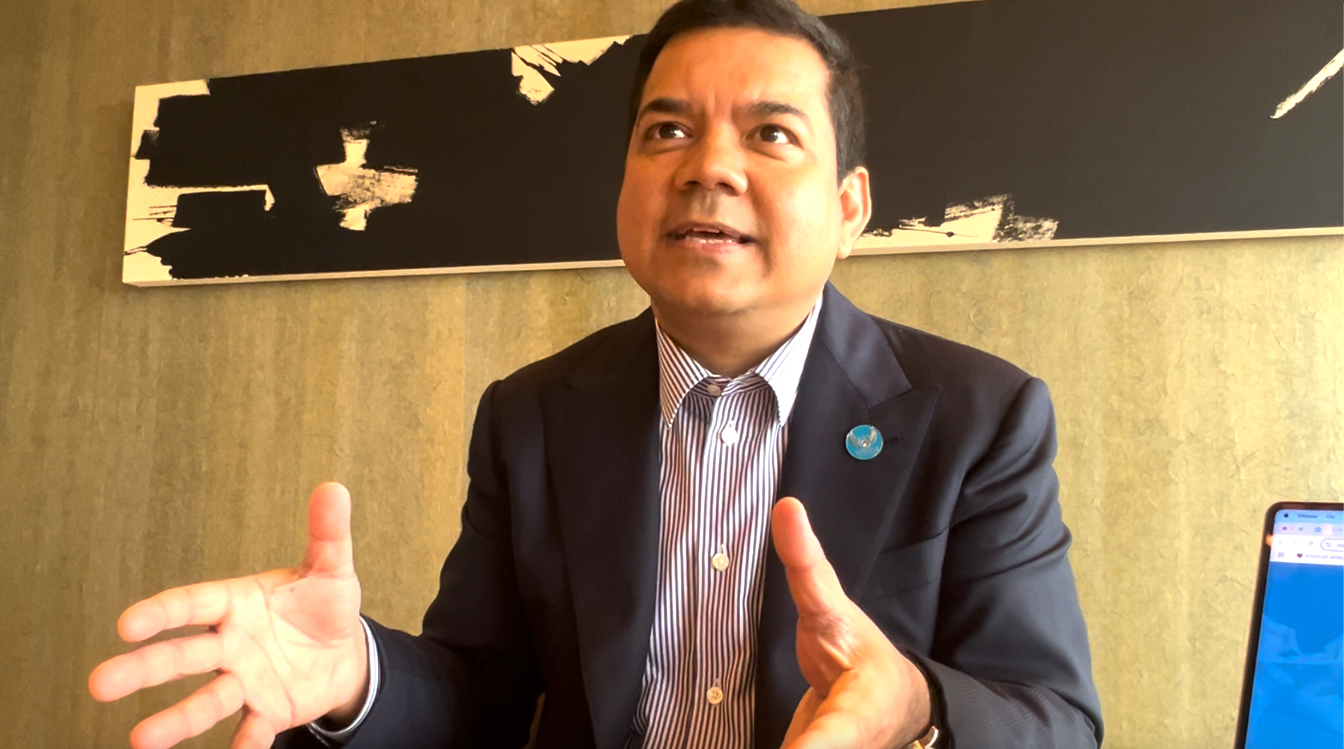
Uzzaman says the evolution of corporate venture capital led to the CVC 4.0 model

Pegasus launches individual funds under the Pegasus name for each client company. In essence, these are customized funds designed to maximize business value for each individual company.

Covering 14 countries with a 135-person team

Founded in 2012, Pegasus Tech Ventures is currently headquartered in San Jose with a team of 135 people operating across 14 countries. The company has invested in over 260 companies, with 22 achieving IPOs.

Particularly noteworthy is the quality of their portfolio companies. They have made early investments in era-defining companies such as SpaceX, OpenAI, Airbnb, Anthropic, SoFi, and X (formerly Twitter). Having invested in 30 unicorns, they boast high returns even within the American VC industry.

However, Uzzaman’s vision extends beyond mere financial and business success. The sentiment that “we must also think about giving” has led him to even greater endeavors.


In Part 2, we will introduce the grand vision of Startup World Cup connecting 130 countries, support for entrepreneurs in developing nations, and specific recommendations for Japan’s startup ecosystem.

Written by Toshi Maeda | JStories

Edited by Desiderio Luna | JStories

Top photo: Emi Takahata | JStories

For inquiries regarding this article, please contact jstories@pacificbridge.jp


Tags: #StartupAicorporate investmentCVC 4.0InterviewJapanSilicon ValleyTechnology
Previous Post

Hands-on disaster and emergency preparedness experience in Tokyo

Next Post

Japan’s NTT uses drone to capture and redirect lightning strikes in world first

Toshi Maeda

Toshi Maeda

A multilingual journalist with over 25 years of experience in the media industry, Maeda worked as a producer and correspondent for Reuters TV in Tokyo after stints as a reporter at The Japan Times, The Associated Press in San Francisco, Newsday in New York, and The Desert Sun in Palm Springs, California. Maeda has also taught journalism at Komazawa University’s Faculty of Global Media Studies. Currently, he serves as executive editor for solutions-focused bilingual news platform J-Stories, a PBMC media outlet.

Related Posts

One typhoon, four warning systems: Japanese AI stitches the disaster picture together
Disaster Tech

One typhoon, four warning systems: Japanese AI stitches the disaster picture together

by JStories Editorial Team
07/15/2026
As Venezuela’s quake cuts off water, a Japanese recycler shows another way
Disaster Tech

As Venezuela’s quake cuts off water, a Japanese recycler shows another way

by JStories Editorial Team
07/10/2026
日本の温泉郷に眠る地熱発電、AIデータセンターの電力源として新たな期待
Earth

Geothermal Power Taps a ‘Buried Treasure’ to Revitalize a Hot Spring Region

by Yoshiko Ohira
07/08/2026
As deepfake scams spread, a Japanese institute builds detectors to catch them
Artificial Intelligence

As deepfake scams spread, a Japanese institute builds detectors to catch them

by JStories Editorial Team
07/03/2026
Sony’s neck-worn cooler targets a world running short on ways to beat the heat
Green Innovation

Sony’s neck-worn cooler targets a world running short on ways to beat the heat

by JStories Editorial Team
07/01/2026
Next Post

Japan’s NTT uses drone to capture and redirect lightning strikes in world first

Leave a Reply Cancel reply

Your email address will not be published. Required fields are marked *

Trending

Greening the desert with trash

by Yui Sawada
03/23/2023
0

KYOTO (JStories) - The sight of local Niger women throwing kitchen waste out into the African desert inspired a project...

Evolutionary artificial protein slated for market debut as early as June 2026

by Yoshiko Ohira
04/17/2026
0

JStories — Severe and hard-to-heal wounds — such as those caused by burns, injuries, pressure ulcers, skin cancer surgery, and...

Ai Heart Japan

Ai Heart Japan

by Jstories
06/18/2024
0

https://www.youtube.com/watch?v=q0fmsRv3ZjQ Company Profile Startup Name: Ai Heart Japan Co., Ltd. Stage: Early-stage (founded March 30, 2021) Location: Japan Website: https://ai-heart.jp/...

AssistMotion Inc.

AssistMotion Inc.

by Jstories
06/18/2024
0

https://www.youtube.com/watch?v=xQrw2hrDzzc Pitch by the representative director of AssistMotion Minoru Hashimoto Company Profile Startup Name: AssistMotion Inc. Stage: Early-stage / Seed...

A pocket-size AED innovation to save more lives

by Suvendrini Kakuchi
09/11/2025
0

JStories ー A Japanese startup has developed a pocket-size automated external defibrillator (AED) — about the size and weight of...

JStories

©Articles and photos published on JStories are protected by Japanese copyright law and international treaties. They cannot be reproduced without the permission of the copyright holders

Explore JStories

  • Home
  • About JStories
  • JStories Newsletter Sign-Up
  • Company
  • Team
  • Contact
  • Privacy Policy
  • Partner Press Releases

Follow Us

Welcome Back!

Login to your account below

Forgotten Password?

Retrieve your password

Please enter your username or email address to reset your password.

Log In
No Result
View All Result
  • TOP STORIES
  • AI
    • Artificial Intelligence
    • Robotics
    • Mobility
    • FinTech
    • Quantum
  • Earth
    • AgriTech
    • Green Innovation
    • Disaster Tech
    • SpaceTech
    • Materials
  • Life Sciences
    • BioTech
    • HealthTech
    • MedTech
    • AgeTech
  • Society
    • Media
    • EdTech
    • Diversity
    • FemTech
    • Social Impact
  • Lifestyle
    • FoodTech
    • Beauty & Fashion
    • Wellbeing
    • Arts & Music
    • Anime
  • Travel
    • Adventure Travel
    • Luxury Travel
    • Wellness & Medical Tourism
    • Culture
  • Video
  • Deals
    • Venture Capital
    • M&A
    • Events
    • Growth Support
    • Legal & IP
  • Interview
  • Opinion

©Articles and photos published on JStories are protected by Japanese copyright law and international treaties. They cannot be reproduced without the permission of the copyright holders

Not enough quota to unlock this post
Unlock left : 0
Are you sure want to cancel subscription?