
• Login
Upgrade
JStories
  • 日本語
  • 中文 (中国)
No Result
View All Result
  • Home
  • AI
    • Artificial Intelligence
    • Robotics
    • Mobility
    • FinTech
    • Quantum
  • Earth
    • AgriTech
    • Green Innovation
    • Disaster Tech
    • SpaceTech
    • Materials
  • Life Sciences
    • BioTech
    • HealthTech
    • MedTech
    • AgeTech
  • Society
    • Media
    • EdTech
    • Diversity
    • FemTech
    • Social Impact
  • Lifestyle
    • FoodTech
    • Beauty & Fashion
    • Wellbeing
    • Arts & Music
    • Anime
  • Travel
    • Adventure Travel
    • Luxury Travel
    • Wellness & Medical Tourism
    • Culture
  • Video
  • Deals
    • Venture Capital
    • M&A
    • Events
    • Pitch
    • Growth Support
    • Legal & IP
  • Interview
  • Opinion
  • Home
  • AI
    • Artificial Intelligence
    • Robotics
    • Mobility
    • FinTech
    • Quantum
  • Earth
    • AgriTech
    • Green Innovation
    • Disaster Tech
    • SpaceTech
    • Materials
  • Life Sciences
    • BioTech
    • HealthTech
    • MedTech
    • AgeTech
  • Society
    • Media
    • EdTech
    • Diversity
    • FemTech
    • Social Impact
  • Lifestyle
    • FoodTech
    • Beauty & Fashion
    • Wellbeing
    • Arts & Music
    • Anime
  • Travel
    • Adventure Travel
    • Luxury Travel
    • Wellness & Medical Tourism
    • Culture
  • Video
  • Deals
    • Venture Capital
    • M&A
    • Events
    • Pitch
    • Growth Support
    • Legal & IP
  • Interview
  • Opinion
en English ja 日本語 zh 中文 (中国)
JStories
No Result
View All Result

As deepfake scams spread, a Japanese institute builds detectors to catch them

With cloned voices and fake video calls draining company accounts, Japanese researchers are turning in decade of detection work into a shared line of defense

JStories Editorial Team by JStories Editorial Team
07/03/2026
in Artificial Intelligence, AI, News, Social Impact, Society
0
Home AI Artificial Intelligence
Share on FacebookShare on Twitter

PROBLEM: Deepfake scams are spreading fast as cloned voices and fake video calls impersonating executives leads to U.S. losses heading toward tens of billions of dollars a year.

SOLUTION: Japan’s National Institute of Informatics (NII), a Tokyo research institute, has built a deepfake detector, Synthetiq Vision, now being folded into a national platform that flags manipulated audios, images, and videos.


Deepfake fraud moves from novelty to industry

Fraud that hijacks a familiar face or voice has moved from novelty to industry. In early 2024, a finance worker at the engineering firm Arup was tricked into sending $25 million to criminals after a video call in which every colleague, including the chief financial officer, was AI-generated. According to Japan’s National Institute of Informatics, such attacks are cheap as a convincing voice clone needs only a few seconds of audio.

The scale is climbing. Deloitte’s Center for Financial Services projects U.S. generative-AI fraud losses rising from $12.3 billion in 2023 to $40 billion by 2027. In 2025, the FBI’s annual cybercrime report logged for the first time, AI-related complaints as their own category, with roughly 900 million in losses.
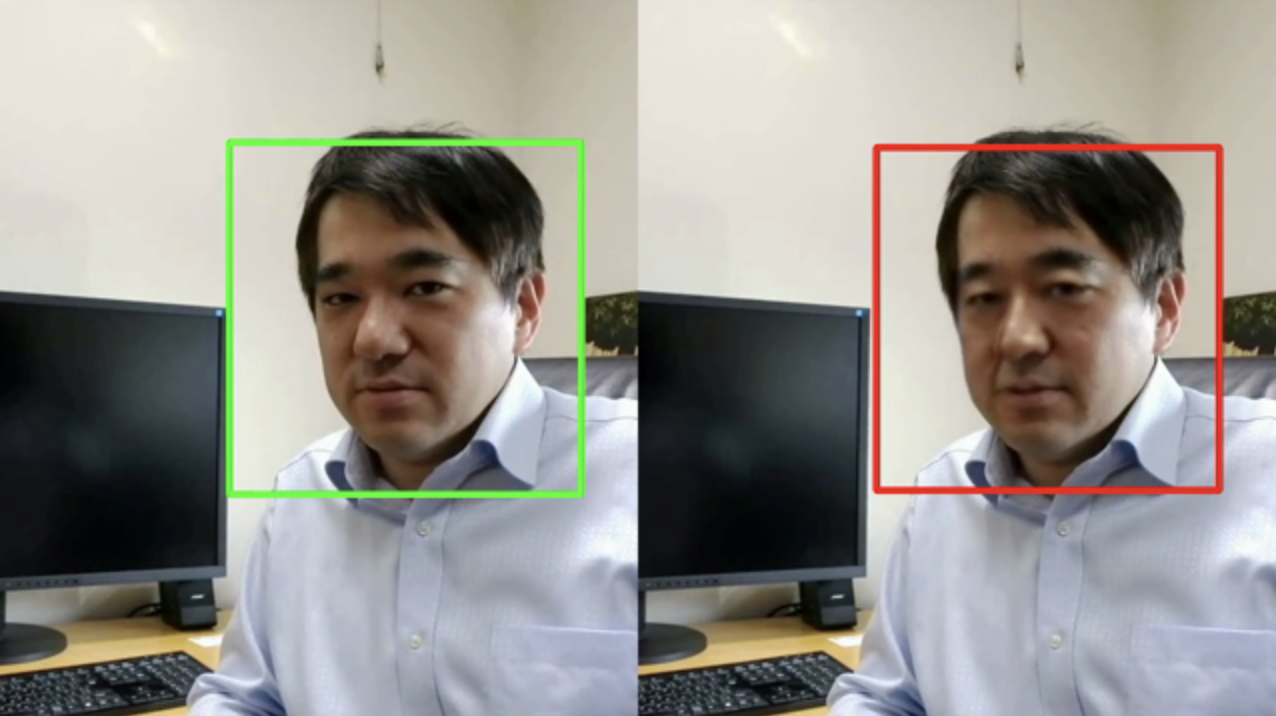
Picture of Synthetiq Vision detecting real (left) and deepfake (right) images     Source: National Institute of Informatics (NII)

A Japanese institute builds a possible countermeasure

NII has set up a Research Center for Synthetic Media in 2021 and has licensed its detector, Synthetiq Vision, since 2023. Synthetiq Vision traces back to a deepfake-video detector named “MesoNet” published in 2018. That tool is now one piece of a larger effort: since October 2024, a nine-organization consortium led by Fujitsu, including NEC Corporation, has been building what it calls a first-of-its-kind disinformation platform, with a prototype finished by mid-2025. NII and NEC handle the detection layer. It is being trialed first with fact-checkers and government offices, with company and newsroom use targeted from fiscal 2026, focused on election and disaster misinformation. 

Expanding its horizons across AI content

Last month, NII has made a big update to the deepfake-detection tool. On top of its original focus on fake images and videos of people’s faces, it can now also spot fake “disaster” images like AI-made photos of floods, fires, and collapsed buildings that spread on social media and cause panic during real emergencies. The tool also got a technical upgrade so it runs on the cloud, letting it check huge numbers of images quickly and connect easily to news, security, and monitoring systems. With Japan being disaster prone, NII may have the upper-hand in understanding the intricacies between real and AI generated disasters videos, however little can be said with how much this affects the program’s accuracy. What makes Synthetiq Vision standout over many other AI detection softwares is their open source approach, as NII provides their program free to use.

Why detection alone won’t win

NII is not alone, Intel’s FakeCatcher, Reality Defender and Sensity are among global rivals in a detection market whose 2026 size estimates swing from under $1 billion to several billion, a sign of how new the field is. And detection has hard limits: on a 2024 benchmark of real-world fakes, established tools lost roughly 45 to 50 percent of their accuracy, because detectors trained on older fakes struggle against newer ones. Analysts call it necessary but not sufficient, urging firms to keep human checks such as second-channel verification and code words. NII’s researchers are more optimistic, arguing that models trained on real human data and across thousands of AI generators can start catching fakes they were never shown. Japan’s bet is that reliable detection becomes shared public infrastructure for the AI era and not just another product.


Tags: AiAI DetectionDeepfake
Previous Post

Sony’s neck-worn cooler targets a world running short on ways to beat the heat

JStories Editorial Team

JStories Editorial Team

The JStories Editorial Team is a group of experienced, multilingual and multicultural journalists based in Tokyo, many of whom have reported for major international news organizations such as Reuters. Drawing on decades of combined experience across television, wire, and print journalism, the team produces solutions-focused stories that meet global broadcast and editorial standards. The team is led by Toshi Maeda, a former producer and correspondent for Reuters TV. Earlier in his career, Maeda worked as a reporter at The Japan Times in Japan, The Associated Press in San Francisco, Newsday in New York, and The Desert Sun in Palm Springs, California. He has also taught journalism at Komazawa University's Faculty of Global Media Studies.

Related Posts

Sony’s neck-worn cooler targets a world running short on ways to beat the heat
Green Innovation

Sony’s neck-worn cooler targets a world running short on ways to beat the heat

by JStories Editorial Team
07/01/2026
As the World Cup heats up, Japan’s cooling-wear industry sees its moment
Beauty & Fashion

As the World Cup heats up, Japan’s cooling-wear industry sees its moment

by JStories Editorial Team
06/18/2026
Japan’s Shionogi puts a last-resort antibiotic in the hands of doctors in 27 countries
MedTech

Japan’s Shionogi puts a last-resort antibiotic in the hands of doctors in 27 countries

by Toshi Maeda
06/15/2026
Japanese telecom bets on liquid cooling to take the heat out of AI’s energy crisis
Artificial Intelligence

Japanese telecom bets on liquid cooling to take the heat out of AI’s energy crisis

by Toshi Maeda
06/12/2026
測量、農業、インフラ点検から防衛まで、ドローンで社会課題を解決
Mobility

From surveying and agriculture to daily life and defense: Drones tackle society’s toughest challenges

by Hiroko Ishi
06/08/2026

Leave a Reply Cancel reply

Your email address will not be published. Required fields are marked *

Trending

Greening the desert with trash

by Yui Sawada
03/23/2023
0

KYOTO (JStories) - The sight of local Niger women throwing kitchen waste out into the African desert inspired a project...

The world’s first drug that helps patients ‘grow new teeth’

by Ruiko Kokubun
09/22/2023
0

KYOTO (JStories) - The conventional way to help people who have lost teeth due to tooth decay or aging has...

Evolutionary artificial protein slated for market debut as early as June 2026

by Yoshiko Ohira
04/17/2026
0

JStories — Severe and hard-to-heal wounds — such as those caused by burns, injuries, pressure ulcers, skin cancer surgery, and...

Antibodies that grow teeth in wild-type mice. Source: Toregem Biopharma

World’s first ‘teething drug’ clinical trial starts in September – Aiming for full commercialization by 2030

by Ruriko Kokubun
06/07/2024
0

Editor's Note: This article has been updated with new information. It was originally published on 09/22/2023. J-STORIES - The conventional...

JStories

©Articles and photos published on JStories are protected by Japanese copyright law and international treaties. They cannot be reproduced without the permission of the copyright holders

Explore JStories

  • Home
  • About JStories
  • JStories Newsletter Sign-Up
  • Company
  • Team
  • Contact
  • Privacy Policy
  • Partner Press Releases

Follow Us

Welcome Back!

Login to your account below

Forgotten Password?

Retrieve your password

Please enter your username or email address to reset your password.

Log In
No Result
View All Result
  • TOP STORIES
  • AI
    • Artificial Intelligence
    • Robotics
    • Mobility
    • FinTech
    • Quantum
  • Earth
    • AgriTech
    • Green Innovation
    • Disaster Tech
    • SpaceTech
    • Materials
  • Life Sciences
    • BioTech
    • HealthTech
    • MedTech
    • AgeTech
  • Society
    • Media
    • EdTech
    • Diversity
    • FemTech
    • Social Impact
  • Lifestyle
    • FoodTech
    • Beauty & Fashion
    • Wellbeing
    • Arts & Music
    • Anime
  • Travel
    • Adventure Travel
    • Luxury Travel
    • Wellness & Medical Tourism
    • Culture
  • Video
  • Deals
    • Venture Capital
    • M&A
    • Events
    • Growth Support
    • Legal & IP
  • Interview
  • Opinion

©Articles and photos published on JStories are protected by Japanese copyright law and international treaties. They cannot be reproduced without the permission of the copyright holders

Not enough quota to unlock this post
Unlock left : 0
Are you sure want to cancel subscription?