


• Login
Upgrade
JStories
  • 日本語
  • 繁体字中文
No Result
View All Result
  • Home
  • AI
    • Artificial Intelligence
    • Robotics
    • Mobility
    • FinTech
    • Quantum
  • Earth
    • AgriTech
    • Green Innovation
    • Disaster Tech
    • SpaceTech
    • Materials
  • Life Sciences
    • BioTech
    • HealthTech
    • MedTech
    • AgeTech
  • Society
    • Media
    • EdTech
    • Diversity
    • FemTech
    • Social Impact
  • Lifestyle
    • FoodTech
    • Beauty & Fashion
    • Wellbeing
    • Arts & Music
    • Anime
  • Travel
    • Adventure Travel
    • Luxury Travel
    • Wellness & Medical Tourism
    • Culture
  • Video
  • Deals
    • Venture Capital
    • M&A
    • Events
    • Pitch
    • Growth Support
    • Legal & IP
  • Interview
  • Opinion
  • Home
  • AI
    • Artificial Intelligence
    • Robotics
    • Mobility
    • FinTech
    • Quantum
  • Earth
    • AgriTech
    • Green Innovation
    • Disaster Tech
    • SpaceTech
    • Materials
  • Life Sciences
    • BioTech
    • HealthTech
    • MedTech
    • AgeTech
  • Society
    • Media
    • EdTech
    • Diversity
    • FemTech
    • Social Impact
  • Lifestyle
    • FoodTech
    • Beauty & Fashion
    • Wellbeing
    • Arts & Music
    • Anime
  • Travel
    • Adventure Travel
    • Luxury Travel
    • Wellness & Medical Tourism
    • Culture
  • Video
  • Deals
    • Venture Capital
    • M&A
    • Events
    • Pitch
    • Growth Support
    • Legal & IP
  • Interview
  • Opinion
en English ja 日本語 zh 繁体字中文
JStories
No Result
View All Result

Paste-on resin provides earthquake resistance

Yui Sawada by Yui Sawada
08/18/2022
in Disaster Tech, Earth, Green Innovation, News, Social Impact, Society
0
Home Earth Disaster Tech
Share on FacebookShare on Twitter

J-STORIES – Masaomi Suzuki, a second-generation construction company president, witnessed firsthand the damage caused by the massive earthquake that struck central Italy on August 24, 2016. It spurred a radical change in business direction toward a goal of “zero earthquake casualties.”
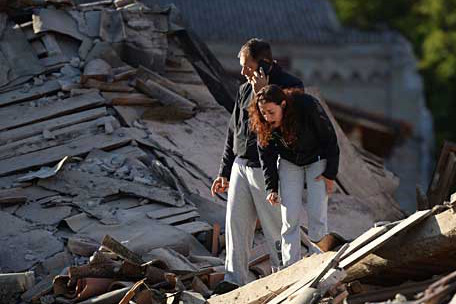
The 2016 earthquake that struck central Italy instantly turned some 600-year-old stone streets in the region into piles of rubble.     Source: Aster website

Two hundred and forty people died as a result of fierce tremors from the magnitude 6.2 quake in Italy. Suzuki found a toy still making noise in the debris and his heart sank as he pictured the child victim it had surely belonged to. Today, Suzuki is working to popularize the use of a paste that provides earthquake resistance, which he created through joint research with the University of Tokyo.

Unlike in Japan, where most residential buildings are made of wood, many buildings in Italy are constructed of brick and stone. The collapse of these masonry buildings was one of the reasons for such extensive quake damage.
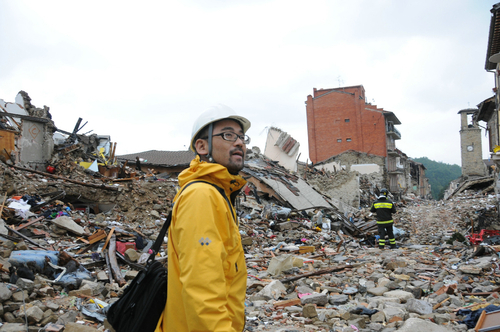

Mr. Suzuki, who has been juggling both his construction business and earthquake-resistant materials business, says he has decided to focus on the latter.      Source: Aster website      
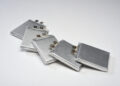
Paste-on resin products designed to boost earthquake resistance of buildings.     Source: Aster website

Suzuki made a powerful vow. “Even if I have to quit the family business, I will devote my life, body, and soul to the manufacture of this earthquake-resistant material.” He founded a new company, Aster, in Tokyo to develop his “Power Coating” business.

Simply applying Power Coating to exterior walls can make them more flexible and resistant to earthquakes. It is one tenth to one twentieth the cost of other high-performance resins, and takes no special skills to apply. According to Suzuki, it can make even 500-year-old buildings more resistant to earthquakes.
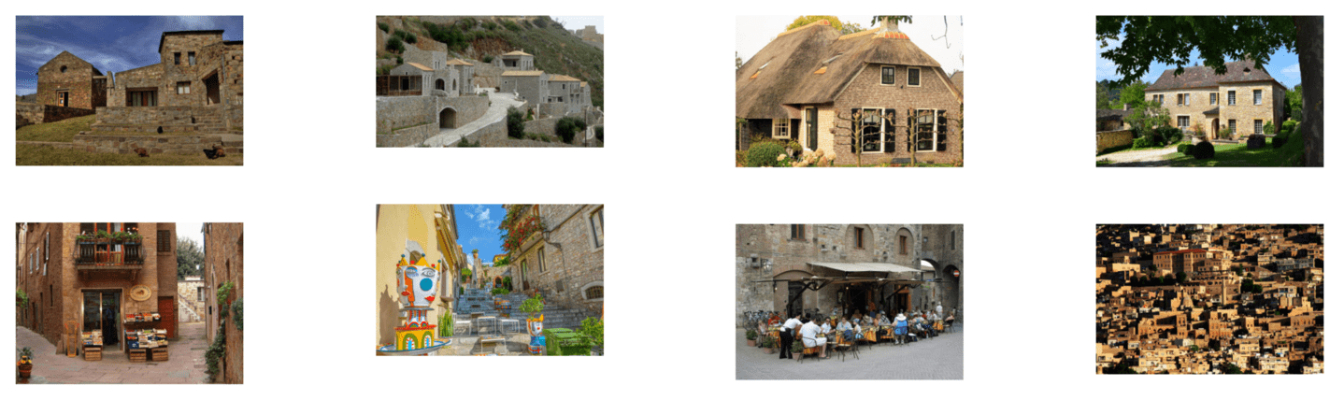
Brick and stone masonry buildings are prone to collapse in big earthquakes,   but are still being built in many countries today       Source: Aster website

Brick and stone buildings are still being constructed in many countries because they do not require advanced technology. Also, the raw materials are cheap and easy to obtain. The Japanese earthquake intensity scale tops out at 7, but, according to Aster, these buildings can collapse at an intensity of just 3 to 4. Some studies suggest that about 80 percent of the fatalities from earthquakes in the 100 years from 1915 to 2015 were caused by collapsed masonry buildings. It’s believed that about 60 percent of the world’s population lives in buildings that are vulnerable to earthquakes.

According to Suzuki, the company has received requests from all over the world for its earthquake-resistant materials. It’s looking at the Philippines, Nepal, and Colombia as possible major markets.

Another problem is that manufacturing cement, a main material for masonry buildings, produces carbon dioxide. Suzuki suggests Power Coating could be an alternative to cement. If successful, the project could potentially reduce annual carbon dioxide emissions worldwide by 2.8 billion tons.

On the other hand, Suzuki has experienced a lot of frustration in Japan. His company’s product is overlooked because earthquake-resistant construction technology advances so rapidly in Japan.

Yet, this February the company was selected as a Grand Prix winner out of 105 participating companies in a venture business model contest held by Nikkei Inc.

Suzuki told J-Stories, “I want to prove that it is possible to both do business and make products that are useful to society. Such things should become normal in the future. I hope that people will make this technology a success and continue to do business in a way that is useful to society.”

– This article was written as of May, 2022.

Translation and Editing by Tony McNicol

Top page photo by stockcentral/Envato

For inquires about this article, please contact us at jstories@pacificbridge.jp


Click here for the Japanese version of the article.

Tags: AtoneBrickBuildingEarthquakeInfrastructureItalysafety
Previous Post

Refugee-bound letters of hope left in limbo

Next Post

‘Edible’ homes not just a load of rubbish

Yui Sawada

Yui Sawada

Related Posts

Japanese membrane maker targets desalination costs as Europe’s drought deepens
Green Innovation

Japanese membrane maker targets desalination costs as Europe’s drought deepens

by JStories Editorial Team
08/05/2026
As AI inflates gadget prices, Japan’s Rapidus races to add advanced chip supply
Artificial Intelligence

As AI inflates gadget prices, Japan’s Rapidus races to add advanced chip supply

by JStories Editorial Team
07/31/2026
Japan’s regional spinouts need executives, not just inventions
Growth Support

Japan’s regional spinouts need executives, not just inventions

by Alexander Farrell
07/29/2026
One typhoon, four warning systems: Japanese AI stitches the disaster picture together
Disaster Tech

One typhoon, four warning systems: Japanese AI stitches the disaster picture together

by JStories Editorial Team
07/15/2026
日本の温泉郷に眠る地熱発電、AIデータセンターの電力源として新たな期待
Earth

Geothermal Power Taps a ‘Buried Treasure’ to Revitalize a Hot Spring Region

by Yoshiko Ohira
07/08/2026
Next Post

‘Edible’ homes not just a load of rubbish

Leave a Reply Cancel reply

Your email address will not be published. Required fields are marked *

Trending

Greening the desert with trash

by Yui Sawada
03/23/2023
0

KYOTO (JStories) - The sight of local Niger women throwing kitchen waste out into the African desert inspired a project...

The world’s first drug that helps patients ‘grow new teeth’

by Ruiko Kokubun
09/22/2023
0

KYOTO (JStories) - The conventional way to help people who have lost teeth due to tooth decay or aging has...

As deepfake scams spread, a Japanese institute builds detectors to catch them

As deepfake scams spread, a Japanese institute builds detectors to catch them

by JStories Editorial Team
07/03/2026
0

PROBLEM: Deepfake scams are spreading fast as cloned voices and fake video calls impersonating executives leads to U.S. losses heading...

日本の温泉郷に眠る地熱発電、AIデータセンターの電力源として新たな期待

Geothermal Power Taps a ‘Buried Treasure’ to Revitalize a Hot Spring Region

by Yoshiko Ohira
07/08/2026
0

JStories — Japan, one of the world's most volcanically active countries, has the world's third-largest geothermal resource potential, estimated at...

Antibodies that grow teeth in wild-type mice. Source: Toregem Biopharma

World’s first ‘teething drug’ clinical trial starts in September – Aiming for full commercialization by 2030

by Ruriko Kokubun
06/07/2024
0

Editor's Note: This article has been updated with new information. It was originally published on 09/22/2023. J-STORIES - The conventional...

JStories

©Articles and photos published on JStories are protected by Japanese copyright law and international treaties. They cannot be reproduced without the permission of the copyright holders

Explore JStories

  • Home
  • About JStories
  • JStories Newsletter Sign-Up
  • Company
  • Team
  • Contact
  • Privacy Policy
  • Partner Press Releases

Follow Us

Welcome Back!

Login to your account below

Forgotten Password?

Retrieve your password

Please enter your username or email address to reset your password.

Log In
No Result
View All Result
  • TOP STORIES
  • AI
    • Artificial Intelligence
    • Robotics
    • Mobility
    • FinTech
    • Quantum
  • Earth
    • AgriTech
    • Green Innovation
    • Disaster Tech
    • SpaceTech
    • Materials
  • Life Sciences
    • BioTech
    • HealthTech
    • MedTech
    • AgeTech
  • Society
    • Media
    • EdTech
    • Diversity
    • FemTech
    • Social Impact
  • Lifestyle
    • FoodTech
    • Beauty & Fashion
    • Wellbeing
    • Arts & Music
    • Anime
  • Travel
    • Adventure Travel
    • Luxury Travel
    • Wellness & Medical Tourism
    • Culture
  • Video
  • Deals
    • Venture Capital
    • M&A
    • Events
    • Growth Support
    • Legal & IP
  • Interview
  • Opinion

©Articles and photos published on JStories are protected by Japanese copyright law and international treaties. They cannot be reproduced without the permission of the copyright holders

Not enough quota to unlock this post
Unlock left : 0
Are you sure want to cancel subscription?