


• Login
Upgrade
JStories
  • 日本語
  • 繁体字中文
No Result
View All Result
  • Home
  • AI
    • Artificial Intelligence
    • Robotics
    • Mobility
    • FinTech
    • Quantum
  • Earth
    • AgriTech
    • Green Innovation
    • Disaster Tech
    • SpaceTech
    • Materials
  • Life Sciences
    • BioTech
    • HealthTech
    • MedTech
    • AgeTech
  • Society
    • Media
    • EdTech
    • Diversity
    • FemTech
    • Social Impact
  • Lifestyle
    • FoodTech
    • Beauty & Fashion
    • Wellbeing
    • Arts & Music
    • Anime
  • Travel
    • Adventure Travel
    • Luxury Travel
    • Wellness & Medical Tourism
    • Culture
  • Video
  • Deals
    • Venture Capital
    • M&A
    • Events
    • Pitch
    • Growth Support
    • Legal & IP
  • Interview
  • Opinion
en English ja 日本語 zh 繁体字中文
JStories
No Result
View All Result

‘Edible’ homes not just a load of rubbish

Yui Sawada by Yui Sawada
08/24/2022
in AgriTech, Earth, FoodTech, Green Innovation, Lifestyle, News
0
Home Earth AgriTech
Share on FacebookShare on Twitter

J-STORIES – It sounds like the story of “Hansel and Gretel,” but this is no fairy tale: A Japanese startup has concocted the base ingredients to create “edible” homes. Instead of gingerbread, however, Tokyo startup, Fabula, is making building materials from waste food such as onion skins, misshapen vegetables and coffee grounds.

The process was developed by Fabula CEO Kota Machida while he was a student at the University of Tokyo. Food waste such as nonstandard-size vegetables, which are often discarded for aesthetic reasons, coffee grounds, or leftovers from food processing are dried and turned into powder. Then, they are heat-compressed in a mold to produce a material they have also named “fabula.”

Fabula was launched in October 2021 by entrepreneurs Takuma Oishi (now CCO), Kota Machida (CEO) and Daiki Matsuda (CFO).      Source: Fabula

The company is working on “fabula” building materials that are strong enough to replace plastic and concrete. Any foodstuff can be used, but according to the company’s research, the champion is Chinese cabbage, which has just the right balance of sugar and fiber and is remarkably strong. A 5-millimeter-thick sheet can support a 30-kilogram load, and also has a “bend strength,” or the ability to resist failure when bent, that is four times greater than concrete.
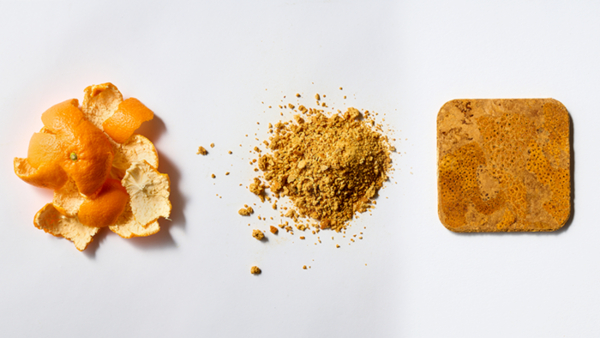
The waste food is dried for one to two days, pulverized, then formed in a high-pressure mold.      Source: Fabula

In addition to being simple to make, “fabula” can be created in different colors, textures and even aromas, depending on the kind of food waste, drying method and size of the powder grains used.

A variety of products can be made, including ornaments, furniture and tableware. For example, a coaster made from coffee grounds “fabula” is brown and smells of coffee. A purple sweet potato “fabula” plate is a beautiful purple color. Each item is unique and tells the “story” of its 100 percent natural source material.

Founded in October 2021, Fabula is already endeavoring to promote various products made from its self-styled material. From July 27 to 29 at an event with a sustainability theme named Green Work Hakuba, it showed flatpack stools made from Chinese cabbage and coffee grounds, as well as “fabula” coasters that visitors could pick up and smell.

On Aug. 1 the company set up a webshop to sell the coasters and also has plans to offer sheets of “fabula” measuring 30 square centimeters for home improvement projects.
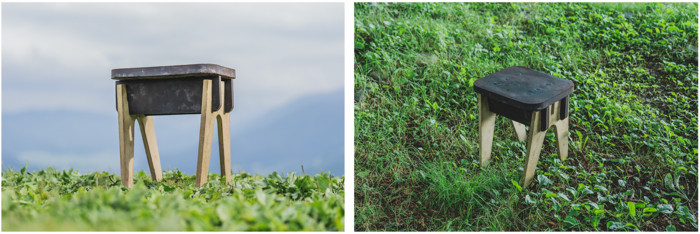
Flatpack stools made from Chinese cabbage and coffee grounds “fabula.”      Source: Fabula

Another idea for the future is to make products that utilize the unique origin of the source material. For example, a coffee shop could use “fabula” tables and chairs made from its own coffee grounds.

Fabula COO Takuma Oishi told J-Stories that the company is now looking at ways to manufacture three-dimensional objects out of a single piece of “fabula” that “tap into the colors and aromas of the raw materials.”

He also shared an even more mouthwatering dream for the “edible” material.  “For example, temporary housing in evacuation centers used during natural disasters could be built with this material, and the houses could be used for food during emergencies.”

Translation and Editing by Tony McNicol

Top page photo by anontae2522 / Envato

For inquires about this article, please contact us at [email protected]


Click here for the Japanese version of the article.



Tags: RecyclingSustainable SocietyWealth
Previous Post

Paste-on resin provides earthquake resistance

Next Post

New spin on old wool

Yui Sawada

Yui Sawada

Related Posts

日本のスタートアップはなぜルクセンブルクを目指すのか
Growth Support

Why Japanese Startups Are Setting Their Sights on Luxembourg

by JStories Editorial Team
10/20/2026
脱炭素、何から始める? CO2排出量をオンラインで「見える化」
Green Innovation

‘Visualizing’ Greenhouse Gas Emissions to Support Corporate Climate Efforts

by Ayaka Sagasaki
09/24/2026
ディープテックとAI、地球課題に挑む新興10社の「実装力」
Artificial Intelligence

Deep Tech and AI: 10 Startups Tackling Global Challenges With Market Execution

by JStories Editorial Team
09/15/2026
Japan looks to Latin America for the minerals powering AI — and the IDB offers to be the bridge
Deals

Japan looks to Latin America for the minerals powering AI — and the IDB offers to be the bridge

by Toshi Maeda
08/29/2026
What matters is not what you build, but who you build it with
Events

What matters is not what you build, but who you build it with

by Ikeda Masaru
08/28/2026
Next Post

New spin on old wool

Leave a Reply Cancel reply

Your email address will not be published. Required fields are marked *

Trending

Greening the desert with trash

by Yui Sawada
03/23/2023
0

KYOTO (JStories) - The sight of local Niger women throwing kitchen waste out into the African desert inspired a project...

ディープテックとAI、地球課題に挑む新興10社の「実装力」

Deep Tech and AI: 10 Startups Tackling Global Challenges With Market Execution

by JStories Editorial Team
09/15/2026
0

TOKYO — Ten prominent startups presented their pitches at the "SusHi Tech Global" media conference supported by the Tokyo Metropolitan...

Organic power packs

by Ayaka Sagasaki
12/29/2023
0

J-STORIES ー While rechargeable batteries today rely on rare metals and have a relatively short lifespan, a Japanese company has...

日本のスタートアップはなぜルクセンブルクを目指すのか

Why Japanese Startups Are Setting Their Sights on Luxembourg

by JStories Editorial Team
10/20/2026
0

For Japanese startups with strong technology, turning that technology into a business in overseas markets is a major challenge. Entering...

Hands-on disaster and emergency preparedness experience in Tokyo

by Tokyo Updates
08/01/2025
0

Disaster and emergency preparedness is an integral part of any resilient community, especially a metropolis with over 14 million residents...

JStories

©Articles and photos published on JStories are protected by Japanese copyright law and international treaties. They cannot be reproduced without the permission of the copyright holders

Explore JStories

  • Home
  • About JStories
  • JStories Newsletter Sign-Up
  • Company
  • Team
  • Contact
  • Privacy Policy
  • Partner Press Releases

Follow Us

Welcome Back!

Login to your account below

Forgotten Password?

Retrieve your password

Please enter your username or email address to reset your password.

Log In
No Result
View All Result
  • TOP STORIES
  • AI
    • Artificial Intelligence
    • Robotics
    • Mobility
    • FinTech
    • Quantum
  • Earth
    • AgriTech
    • Green Innovation
    • Disaster Tech
    • SpaceTech
    • Materials
  • Life Sciences
    • BioTech
    • HealthTech
    • MedTech
    • AgeTech
  • Society
    • Media
    • EdTech
    • Diversity
    • FemTech
    • Social Impact
  • Lifestyle
    • FoodTech
    • Beauty & Fashion
    • Wellbeing
    • Arts & Music
    • Anime
  • Travel
    • Adventure Travel
    • Luxury Travel
    • Wellness & Medical Tourism
    • Culture
  • Video
  • Deals
    • Venture Capital
    • M&A
    • Events
    • Growth Support
    • Legal & IP
  • Interview
  • Opinion

©Articles and photos published on JStories are protected by Japanese copyright law and international treaties. They cannot be reproduced without the permission of the copyright holders

Not enough quota to unlock this post
Unlock left : 0
Are you sure want to cancel subscription?