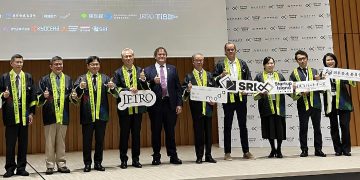



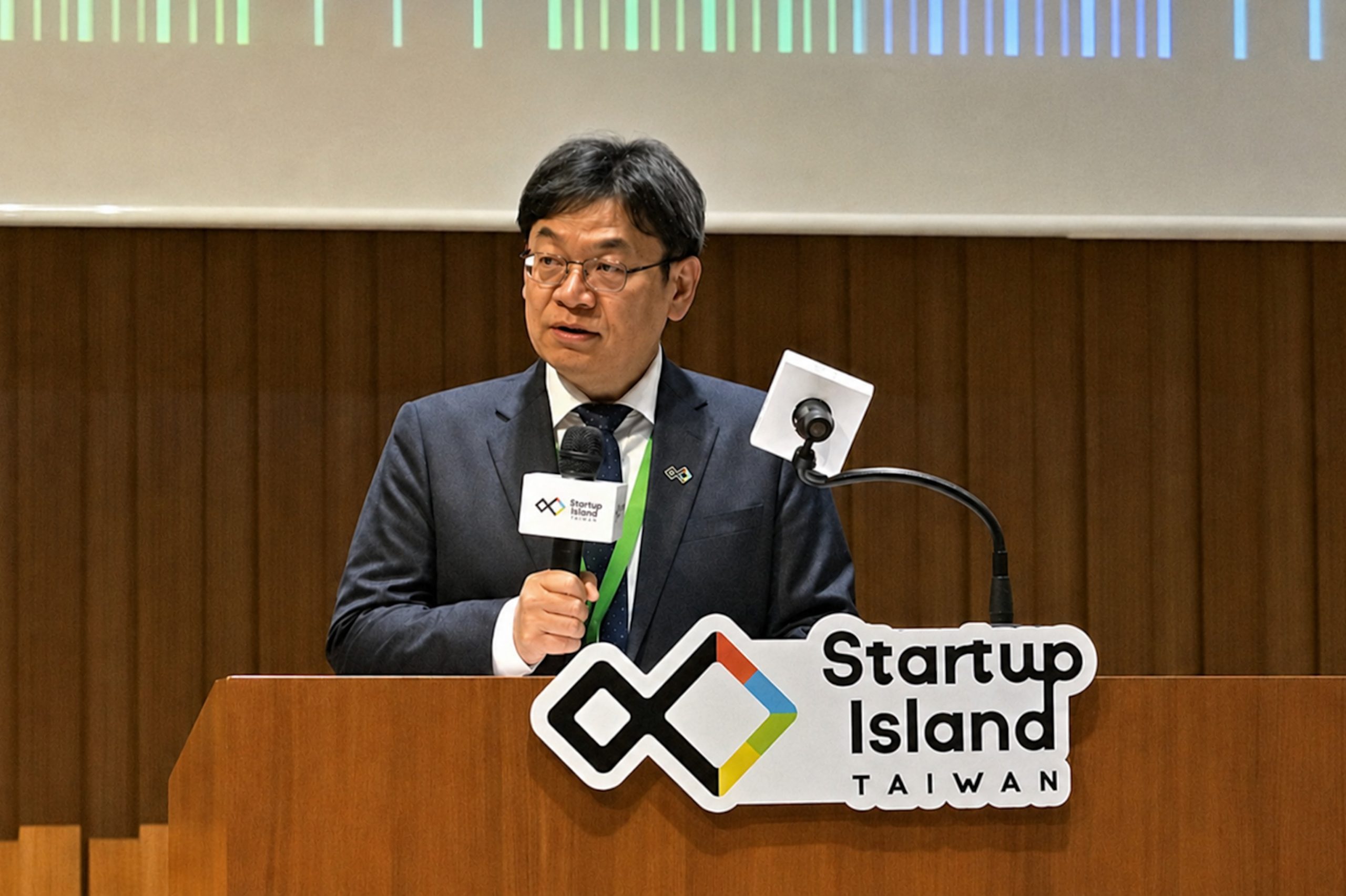
TOKYO – Of the 46 Taiwanese startups that gathered in Tokyo earlier this month, more than 30 were already here — “having established a presence in Japan, received investment or subsidies, or begun collaborating with Japanese companies,” as Yeh Chun-Hsien, minister of Taiwan’s National Development Council, put it from the stage on the summit’s opening morning. The number doubled as a verdict on the event itself: the introductions are largely over.
The Japan-Taiwan Innovation Summit opened in Osaka on Aug. 17 before moving to its main Tokyo sessions, held Aug. 18 and 19 at the Tokyo Chamber of Commerce and Industry in Japan’s business center of Marunouchi and at Tokyo Innovation Base in Yurakucho. The summit is the annual showcase of Startup Island TAIWAN, the national brand the NDC created to take the island’s startups global. It began in 2022 as a matchmaking venue.
In its fifth edition, under the theme “From Startups to Strategy,” the agenda ran instead to economic security, semiconductor supply chains and stock-exchange listings — security as the foundation, and shared Taiwan-Japan growth as what gets built on top of it.
What had been a bilateral framework between Taiwan and Japan now included the United States, and the discussions over strategic industries — AI, semiconductors, biotech and trusted digital infrastructure — were conducted with geopolitics firmly in mind.
The conversation moves up a level
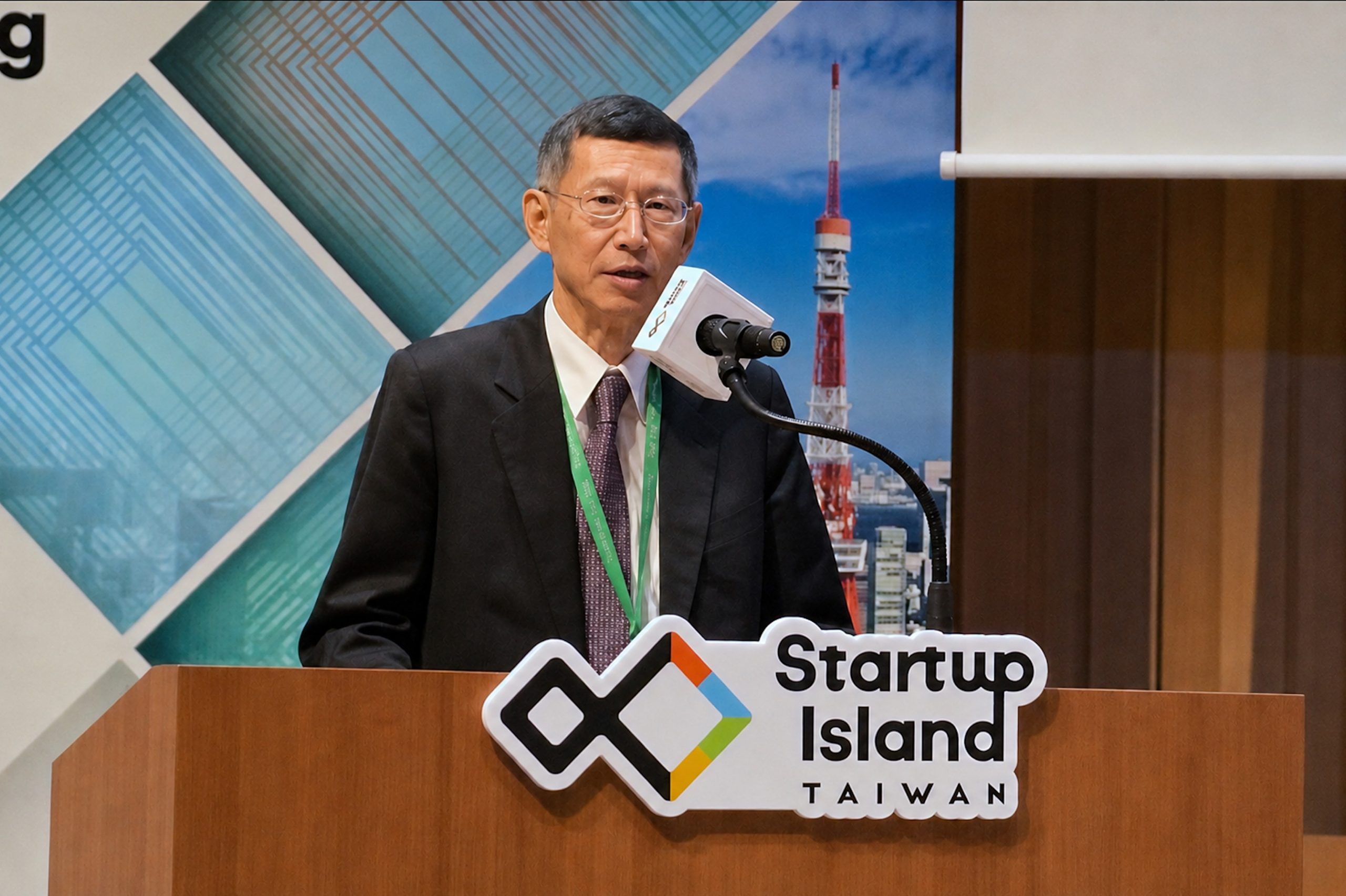
The discussions on Aug. 18 went beyond introducing startups and into economic security. John Speaks, regional technology officer for East Asia at the U.S. Department of State, gave a keynote introducing Pax Silica, an American framework that treats everything from AI and semiconductors to critical minerals and logistics as a single connected chain. Japan is a founding signatory, and Taiwan endorsed its principles in a joint U.S.-Taiwan statement in January.
Hsiao Chen-Jung, director general of the NDC’s Department of Industrial Development, said supply chains once built around a cost-first model are being rebuilt around security — and argued that Japan and Taiwan are not competitors.
“In semiconductors, Taiwan handles manufacturing while Japan supplies the materials and equipment,” Hsiao said. “In quantum technology, Japan is ahead and Taiwan answers with mass production.”
Hsiao’s keynote made the sequence explicit. The 2021-2024 agenda, he argued, was defense: protecting supply chains and critical technology against geopolitical risk. The agenda from 2025 onward is offense — AI-driven expansion and the joint creation of new global markets. His formula for the division of labor was compact: Taiwan innovates, Japan validates, and the United States scales.
On Aug. 19, executives from the Taiwan Stock Exchange and the Taiwan Venture Capital Association (TVCA) took the stage one after another and posed a direct question to Japanese startups: why not list in Taiwan? At previous summits, talk of capital meant mergers and acquisitions. This year the theme was going public.
While the policy and capital discussions moved up a level, the most concrete picture of the Japanese market came from the startup pitches — 35 companies, three minutes each. From those, JStories picked eight for a closer look at how they are actually engaging it. Two of them sat down with JStories after their pitches; the rest tell their stories from the stage.
Phasetrum: Everyone needs their own Starlink
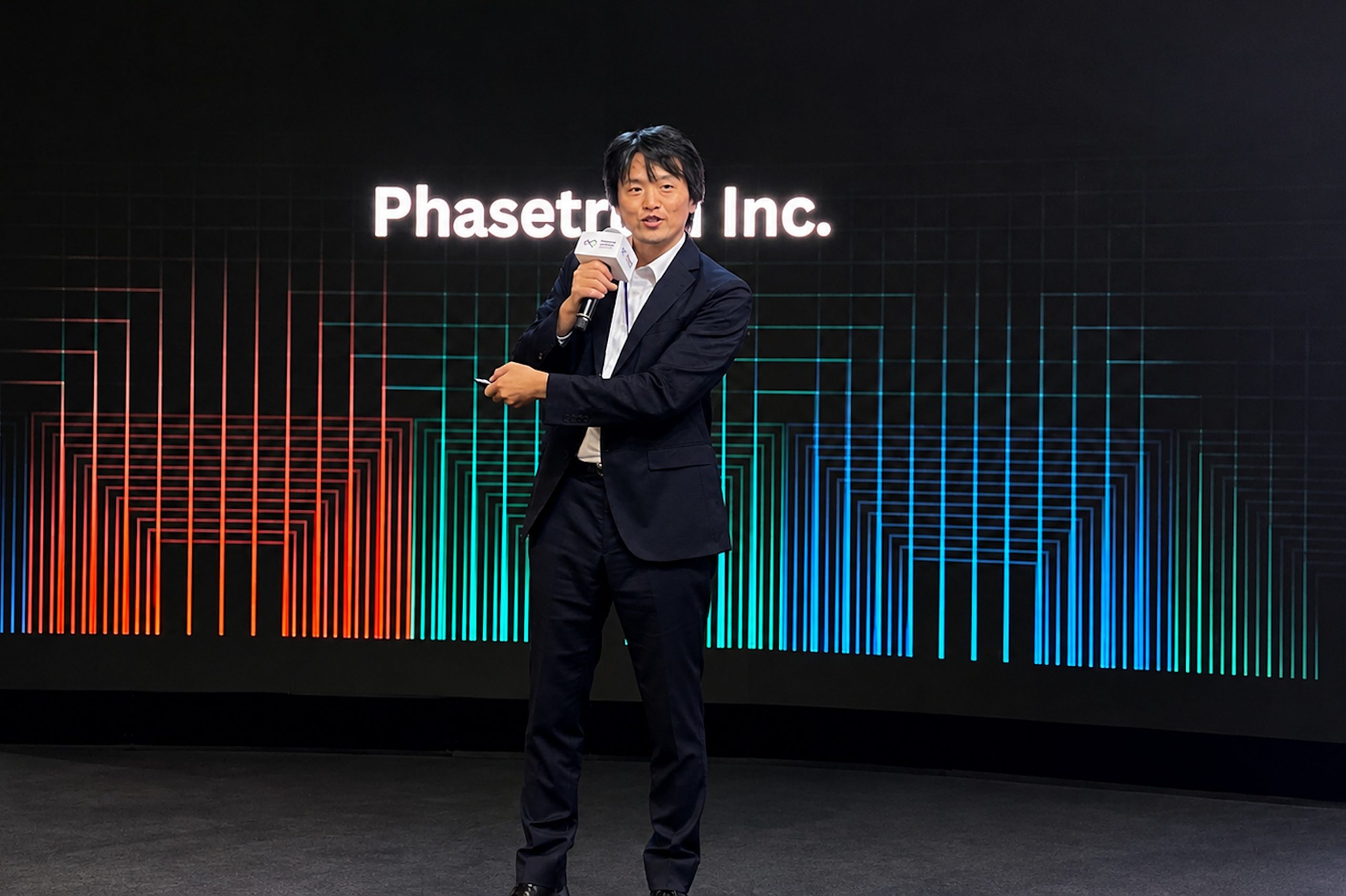
Phasetrum was the only company to appear on three separate stages during the summit. CEO Wayne Tsai spoke at the startup showcase on the morning of Aug. 18; later that day Hsiao, the NDC director general, named the company first among Taiwan’s success stories in his keynote; and it pitched again on Aug. 19.
Founded in Hsinchu in 2023 as a spin-out from the Department of Electrical and Computer Engineering at National Yang Ming Chiao Tung University, the fabless company designs RF ICs for phased arrays used in satellite communications. Its paid-in capital is NT$10.97 million (about US$350,000). Three years old, with a small headcount. Wayne Tsai told JStories: “Starlink is doing well. But we need more Starlinks. Everyone needs to become Starlink. Every country needs its own Starlink.”
Starlink signed up 10 million subscribers in five years. Operators around the world have watched that success and tried to build the same thing, without getting there. A phased-array antenna — which tracks a moving satellite electronically, without the physical steering a parabolic dish requires — runs roughly 1,000 elements, and calibrating the beam direction of each one takes an enormous amount of time. Yields stay at 5 to 10 percent.
Drawing on patents granted in the United States and Taiwan, Phasetrum combined “AIP,” which packages the antenna together with the chip, and a “Phase Tuner” that adjusts the phase difference stage by stage. The number of variables in beamforming drops from 1,024 to 10, and calibration falls to 20 minutes. Power consumption is halved, and the link budget — the measure of a communication link’s performance margin — gains 30 decibels of headroom. The same technology can serve direct-to-device satellite links, drone-detection radar, and the integrated sensing and communication envisioned for 6G.
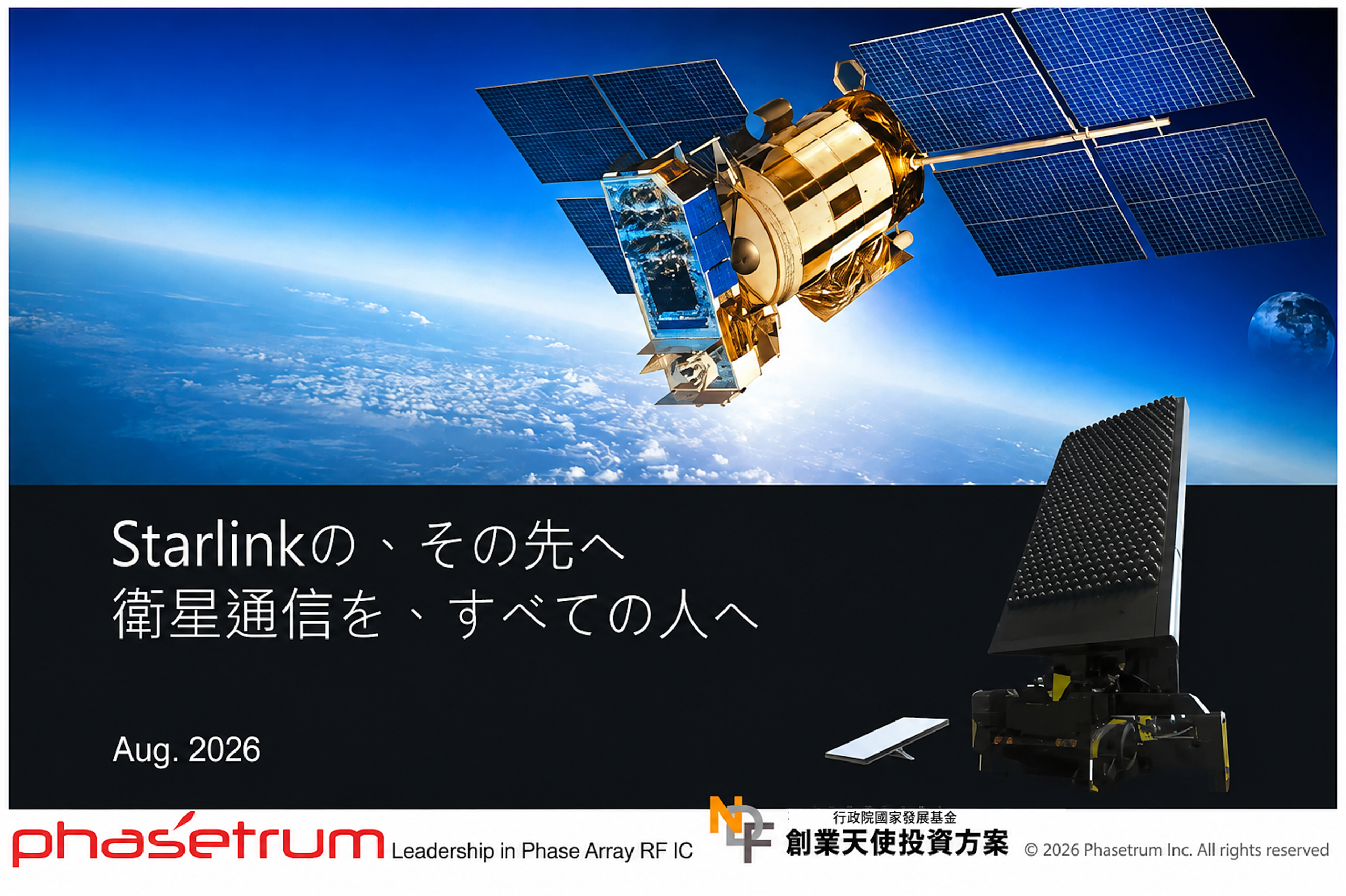
Tsai also spoke about how the company approaches Japan, noting the Japanese government’s selection of a satellite constellation project run as a joint venture between Rakuten and AST SpaceMobile.
“Japan and the United States have far deeper knowledge when it comes to designing the system as a whole,” Tsai said. “But there is still room for Taiwanese industry to contribute. We can design the chips, and we know how to design chips that can actually be mass-produced.”
His evidence was the consumer electronics experience Taiwan has accumulated: chips for mobile phones, for televisions, for monitors. All are made by the millions each year, and all must deliver the same performance across widely varying conditions.
“Satellite communications will not be a niche market for the next 40 years. It will become a commodity market,” Tsai said. “When that happens, what matters is volume, yield and production efficiency. That is the experience we have.”
The company sells more than chips, offering a turnkey package that includes antenna integration and calibration — the point being to lower the barrier to entry for its customers. In its pitch, Phasetrum said it is in talks with satellite operators including Japan’s SKY Perfect JSAT, is targeting US$300 million in revenue by 2030, and is currently raising US$2.5 million.
In March 2024, the company exhibited at Satellite 2024, the satellite industry trade show in Washington, alongside Taiwan’s Ministry of Economic Affairs, the Taiwan Space Agency (TASA) and the Industrial Technology Research Institute (ITRI). That June it presented its technology at CONSEO, a space-and-economy forum organized by Japan’s space agency JAXA. This summit was not its first contact with Japan.
A three-year-old company has opened conversations with several Japanese satellite operators. Not as a finished product, but as a component inside someone else’s.
LE Biomedical: Choosing not to start in Tokyo
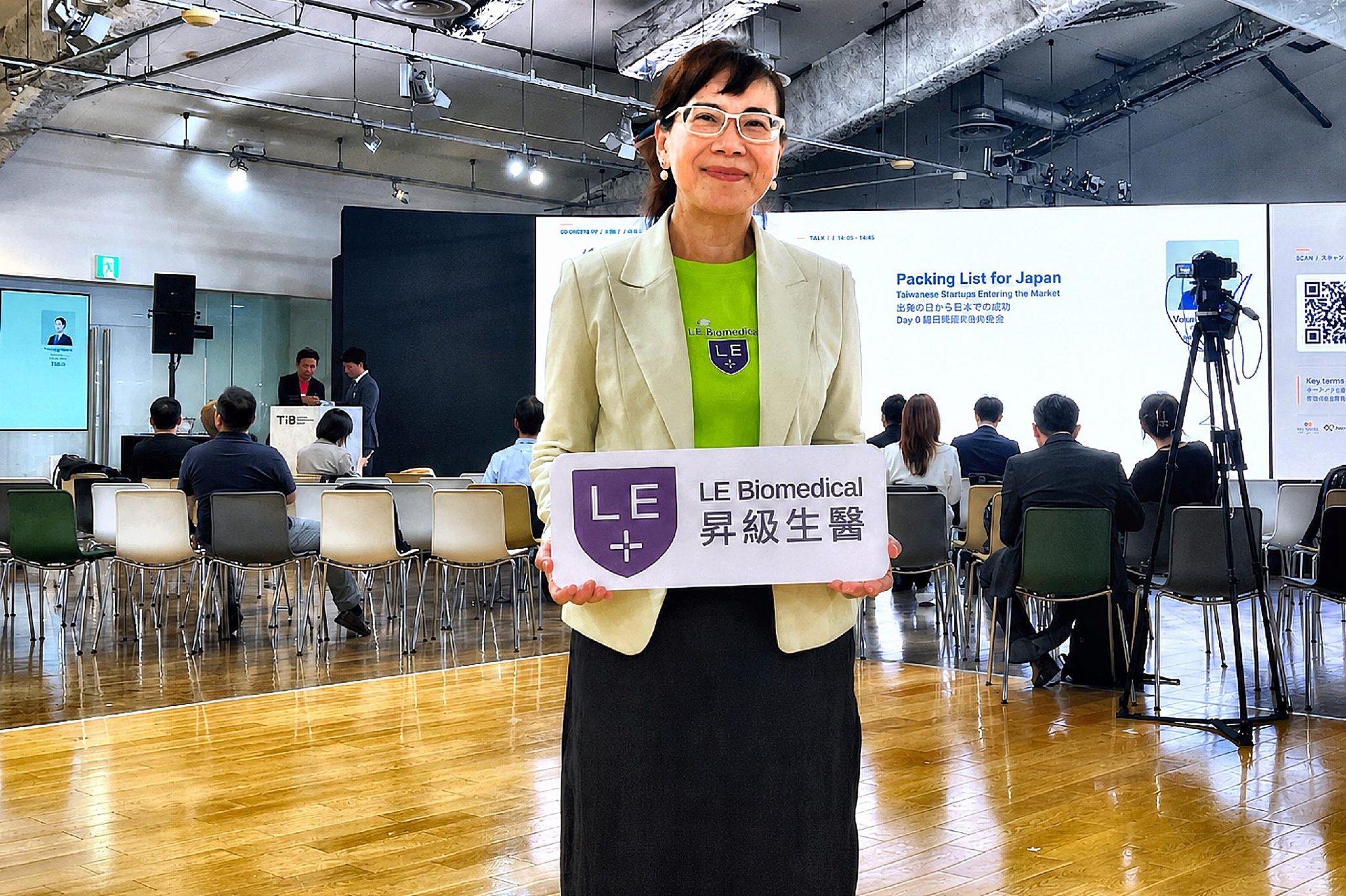
LE Biomedical, founded in 2019, develops PharmaDemand AI, a demand-forecasting tool for pharmacies, along with functional contact lenses and functional foods. It exhibited at SusHi Tech Tokyo this year as a Startup Island TAIWAN selection, and took part in the Taiwan Expo held in Shinjuku in July. In its pitch, the company said it is co-developing contact lenses with the medical arm of Largan Precision — the Taiwanese optics maker known for supplying iPhone lenses — and that it works with 700 clinics and 1,200 pharmacies in Taiwan.
What stands out is that the company’s push into Japan did not begin in Tokyo. It presented its plans in Kobe and started work on a Japan-Taiwan AI lab in Kumamoto.
After the pitch, JStories spoke with Sylvia Lien, founder and president, joined by Sean Huang, co-founder and CEO.
“Our goal is not to replace pharmacists. It is to support their inventory decisions and cut the time they have been spending on managing stock,” Lien said. “Independent pharmacies that cannot attract younger pharmacists exist in Taiwan and in Japan alike. This is a problem outside Tokyo as much as inside it.”
The Japan-Taiwan AI lab in Kumamoto, begun at the end of 2024, remains at the planning stage and is not yet operating. The partner is a local semiconductor equipment maker. The conversation started with what TSMC has done to towns in Taiwan.
“There was nothing in Zhubei, in Hsinchu County. Then TSMC built a plant there, and a town grew around it. We think the same thing will happen in Kumamoto. When we explained that, they — the equipment maker — understood,” Lien said.
So why does a biomedical company partner with a semiconductor equipment maker? What connected the two, Lien explained, was AI.
“Our biomedical work cannot move forward without AI. Semiconductors, meanwhile, have become a manufacturing service industry for AI,” said Lien. “Semiconductors supply the most advanced GPUs, and the computing and the models they enable support every application, biomedical among them. That is why AI became the point of contact between us and Kumamoto.”
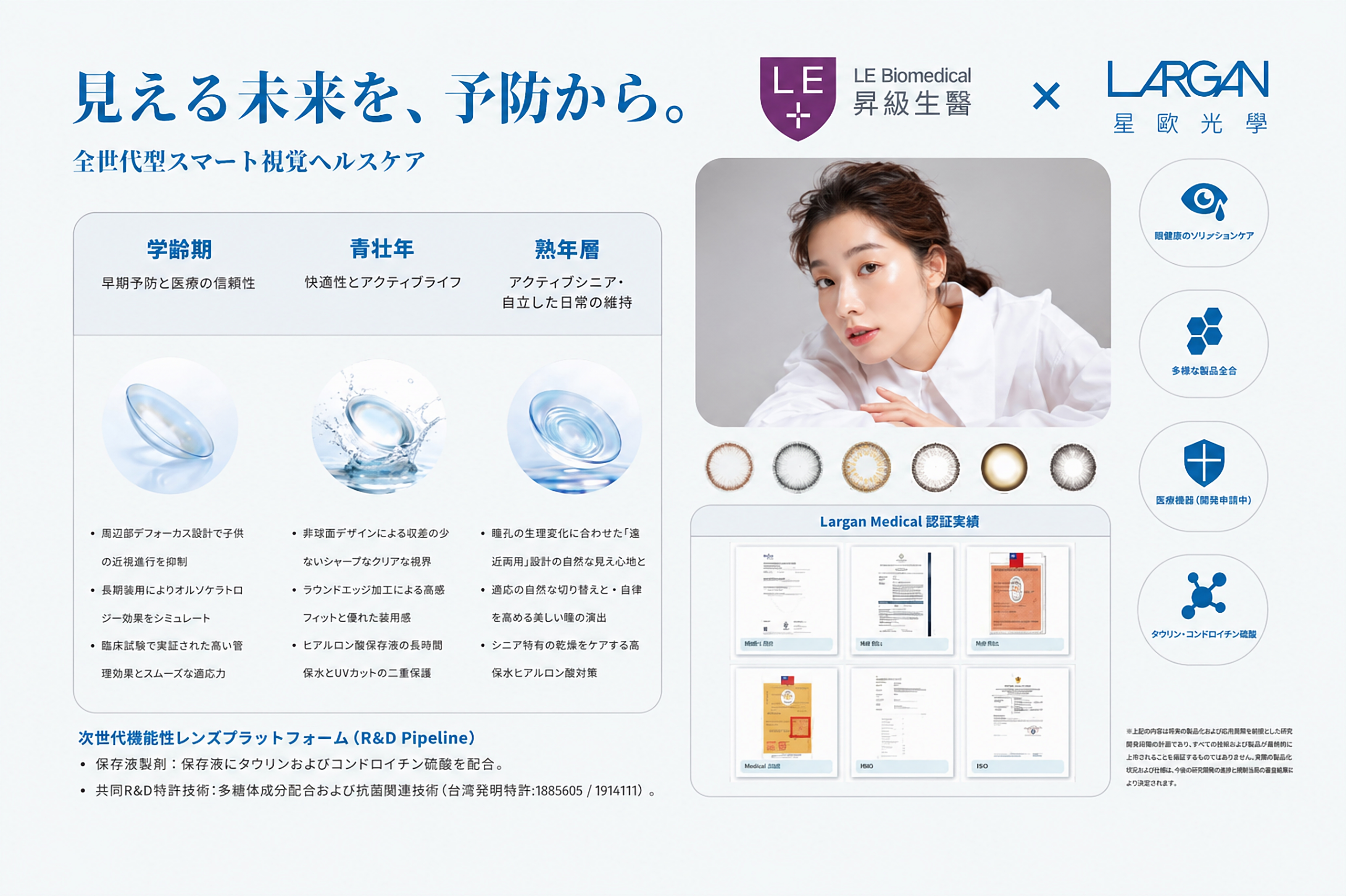
A large-language-model specialist from Academia Sinica, Taiwan’s national research academy, has also joined the effort. The equipment maker they partnered with understood that LE Biomedical wanted to enter regional Japan and not only Tokyo, and decided to come to the table. Perhaps something could be built that connects Japan and Taiwan — at the end of 2024, that was roughly the extent of the agreement. So why not Tokyo? Huang was careful to add that the company is “not anti-Tokyo.”
“Every resource is concentrated in Tokyo. But we are a foreign startup. We want to start from where the demand is, not from a place on the map. First find the problem, then find a partner you can trust, then run a proof of concept, and only then scale. We want to keep that order,” Lien noted.
LE Biomedical has taken part in Startup Island TAIWAN’s programs for three years, traveling through Kansai, Kobe, Fukuoka and Kumamoto. The warmth of the welcome from every local government outside Tokyo, Lien said, left the company confused for a time. The answer it arrived at was to decide by problem rather than by geography.
“We start from the project. We lock down the work first, and then commit time and money. Not the other way around. We do not open an office first and let the costs start running. We think that is the smarter way,” she said.
Asked about the pace of doing business in Japan, Lien shared what a Taiwanese friend working there had told her.
“If the speed on the Taiwanese side is one, she says the speed on the Japanese side is five. So someone has to stand in between and manage it. That is simply a fact, and it will not change,” Lien added. “The pace and the culture of business in Japan are completely different from Taiwan. It takes longer, quality matters more, and personal trust matters more. So we decided not to set goals we cannot meet. What we have learned over the past two or three years is to enjoy the waiting.”
Startups already in business, startups aiming to enter
From here, a look at several companies at different stages of entry into the Japanese market:
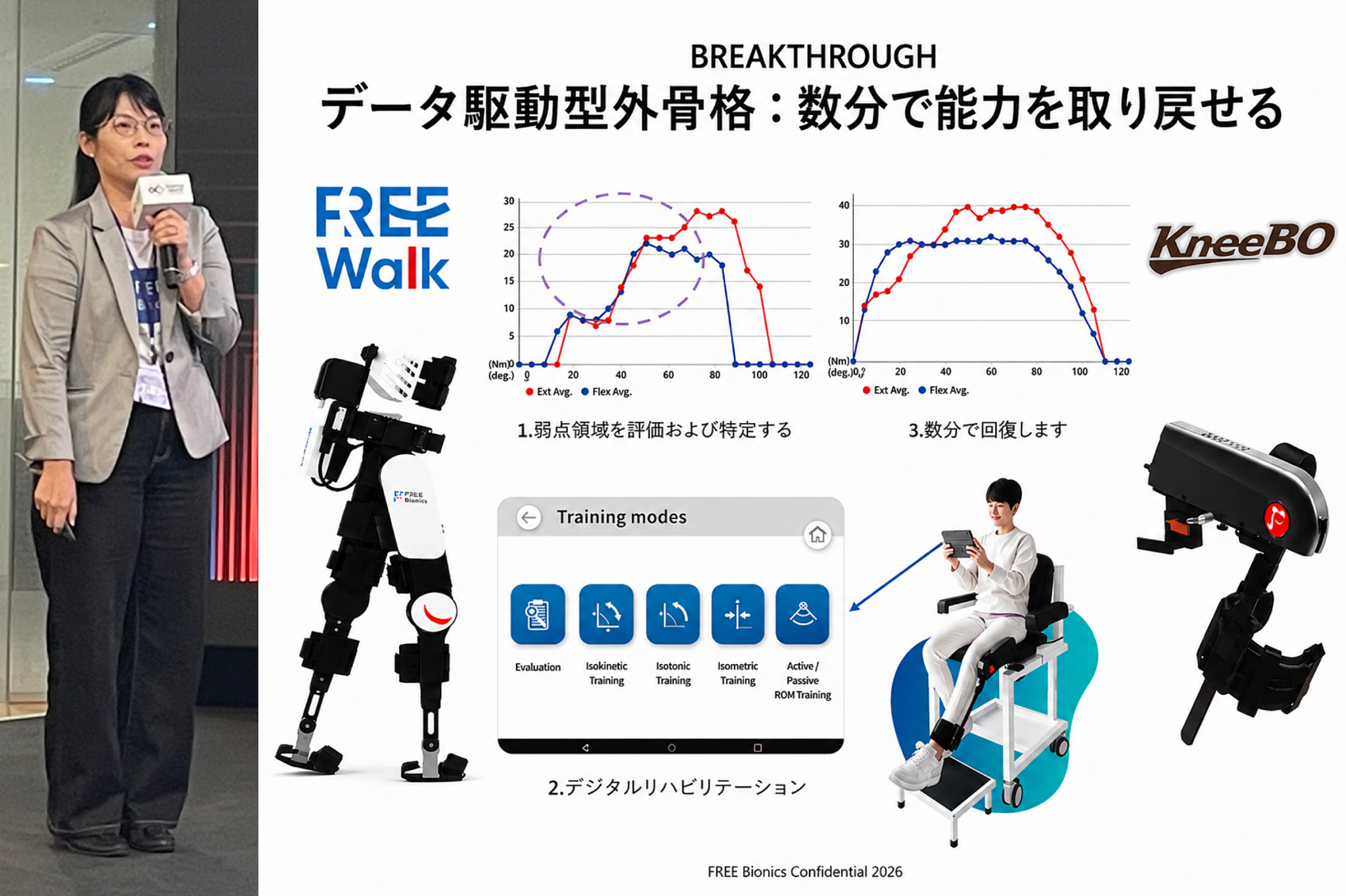
FREE Bionics makes FREE Walk, a lower-limb exoskeleton robot. Founded in 2016 by robotics researchers from Taiwan’s Industrial Technology Research Institute (ITRI) together with physiotherapists, it is backed by Wistron, one of Taiwan’s major contract electronics manufacturers.
What makes the company unique is that the first overseas market it chose was Japan rather than Taiwan’s neighbors — and that it entered not as a “medical device” but as a “welfare device.” A medical device must clear pharmaceutical review; a welfare device can reach the field without that step. Because the company adopted a control method that requires no sensors, the product can also be rented for home use, opening a path outside the hospital. It is now deployed in Taiwan, Japan, China and Europe, and the reputation it built in Japan led, by way of a Czech distributor, into the European market.
***
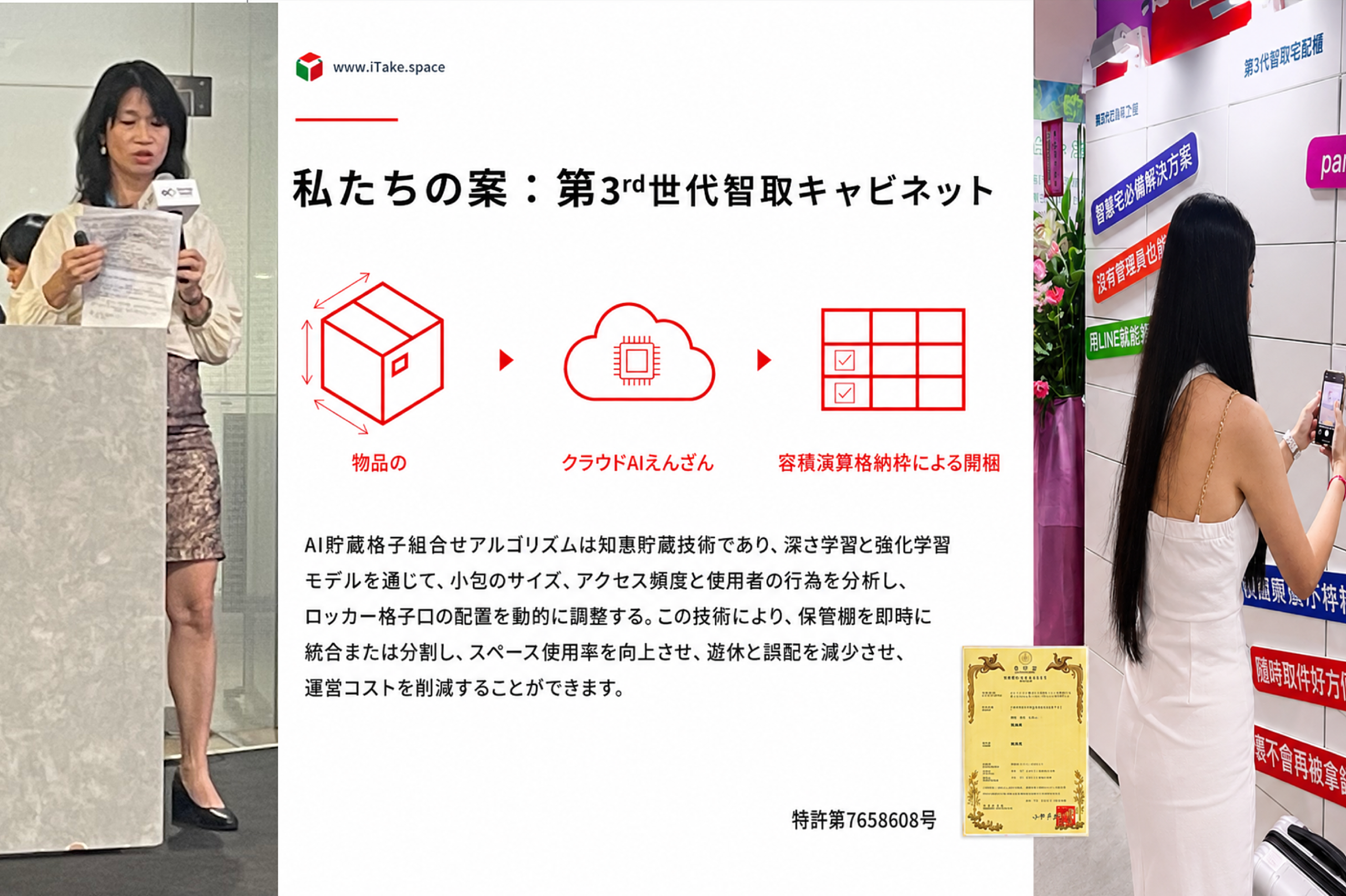
iTake, founded in Taipei in 2021, makes smart lockers. What sets it apart for the Japanese market is that it holds two Japanese patents. The company works on three problems: labor shortages, failed parcel deliveries that require a second attempt, and keeping operations running during a disaster. To solve them, its lineup includes lockers whose compartments can be reconfigured vertically to match parcel size, refrigerated and frozen lockers with double doors, and IoT lockers with backup power.
These smart lockers can connect through open APIs to payment, logistics and e-commerce systems including LINE and Suica. In Taiwan, iTake is an approved supplier of unmanned smart lockers to TSMC and has won Taipei City’s document-handover system contract four years running. It is already working with a Tokyo property operator to bring smart management to parcel lockers in apartment buildings.
***
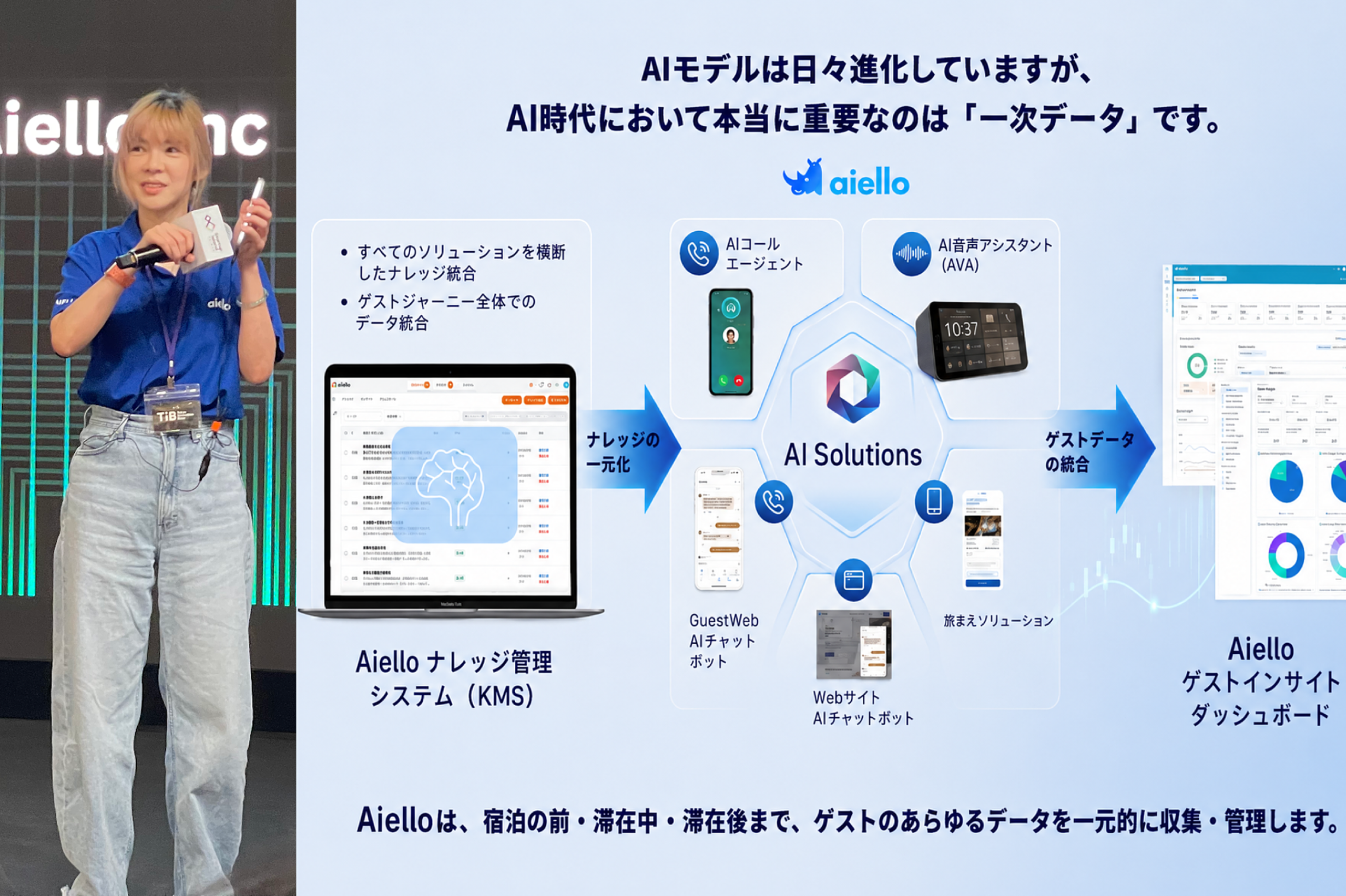
Aiello makes voice AI for hotel guest rooms. Its co-founder came out of Google’s smart speaker team, and the company raised US$5.8 million in a round led by JAFCO Asia and Wistron. In Japan it works with X1Studio and is deployed across Seibu’s Prince Smart Inn properties, where hotels report that time spent handling front-desk phone calls has fallen by about 30 percent. This is a company already selling.
***
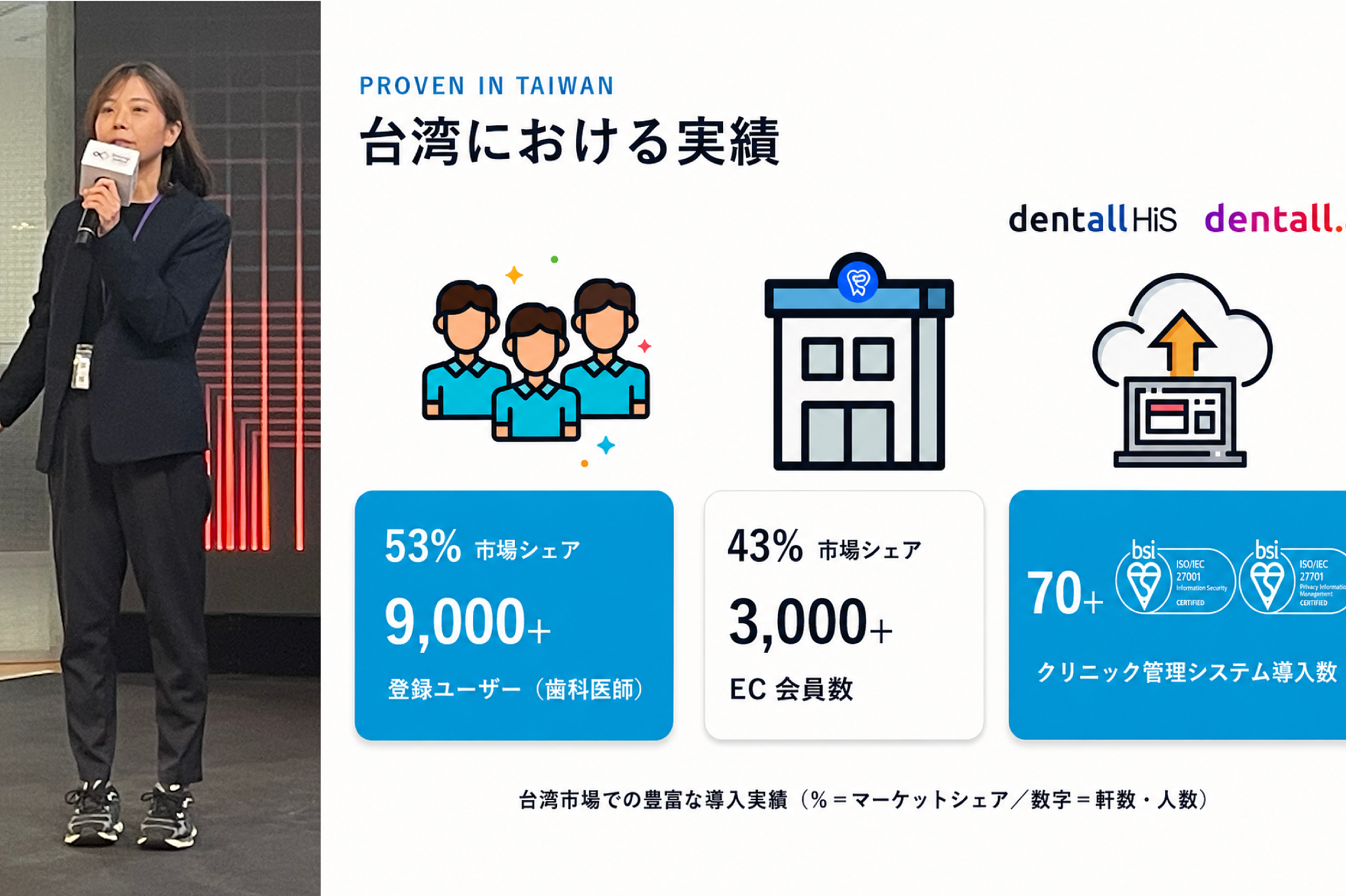
Dentall provides a platform for dental clinics. Its pitch covered generative AI that explains treatment to patients, analysis of existing clinical data, round-the-clock support and diagnostic assistance. The CEO is a dentist and builds the product alongside the development team. A Japanese entity is already established, with an office in Higashi-Azabu, Tokyo, according to the company’s website. On stage, Dentall said it is looking for proof-of-concept partners in Japan.
***
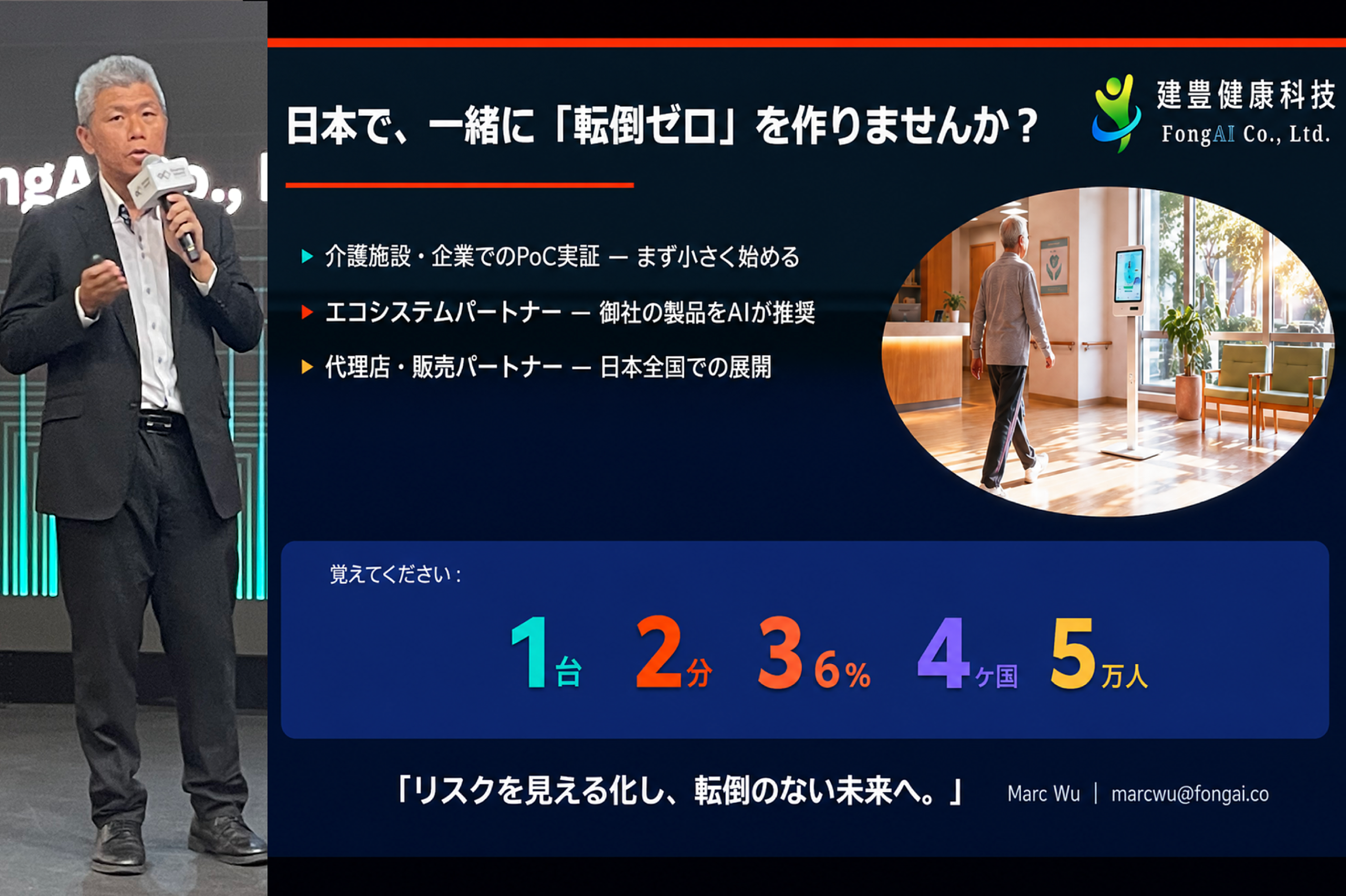
FongAI works on falls among older adults. Using the internationally recognized SPPB (Short Physical Performance Battery) standard recommended by the World Health Organization, it runs a two-minute assessment on a single iPhone. Its AI then draws an individualized improvement plan from more than 1,600 possible combinations. In a six-month trial at a day care center in Taipei, the company says falls fell by 36 percent. It operates in four countries — Taiwan, Japan, Singapore and the United States — and says it has built a database of more than 50,000 people, reaching 95 percent accuracy. Japanese-language support is complete; what remains is finding a partner.
***
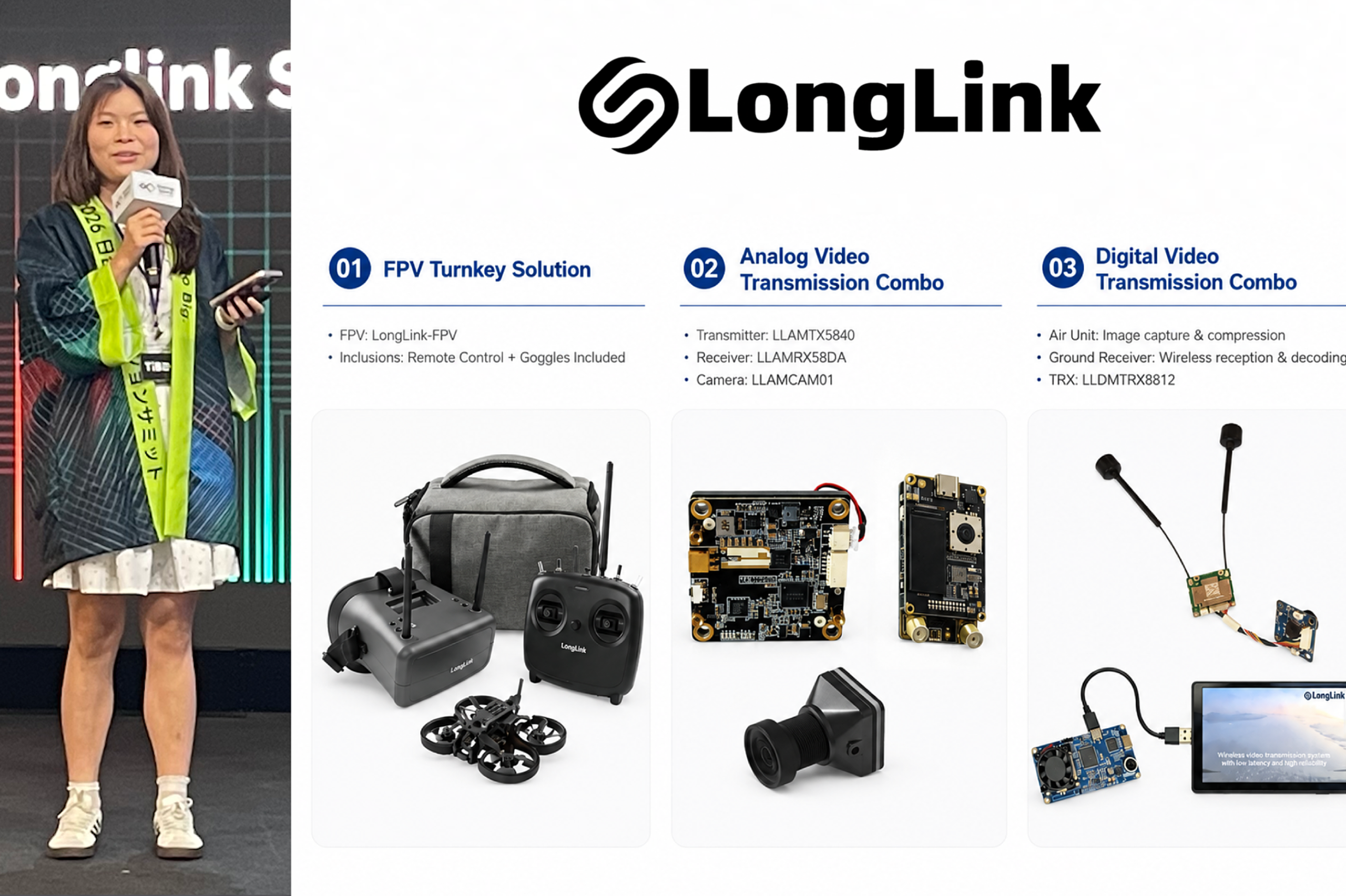
LongLink Solutions is a startup building communication links for military drones, and it makes a point of manufacturing them on a supply chain that excludes Chinese components. Noting that DJI holds more than 70 percent of Japan’s drone market, and that Japan’s Ministry of Defense is seeking communications that stay connected in harsh electromagnetic environments, the company argued that Japan needs a new and trustworthy option. It has already begun operating here through a partner, with product deliveries and customer validation under way.
***
Crescendo Lab: What four years taught them
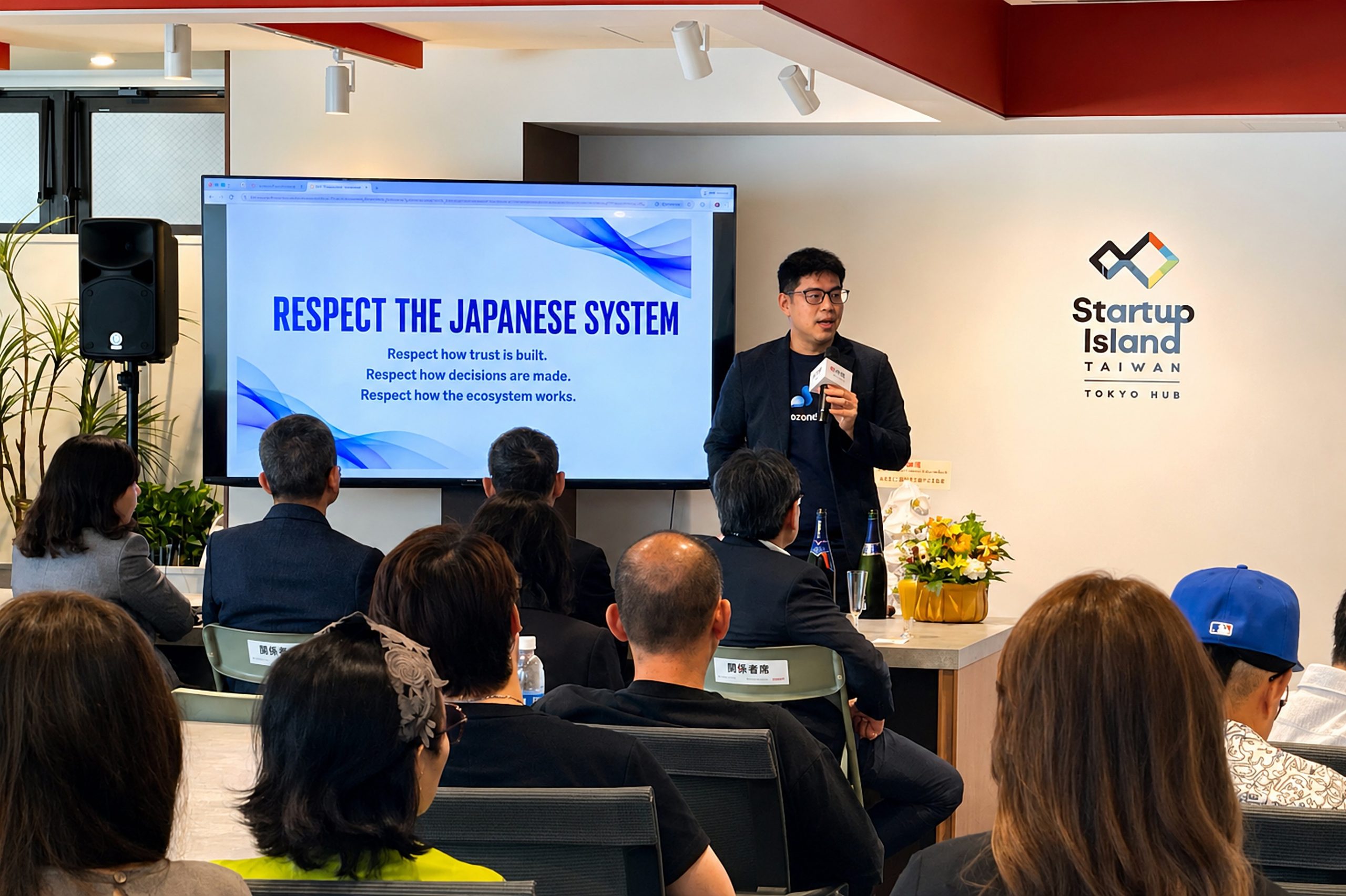
On the morning of Aug. 20, the day after the summit closed, an opening ceremony was held for the expanded and relocated Startup Island TAIWAN Tokyo Hub in Hamamatsucho. The old space had become too small; the new one runs to more than 330 square meters. According to Yeh, the NDC minister, 20 Taiwanese startups have established a base in Japan through the hub, and six have received support from Tokyo Metropolitan Government programs.
At that ceremony, only one speaker talked about the practical work: a startup four years into its Japanese expansion.
Jin Hsueh is co-founder and CEO of Crescendo Lab, which provides marketing support built around LINE official accounts. The Japanese office has grown from one person to ten. The lessons he shared from the stage came down to three.
The first is time. The company’s first contract took a year and a half — six months to understand the scope of the project, six months to align the stakeholders inside the client, and six more before anything actually moved.
“In Taiwan, plenty of founders would give up somewhere in the middle,” Hsueh said. “But in Japan you have to show that you are serious. The other side is measuring exactly how serious you are.”
The second is outsourcing the search for product-market fit itself to a local salesperson, simply because you do not speak Japanese. He also offered a rough sense of the early-adopter population — around 1 percent in markets outside Japan, but only 0.2 to 0.5 percent here.
“I do not speak a word of Japanese. Even so, I bring an interpreter and talk to customers myself,” Hsueh said. “What matters is whether you can find someone who genuinely wants to try something new and who can also bring their own organization along.”
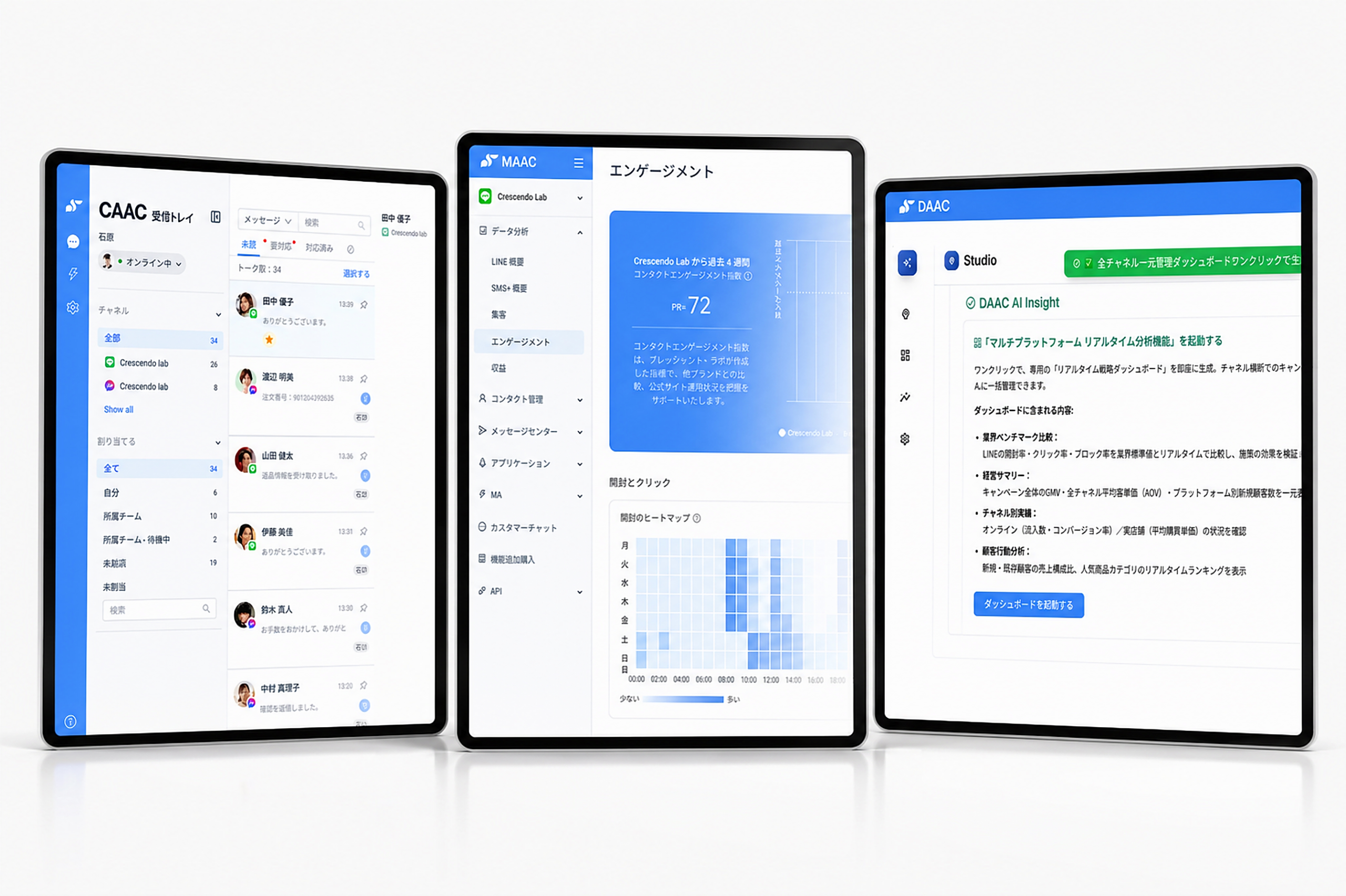
The third is the intermediary structure particular to Japan. Crescendo Lab has attended LINE Yahoo’s events every year since 2023, building the relationship, and only this year did customer referrals start to arrive.
“Japanese people are polite, so they will not give you honest feedback. That leaves you no choice but to rely on a third party.” (Hsueh)
He also described the gap in temperature between headquarters and the Japanese team. Last year the company decided to put AI first across the organization, and the Japanese team was skeptical. Headquarters did not force it, and waited. This year, as inquiries about AI increased from Japanese customers, the Japanese team came back to headquarters asking for AI products.
“The pace and the culture differ from country to country, and it is on us to understand that,” Hsueh said. “Let’s not only go abroad — let’s go big.”
What the startups in this article share is that none of them talks about Japan any longer as a market they will get to someday. Tomohiro Takashima, an executive vice president at the Japan External Trade Organization (JETRO), captured that shift in his remarks at the event on Aug. 18.
“Ten years ago, if you asked a Taiwanese startup where it wanted to expand, the answer was the United States, then mainland China, then ASEAN or Japan,” Takashima said. “But ask the same question now and the answer comes back, without fail, as the United States or Japan.”
Tsai Ing-Wen, who became Taiwan’s president in 2016, pursued the New Southbound Policy, a diplomatic and economic strategy aimed at strengthening ties with ASEAN and South Asian countries in order to reduce the island’s excessive economic dependence on China. Taiwan’s startup support initially followed that line, before shifting toward closer ties with Japan in light of how well the two markets’ needs fit together. The presidency has since passed to Lai Ching-Te.
Five years into this summit, Taiwan’s government strategy is producing clear results in the Japanese market — and the agenda has moved with it, from securing what the two economies have to growing what they can build together.
Edited by Toshi Maeda | JStories
Top photo: Masaru Ikeda | JStories
This article was published in partnership with Startup Island TAIWAN.