

• Login
Upgrade
JStories
  • 日本語
  • 中文 (中国)
No Result
View All Result
  • Home
  • AI
    • Artificial Intelligence
    • Robotics
    • Mobility
    • FinTech
    • Quantum
  • Earth
    • AgriTech
    • Green Innovation
    • Disaster Tech
    • SpaceTech
    • Materials
  • Life Sciences
    • BioTech
    • HealthTech
    • MedTech
    • AgeTech
  • Society
    • Media
    • EdTech
    • Diversity
    • FemTech
    • Social Impact
  • Lifestyle
    • FoodTech
    • Beauty & Fashion
    • Wellbeing
    • Arts & Music
    • Anime
  • Travel
    • Adventure Travel
    • Luxury Travel
    • Wellness & Medical Tourism
    • Culture
  • Video
  • Deals
    • Venture Capital
    • M&A
    • Events
    • Pitch
    • Growth Support
    • Legal & IP
  • Interview
  • Opinion
  • Home
  • AI
    • Artificial Intelligence
    • Robotics
    • Mobility
    • FinTech
    • Quantum
  • Earth
    • AgriTech
    • Green Innovation
    • Disaster Tech
    • SpaceTech
    • Materials
  • Life Sciences
    • BioTech
    • HealthTech
    • MedTech
    • AgeTech
  • Society
    • Media
    • EdTech
    • Diversity
    • FemTech
    • Social Impact
  • Lifestyle
    • FoodTech
    • Beauty & Fashion
    • Wellbeing
    • Arts & Music
    • Anime
  • Travel
    • Adventure Travel
    • Luxury Travel
    • Wellness & Medical Tourism
    • Culture
  • Video
  • Deals
    • Venture Capital
    • M&A
    • Events
    • Pitch
    • Growth Support
    • Legal & IP
  • Interview
  • Opinion
en English ja 日本語 zh 中文 (中国)
JStories
No Result
View All Result

Students develop device to detect dementia

Emi Takahata by Emi Takahata
09/01/2022
in HealthTech, Life Sciences, News
0
Home Life Sciences HealthTech
Share on FacebookShare on Twitter

J-STORIES – A shuffling gait is one of the early signs of dementia that can be so subtle that it is easily missed by medical professionals, family members and even the individuals who have the disease. However, students at a technical college in Japan have come up with an ingenious solution: A device that attaches to a shoe to measure the wearer’s gait and uses artificial intelligence to analyze it for signs of dementia. It may even be able to predict the onset of the disease before major symptoms occur.
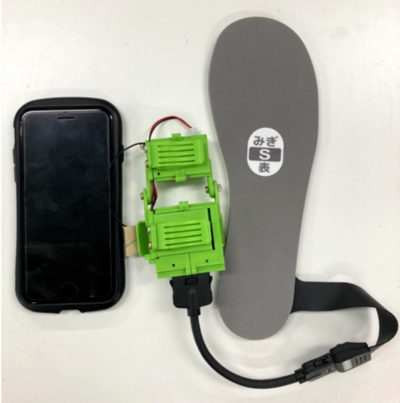
A sensor in a pressure-sensitive insole picks up potential signs of dementia by measuring acceleration and other movements.      Source: National Institute of Technology, Ichinoseki College

The “D-Walk” device was developed by three students at Ichinoseki College in northeast Japan. It uses data from a sensor located in a pressure-sensitive shoe insole that is sent to a smartphone attached to the wearer’s waste. Number crunching produces a score that indicates the likelihood of dementia.

The device earned the trio, which call themselves TEAM MJ, the Grand Prize at DCON2022, a contest sponsored by the Japan Deep Learning Association. It awards prizes for AI deep learning-related technologies developed at Japanese technical colleges. Winners receive funds for development and the chance to commercialize their inventions.
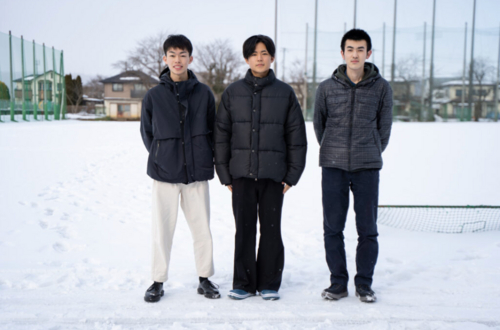
The three Team MJ members who created D-Walk. The device was developed using data on the gait of 100 elderly people in the city of Ichinoseki.      Source: National Institute of Technology, Ichinoseki College

Team MJ’s device is timely in a country whose population is among the most rapidly aging in the world. According to a Japanese government white paper, it was estimated that 1 in 5 people over the age of 65 in Japan will be suffering from dementia by 2025.

The trio focused on the shuffling and unsteady gait as it is a key symptom of dementia, and they hope that the D-Walk device will be able to not only detect, but also predict the disease at an early stage. Although there is no cure for the disease, when it is picked up early on it can be treated and slowed down, meaning the D-Walk device could help delay the serious onset of the disease.

Translation and Editing by Tony McNicol

Top page photo by travnikovstudio / Envato

For inquires about this article, please contact us at jstories@pacificbridge.jp


Click here for the Japanese version of the article.

Tags: HealthTechnology
Previous Post

Mice cloned from freeze-dried cells

Next Post

The Brief #25 Freeze-dried genes, Kids’ letters to Ukraine, Detecting dementia

Emi Takahata

Emi Takahata

Related Posts

AQUIVIO
Pitch

AQUIVIO

by JStories_Admin
05/01/2026
世界が渇望する日本発バイオ素材、2026年6月以降に市場投入へ
BioTech

Evolutionary artificial protein slated for market debut as early as June 2026

by Yoshiko Ohira
04/17/2026
Ai Heart Japan
Pitch

Ai Heart Japan

by JStories_Admin
04/01/2026
Assist motion
Pitch

Assist motion

by JStories_Admin
04/01/2026
Aster
Pitch

Aster

by JStories_Admin
04/01/2026
Next Post

The Brief #25 Freeze-dried genes, Kids' letters to Ukraine, Detecting dementia

Leave a Reply Cancel reply

Your email address will not be published. Required fields are marked *

Trending

Greening the desert with trash

by Yui Sawada
03/23/2023
0

J-STORIES - The sight of local Niger women throwing kitchen waste out into the African desert inspired a project that...

世界が渇望する日本発バイオ素材、2026年6月以降に市場投入へ

Evolutionary artificial protein slated for market debut as early as June 2026

by Yoshiko Ohira
04/17/2026
0

JStories — Severe and hard-to-heal wounds — such as those caused by burns, injuries, pressure ulcers, skin cancer surgery, and...

INTERVIEW | How Japanese musician Grover turned his passion of ‘sound’ into a health-tech startup

by Toshi Maeda
05/02/2025
0

JStories ー For over two decades, Yoshikazu Grover — better known simply as Grover — has been a familiar voice...

World-first “anime character-based therapy” trial to test effectiveness in Japanese young adults

by Lucas Maltzman
01/30/2026
0

JStories – Is sharing personal problems with a virtual anime character easier than face-to-face? In the world’s first clinical trial,...

The world’s first drug that helps patients ‘grow new teeth’

by Ruiko Kokubun
09/22/2023
0

J-STORIES - The conventional way to help people who have lost teeth due to tooth decay or aging has been...

JStories

©Articles and photos published on JStories are protected by Japanese copyright law and international treaties. They cannot be reproduced without the permission of the copyright holders

Explore JStories

  • Home
  • About JStories
  • Company
  • Team
  • Contact
  • Privacy Policy
  • Partner Press Releases

Follow Us

Welcome Back!

Login to your account below

Forgotten Password?

Retrieve your password

Please enter your username or email address to reset your password.

Log In
No Result
View All Result
  • Home
  • AI
    • Artificial Intelligence
    • Robotics
    • Mobility
    • FinTech
    • Quantum
  • Earth
    • AgriTech
    • Green Innovation
    • Disaster Tech
    • SpaceTech
    • Materials
  • Life Sciences
    • BioTech
    • HealthTech
    • MedTech
    • AgeTech
  • Society
    • Media
    • EdTech
    • Diversity
    • FemTech
    • Social Impact
  • Lifestyle
    • FoodTech
    • Beauty & Fashion
    • Wellbeing
    • Arts & Music
    • Anime
  • Travel
    • Adventure Travel
    • Luxury Travel
    • Wellness & Medical Tourism
    • Culture
  • Video
  • Deals
    • Venture Capital
    • M&A
    • Events
    • Growth Support
    • Legal & IP
  • Interview
  • Opinion

©Articles and photos published on JStories are protected by Japanese copyright law and international treaties. They cannot be reproduced without the permission of the copyright holders

Are you sure want to unlock this post?
Unlock left : 0
Are you sure want to cancel subscription?