


JStories — Severe and hard-to-heal wounds — such as those caused by burns, injuries, pressure ulcers, skin cancer surgery, and diabetic ulcers — carry a high risk of bacterial infection. Once infection occurs, it often leads to a vicious cycle that further delays healing.
A groundbreaking wound dressing that breaks this cycle — reducing infection risk, shortening treatment time, and alleviating patient pain — has been commercialized through joint research between Kyoto-based Sanyo Chemical Industries and Kyoto University. The product obtained regulatory approval in 2025 and is being launched by Tokyo-based Kaken Pharmaceutical as the “Silk-Elastin Wound Healing Sheet,” with clinical use scheduled to begin in June or later this year.
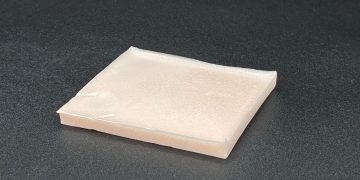
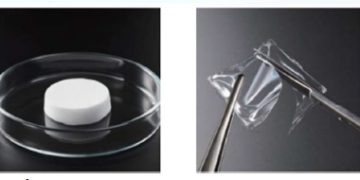
The photo on the left shows the Silk-Elastin Wound Healing Sheet. It can be processed into various forms such as sponges and films. Photo courtesy of Sanyo Chemical Industries (same below).
Applications Expand to Meniscus Repair for Athletes and the Elderly
Sanyo Chemical has initiated company-sponsored clinical trials in collaboration with Hiroshima University using a Silk-Elastin healing material for meniscus injuries. These injuries are a major cause of knee osteoarthritis, a condition that affects both elderly individuals and athletes.
In Japan alone, the number of patients with osteoarthritis is estimated at 30 million, with economic costs from reduced healthy life expectancy reaching approximately 5 trillion yen (roughly $33 billion) annually. With both domestic and global interest in meniscus repair and regeneration on the rise, Sanyo Chemical is accelerating development toward practical use by 2028.
Engineered Protein from E. coli Combines High Biocompatibility with Antibacterial Effects
Silk-Elastin is an artificial protein produced using genetic engineering techniques from E. coli, combining silk fibroin, a medical material known for its high moisture retention and antibacterial properties, with elastin, a key component of the dermis that provides skin elasticity.
“Artificial proteins used in earlier research were often derived from eggs or pigs, making stable extraction difficult and limiting their industrial use,” says Shingo Kawabata, project leader of the Siela Project, a development initiative for regenerative medical devices and wound-healing materials led by Sanyo Chemical.
Silk-Elastin produced using E. coli offers strong compatibility with human cells while also helping to suppress bacterial growth, enabling safe and stable large-scale production. Moreover, the Silk-Elastin is water-soluble and forms a gel at approximately body temperature, allowing it to conform to wounds with complex shapes.
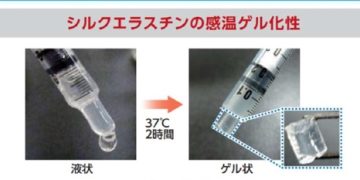
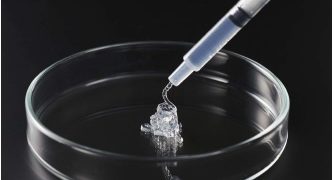
A Silk-Elastin solution is applied to the wound area, where the solution gels in response to body fluids and temperature.
Effective Even for Severe Wounds, Cutting Healing Time in Half
When the Silk-Elastin wound sheet is applied to damaged skin, the sheet dissolves in bodily fluids and forms a gel at body temperature. The resulting gel adheres closely to the wound, maintains a moist environment, and suppresses bacterial growth.
Kawabata explains: “Silk-Elastin has demonstrated effectiveness in creating a healing environment even for severe wounds — such as injuries exposing bone or extensive burns — that have traditionally been difficult to treat. In company-sponsored clinical trials, wounds that typically required two to four weeks to heal did so in roughly half that time.”
 Illustration of wound healing using Silk-Elastin
Complete Meniscus Healing Confirmed Three Months After Surgery
Silk-Elastin has also demonstrated significant therapeutic effects in the treatment of meniscus injuries, a major cause for knee osteoarthritis. Because the meniscus has limited natural healing ability, conventional treatments have relied on pain medication, injections, rehabilitation, or surgery such as suturing or removal. However, sutured areas frequently loosen or re-tear.
According to Kawabata, “In company-sponsored clinical trials involving eight patients with meniscus injuries, six patients achieved complete healing within three months after suturing using Silk-Elastin.”
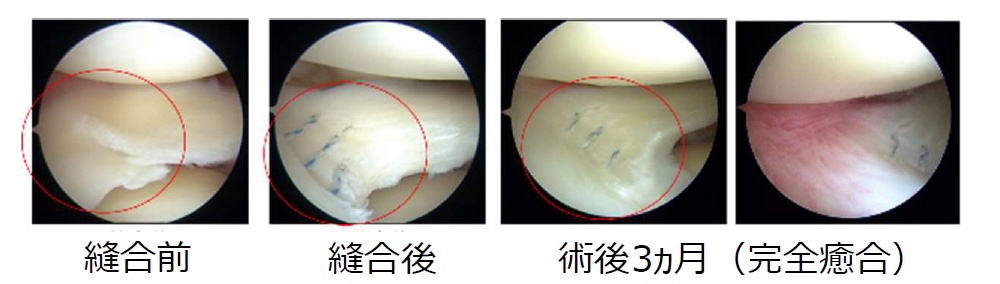 Meniscus injuries, which often re-tear after surgery due to physical stress or activity, show earlier healing when treated with Silk-Elastin.
“Due to its superior ability to create a healing environment and shorten recovery time, Silk-Elastin has broad applicability to other tissues as well,” Kawabata adds. “In particular, it is expected to be effective for bone and muscle healing, and several basic studies are already underway. For muscle tears, preliminary effectiveness has been confirmed.”
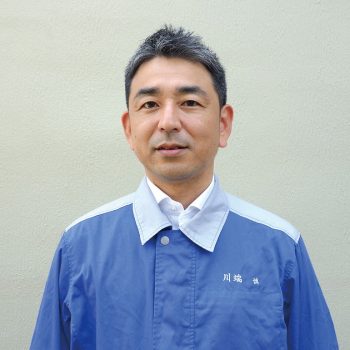 Shingo Kawabata, leader of the Silk-Elastin development project
In the field of meniscus regeneration, the potential patient population is larger overseas than in Japan, with the global market estimated to exceed 100 billion yen (roughly $670 million).
“The company plans to begin with sales in Japan and expand into international markets, including the United States, which accounts for more than half of the global market,” Kawabata says. “We are also accelerating efforts to identify global distribution partners.”
Translated by Makoto Akutsu | JStories
Edited by Mark Goldsmith
Top photo: Sanyo Chemical Industries
For inquiries regarding this article, please contact [email protected]