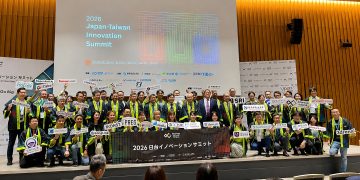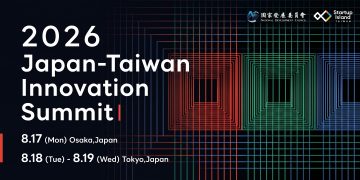


The event that once introduced Taiwanese startups to Japan has changed its role over five years. The biggest shift at this year’s Japan-Taiwan Innovation Summit was that the U.S. joined what had been a bilateral framework, moving the axis of the discussion toward economic security.
The Japan-Taiwan Innovation Summit is an annual event hosted by Taiwan’s National Development Council (NDC) together with Startup Island TAIWAN, the brand that takes Taiwanese startups abroad. It began in 2022 and reached its fifth edition this year, with 46 Taiwanese startups exhibiting. According to Yeh Chun-Hsien, minister of the NDC, more than 30 of them already have a base in Japan, have received investment or subsidies here, or have begun working with Japanese companies.
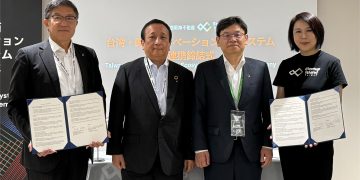
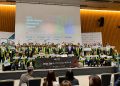
The summit ran for three days. It opened in Osaka on Aug. 17, where Startup Island TAIWAN signed a memorandum of understanding with Hankyu Hanshin Properties — elevating the Kansai push it has led since launching the Go Kansai Alliance in 2024 into a long-term framework. Aug. 18 was given over to policy and investment at Shibusawa Hall in the Tokyo Chamber of Commerce and Industry, and on Aug. 19 the venue moved to Tokyo Innovation Base (TiB) in Yurakucho, where 35 companies pitched.
The theme was “From Startups to Strategy” — a declaration that the time for introducing startups one by one has passed, and that they now belong inside industrial strategy. Government officials, corporations, investors and research institutions from Japan, the U.S. and Taiwan gathered around strategic industries including AI, semiconductors, biotech and trusted digital infrastructure.
An era that asks who you build with
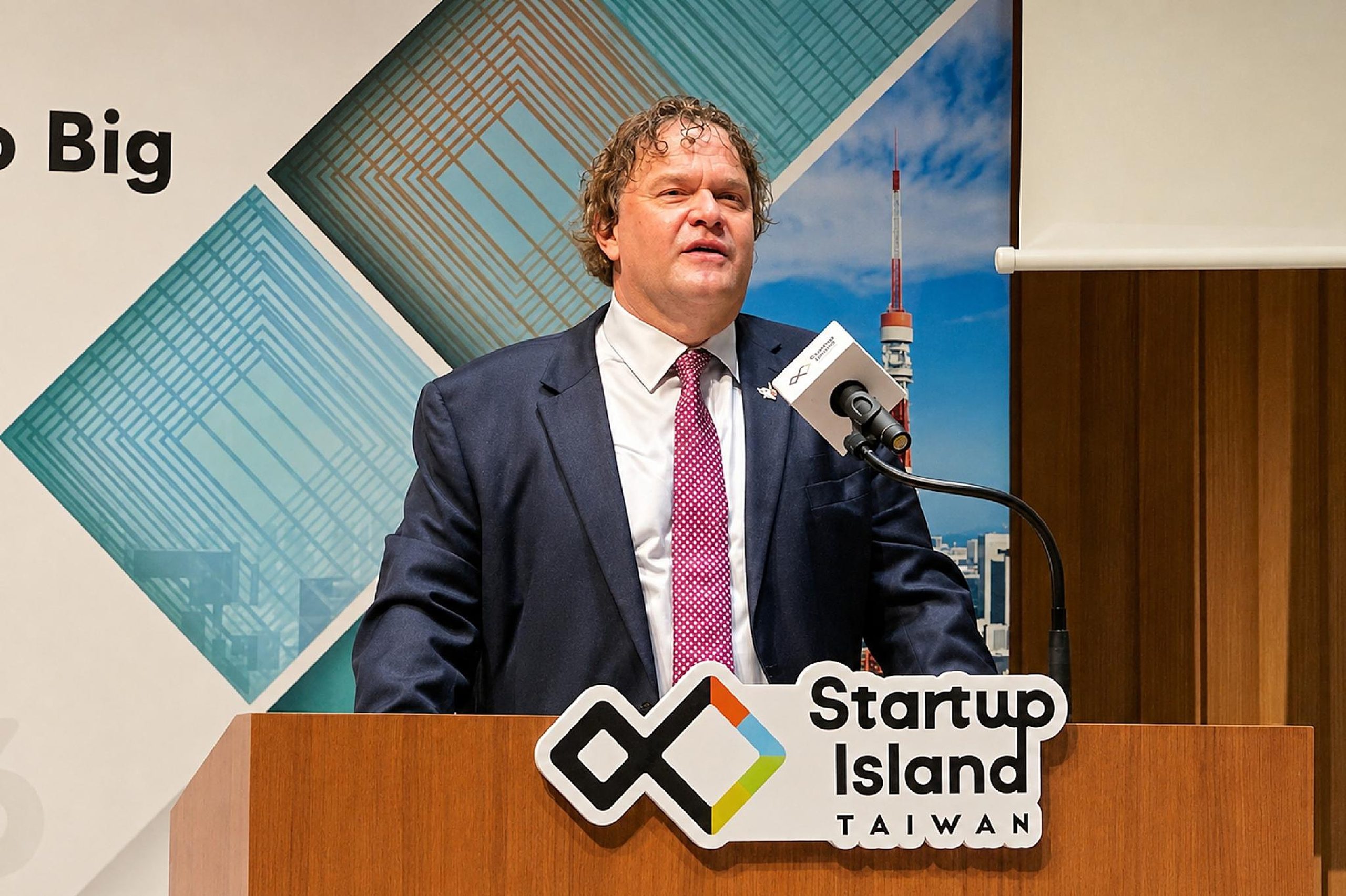
The clearest change was on the stage itself. John Speaks, regional technology officer for East Asia at the U.S. Department of State, delivered a keynote. It was the first time a U.S. government technology policy official had taken the stage at what had until now been a bilateral Japan-Taiwan event.
What Speaks built his talk around was Pax Silica, an initiative the State Department launched in December 2025. It treats AI, semiconductors, critical minerals, energy, advanced manufacturing and logistics as a single connected chain, and seeks to rebuild that supply chain among trusted partners. Japan is a founding signatory, and Taiwan endorsed its principles in a joint U.S.-Taiwan statement in January. By the second summit in June 2026, the number of signatories had grown to 24. “The future of technology will be determined not by what we build, but by who we build it with,” Speaks said. “That is why we need a trusted technology ecosystem. This is not a slogan. It is a framework for stability in a world where technology and geopolitics are increasingly intertwined.”
Speaks went on to describe the role startups play within that framework. “Startups are force multipliers for national competitiveness. They are also the early warning system for when supply chains are becoming strained and when dependencies are becoming dangerous,” he said. Weaknesses in a supply chain show up on the floor of a small company before they appear in the statistics of a large one. Economic security therefore needs startups in the conversation — that, in substance, is what “From Startups to Strategy” meant.
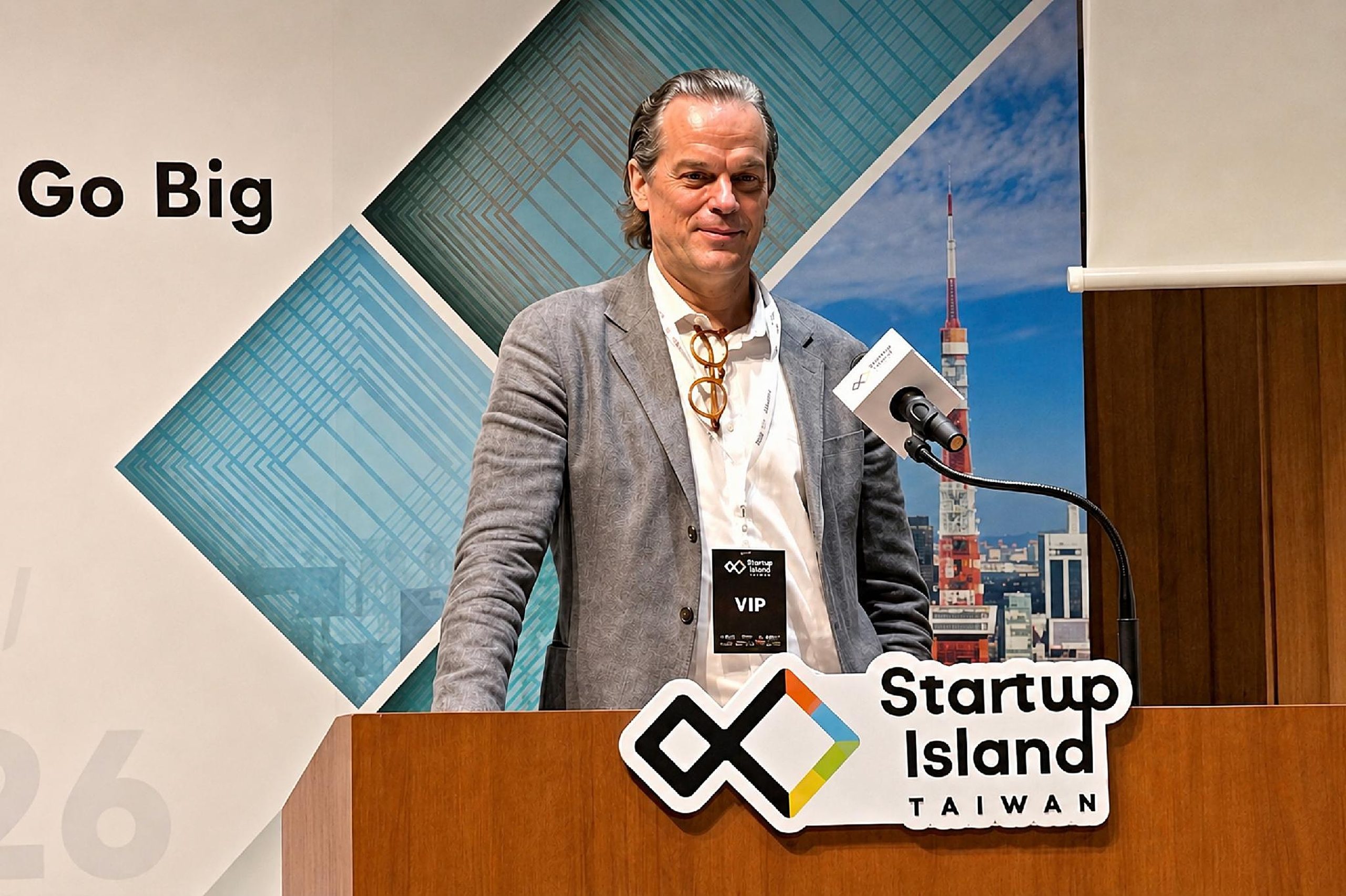
Todd Stavish, vice president of the ventures group at SRI, spoke next. He noted that SRI had licensed patents to TSMC in its early days, and said that through Global Innovation Labs, a partnership announced in November 2025, the institute is extending commercialization and investment bases across the U.S., South Korea, Japan and Singapore.
Taiwan’s policymakers were facing the same direction. Hsiao Chen-Jung, director general of the NDC’s Department of Industrial Development, noted that Taiwan’s exports had risen year on year for 33 straight months, up 31% in July, and that exports from Japan to Taiwan had grown 47% in the same month — evidence, he said, of demand swelling on the back of AI. Supply chains once built around lowest cost, he added, are being rebuilt as secure supply chains, and he stated flatly that Japan and Taiwan are not competitors.
“In semiconductors, Taiwan handles manufacturing while Japan supplies the materials and equipment. In quantum technology, Japan is ahead and Taiwan answers with mass production,” Hsiao said.
He also pointed to typhoons and earthquakes, disasters the two share, as something they can face with shared technology. An AI earthquake early-warning system developed by a Japan-Taiwan joint venture, he said, has cut the time needed to reach a decision during a disaster from six hours to four minutes.
One company showed on stage exactly how the Japan-U.S.-Taiwan partnership works in practice: HCmed Innovations, whichOne was HCmed Innovations, which makes an inhalation therapy platform. At the startup showcase on Aug. 18, chairman Jason Chang opened with an announcement. “I am delighted to share with you here that we are setting up an office in Tokyo. We came here to build relationships, to build trust, and to deliver innovation to the world together.”
The company itself was built across Japan, the U.S. and Taiwan. Its investors include New Ventures of Palo Alto, DCI Partners of Japan, and Mega Bank and Safe Insurance of Taiwan; its partners include Genentech and Roche of the U.S. Hsiao also named the company as a success story in his keynote, explaining a nested structure of capital in which a Japanese venture fund invested in the company and Taiwan’s National Development Fund in turn supports that fund.
So what does Taiwan handle among the three? When the moderator put the question to him, Chang talked about the distance involved in sourcing parts. To build a medical device, you have to find someone who will supply the small communication and control modules you need. In the U.S., he said, simply meeting that supplier means getting on a domestic flight. “When I first spoke with a professor in San Diego, he told me that if you need a Bluetooth module, you have to fly from the West Coast to the East Coast, or the other way around. How long do you think it takes to meet a Bluetooth supplier in Taiwan? Thirty minutes.”
Taiwan’s supply chain is that densely integrated — that was Chang’s point. The mesh module at the core of his company’s device is made with semiconductor processes. When a pharmaceutical company wants to test a new formulation, it needs a module built to order; elsewhere that means a six-month wait, while in Taiwan it arrives in two weeks. “What we offer our partners is flexibility and speed, and what matters is that it is still development and production you can trust,” Chang said.
“At the same time, we think Japan’s quality and precision matter just as much. Over the past decade we have built trusted technology together with Japan while using Taiwanese speed for mass production and commercialization.” On the question of sequence, he was categorical: “Whether the U.S. comes first or Japan comes first is not the issue. In the end we will do it together. And we will build trust. That, above all, is what matters to Japanese companies.”
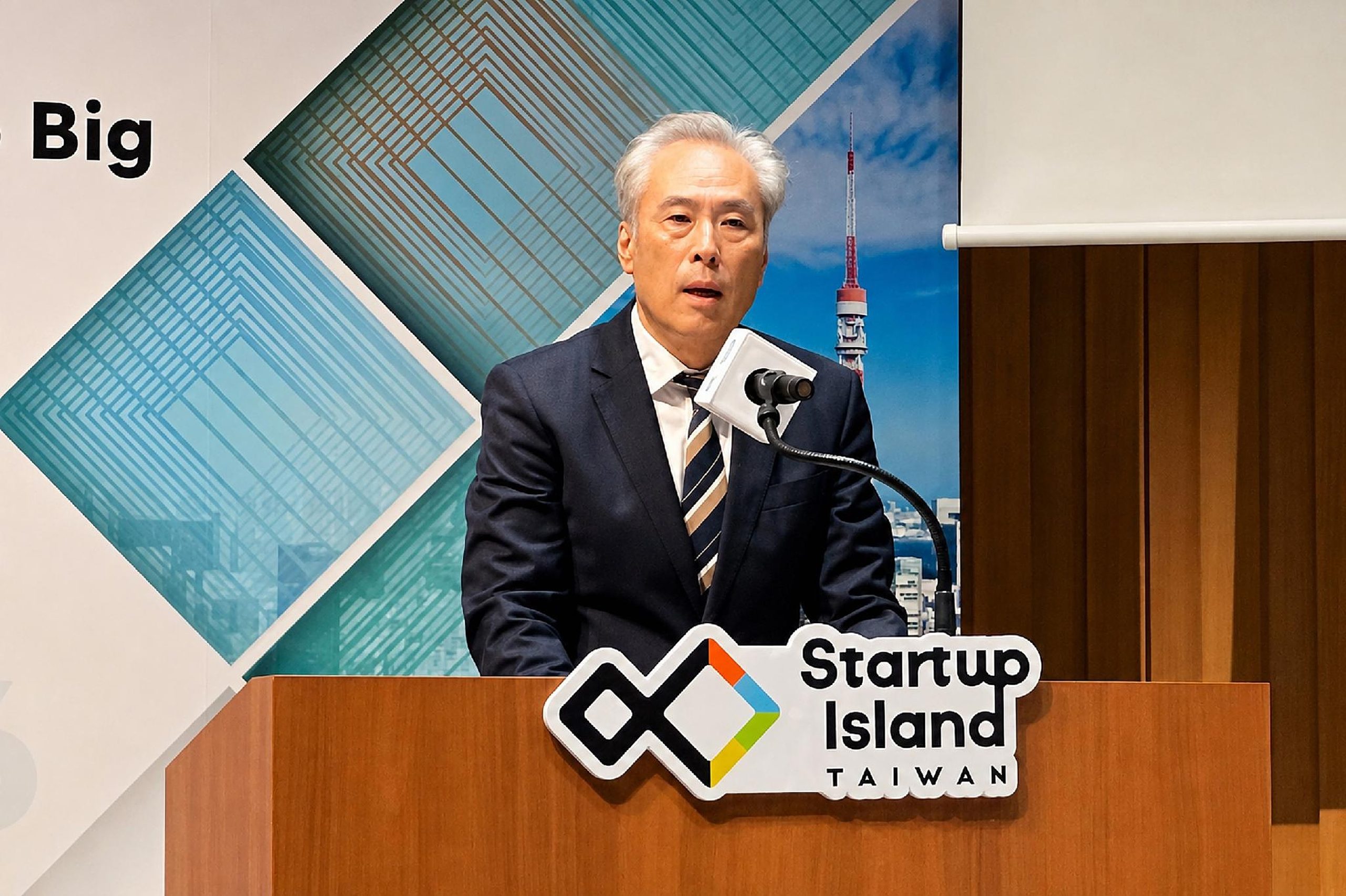
From the Japanese side, Tomohiro Takashima, executive vice president of the Japan External Trade Organization (JETRO), took the stage. He began by referring to the Kumamoto earthquake of July 28, which registered a maximum intensity of 7 on the Japanese scale, and thanked Taiwan for the support it sent. More than 1 billion yen (about $7 million) in donations reached the account opened by Taiwan’s Ministry of Foreign Affairs, and TSMC, which has a plant in Kumamoto, contributed 250 million yen (about $1.7 million).
Kumamoto, Takashima continued, is itself the symbol of Japan-Taiwan industrial cooperation: TSMC grew out of Taiwan’s Industrial Technology Research Institute (ITRI) and was, in its day, a deep tech startup led by seasoned executives. He then pointed to how the Taiwanese view has shifted over the past decade: ten years ago, he said, Taiwanese startups named the U.S. first as the market they wanted to enter, then mainland China, then ASEAN or Japan; ask the same question now, and the answer comes back as the U.S. or Japan.
JETRO has supported roughly 150 inbound investment projects from Taiwan over the past three years. Eisuke Sakamoto of the Organization for Small & Medium Enterprises and Regional Innovation, Japan, also cited the Japan-Taiwan biotech fund — run by DCI Partners with investment from both his organization and Taiwan’s National Development Fund — as an example of what links the two.
Who supports a trusted supply chain
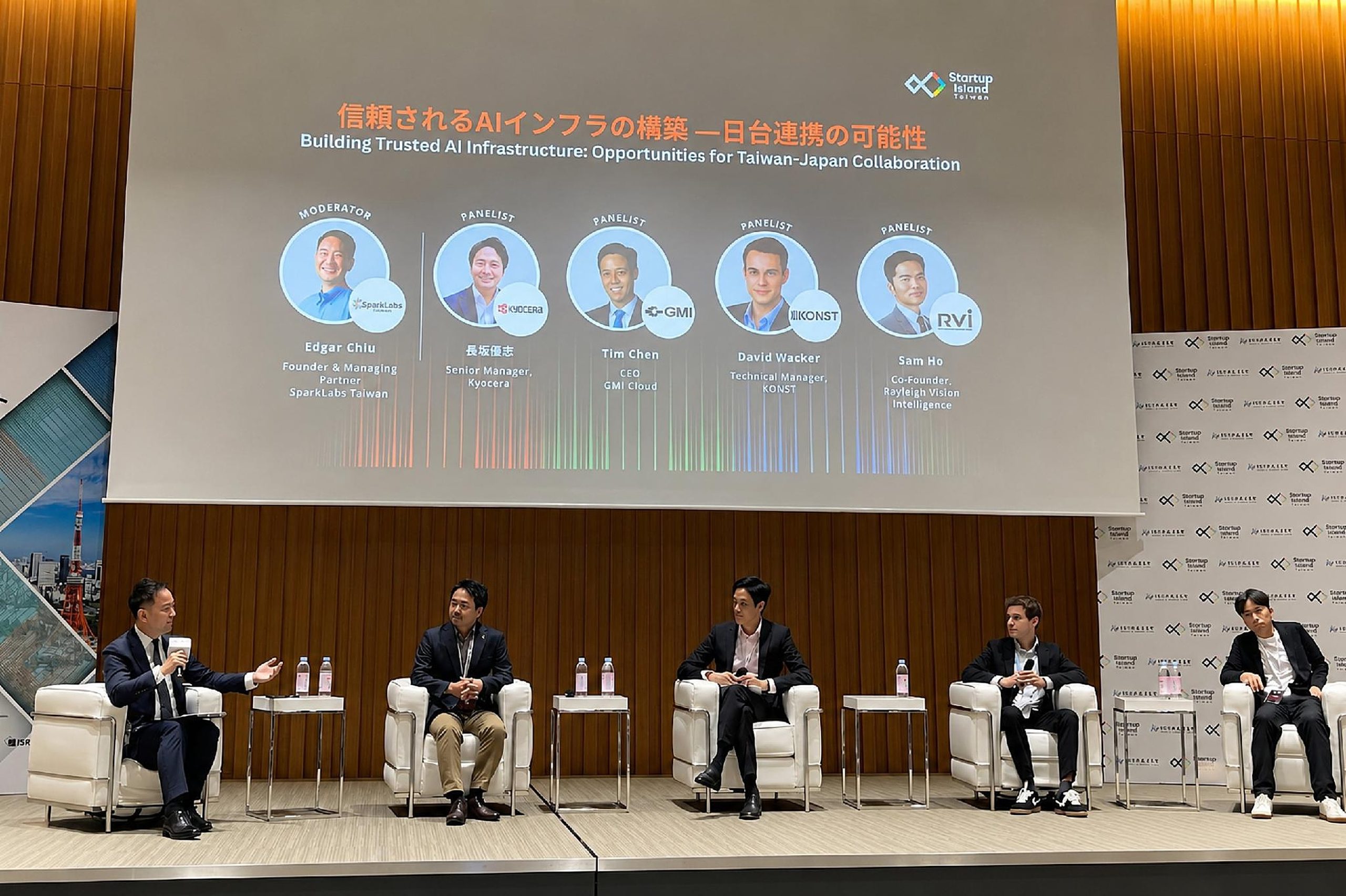
The afternoon discussion left abstraction behind and turned to electricity and money. Ideals, in the end, come down to the question of who pays, how much, and where.
Tim Chen, CFO of GMI Cloud, noted that Taiwan manufactures roughly 90% of the world’s AI servers, and offered his own company’s project in Kagoshima as an example of what happens when Japanese investment is added to that. The site has a gigawatt-class power supply, and the investment could reach as much as $12 billion.
How did a three-year-old company get into a project of that scale in Japan? Chen pointed to the accumulation of Taiwanese investment in Japan, and said capital follows. “First you tell a story, then you talk about action. But action does not really begin until you actually spend money. In other words, it all comes down to investment.”
The company has invested in its Japanese team and is working with Wistron, its main partner on the GPU side.
So who pays the premium for that “trust”? Chen listed three things: availability, control and predictability. Many industries handle sensitive data that cannot leave the country, which is why companies pay a premium for a protected data center. Japan has an edge, he added, precisely because building power infrastructure takes years. “From the outside you may wonder why we are talking about something three or four years away. But investment in power infrastructure takes that long. That predictability is what sovereign AI actually is.”
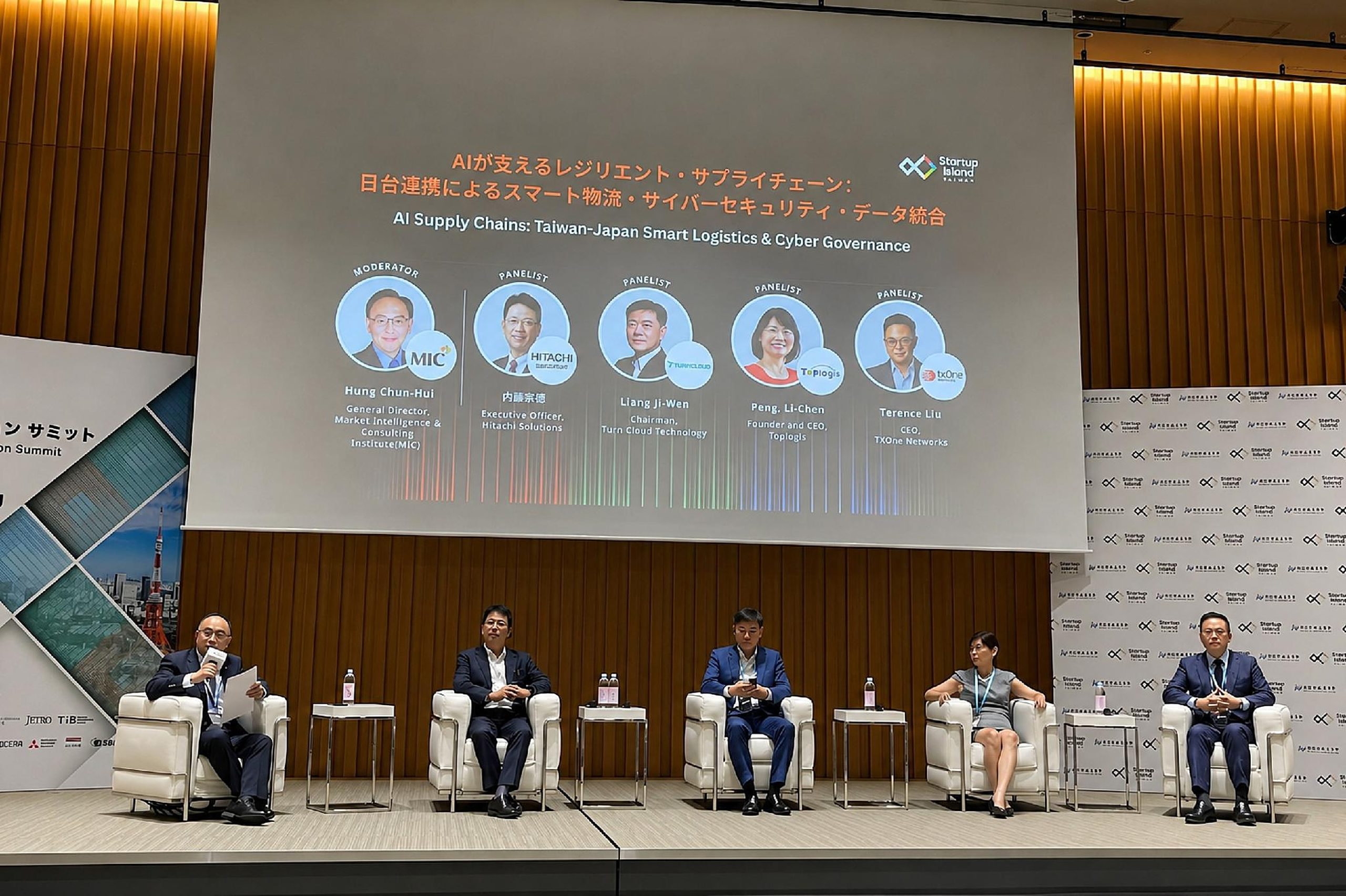
The next panel turned the spotlight on the unglamorous machinery behind the semiconductor and AI story. Chris Hung, director of the Market Intelligence & Consulting Institute (MIC), who moderated, opened by noting that behind Taiwan’s AI supply chain sit the companies handling logistics, security and data integration. Four companies took the stage: Hitachi Solutions, Turn Cloud, Toplogis and TXOne Networks.
Catherine Peng, CEO of Toplogis, was specific. Twenty or thirty years ago, supply chain discussions were all about cost. Then, in response to geopolitical risk, customers began asking for China plus one, and now they ask for Taiwan plus one. Taiwan’s manufacturers have built plants in the U.S., in Mexico, in Vietnam. “Every time you add a site, you add another set of suppliers and another set of inventory, and one more customs regime you have to understand. The geopolitical risk has been addressed, but the supply chain has become more complicated than before,” Peng said.
On top of that comes an era in which tariff rates move on a single social media post from a politician. Peng calls this a “dynamic supply chain.” The low birthrates Japan and Taiwan share compound the problem: import-export and logistics departments are often the least digitized part of a company, and young people do not want to join them.
Peng is one of the few women founders in Taiwanese logistics. She says she cannot forget visiting a customer that had installed her system and seeing how the staff’s expressions had changed.
“The operators on the floor in import, export and logistics are almost all women. They were working overtime every day,” she said. “When I heard that the overtime was gone and they had more time with their families, as a working mother, I was genuinely happy.”
Vincent Liang, chairman and president of Turn Cloud, said it took more than two years to build the relationship with a major Japanese customer. What was asked of him was less technical capability than an understanding of how the Japanese side runs and manages things. Having been through that process, the company is now going overseas together with that customer. It set up a Tokyo subsidiary in 2024 and counts commercial facilities operated by Aeon and Mitsui among its customers; overseas sales have passed 40% of the total.
The Japanese participant on this panel was Hideki Naito, executive officer and general manager of the Business Innovation Division at Hitachi Solutions. What gets tested first is not the technology — on that, the panelists converged.
Taiwanese companies touch Japanese industry in places other than the market for finished goods. Ohmplus, founded in 2021, makes mass-production test systems for RF ICs and antennas. Its proprietary technology runs in parallel the tests that are normally done one at a time, cutting both test time and the number of machines required. It holds more than 40 patents in Taiwan and Japan, and raised NT$60 million (about $1.9 million) in a Series A round in March this year. According to its pitch on Aug. 19, its customers include Murata Manufacturing and Mitsubishi Electric, and sales have doubled every year since 2021.
On the same panel, Terence Liu, CEO of TXOne Networks, spoke frankly about how the tide has turned in his industry. When the company was founded in 2019, the metric was 100% growth a year and never mind the cost. From 2022 that shifted to the “rule of 40” — 30% growth plus 10% margin. The company now has about 400 employees and operates in 30 countries. “It took seven years, and this year we finally broke even. Which is to say, we survived.”
The option of earning in Japan and listing in Taiwan
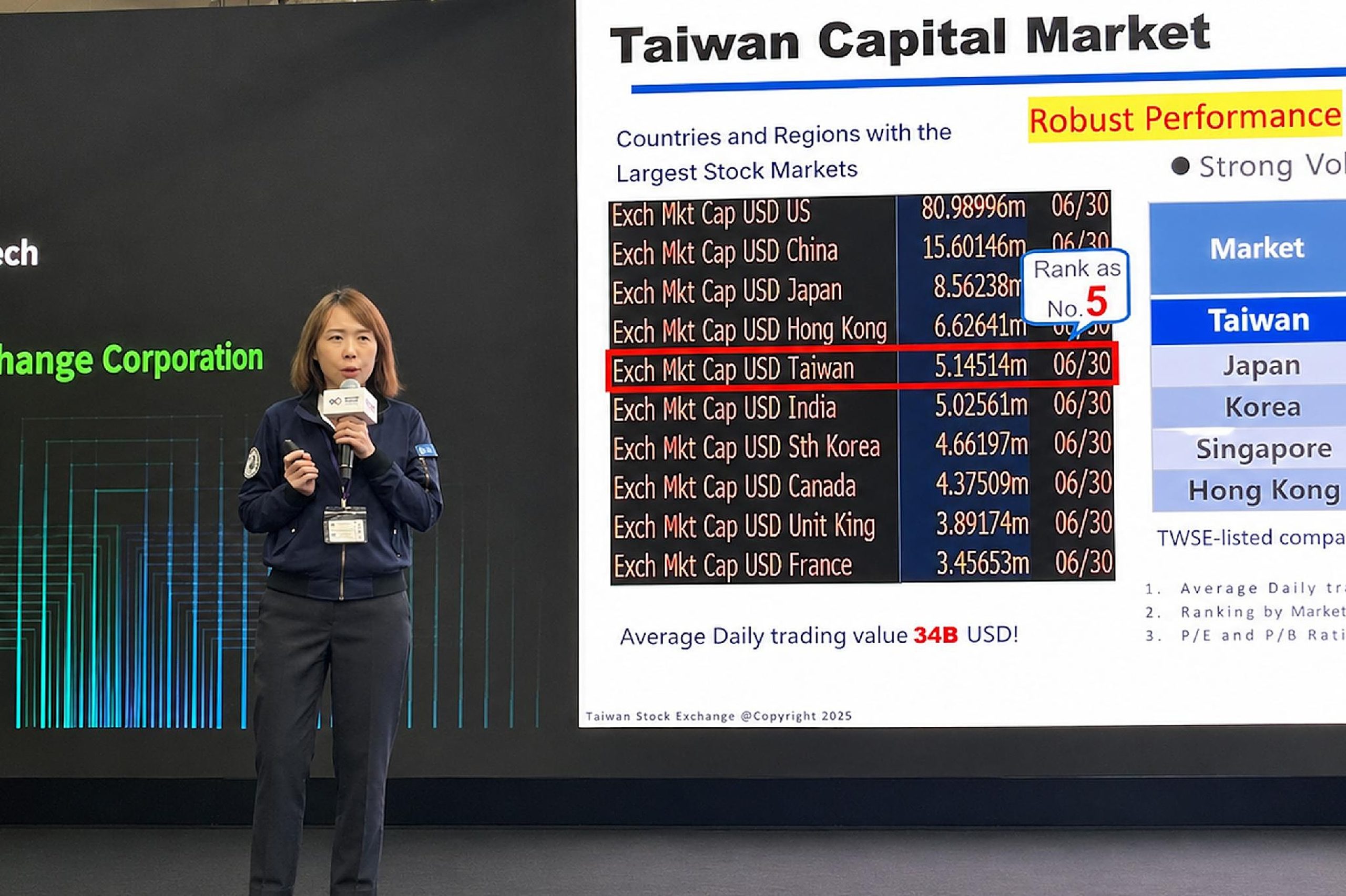
For the Japan-U.S.-Taiwan partnership to actually move, companies have to grow and capital has to circulate. That is where this year’s summit turned to the question of exits. Until now, the discussion has centered on investment from Japanese companies and entry into the Japanese market; from the Taiwanese side came another option — listing on the Taiwanese market. At TiB in Yurakucho, the venue for the second day of the Tokyo sessions, the Taiwan Stock Exchange (TWSE) and the Taiwan Venture Capital Association (TVCA) took the stage in turn — and reversed the direction of the pitch. Their proposal to Japanese startups: list in Taiwan. Where capital talk at past summits had run almost entirely to M&A, the subject this year moved to going public.
Kao Pei-Jing, vice president of the TWSE, focused on the Taiwan Innovation Board, opened in 2021. It requires two years of operating history and a minimum market capitalization of roughly $33 million, and it does not require profitability. Review takes six to eight weeks, and listing generally fits within a year. Taiwan’s exchanges currently list 92 foreign companies, with an average price-earnings ratio of 36.
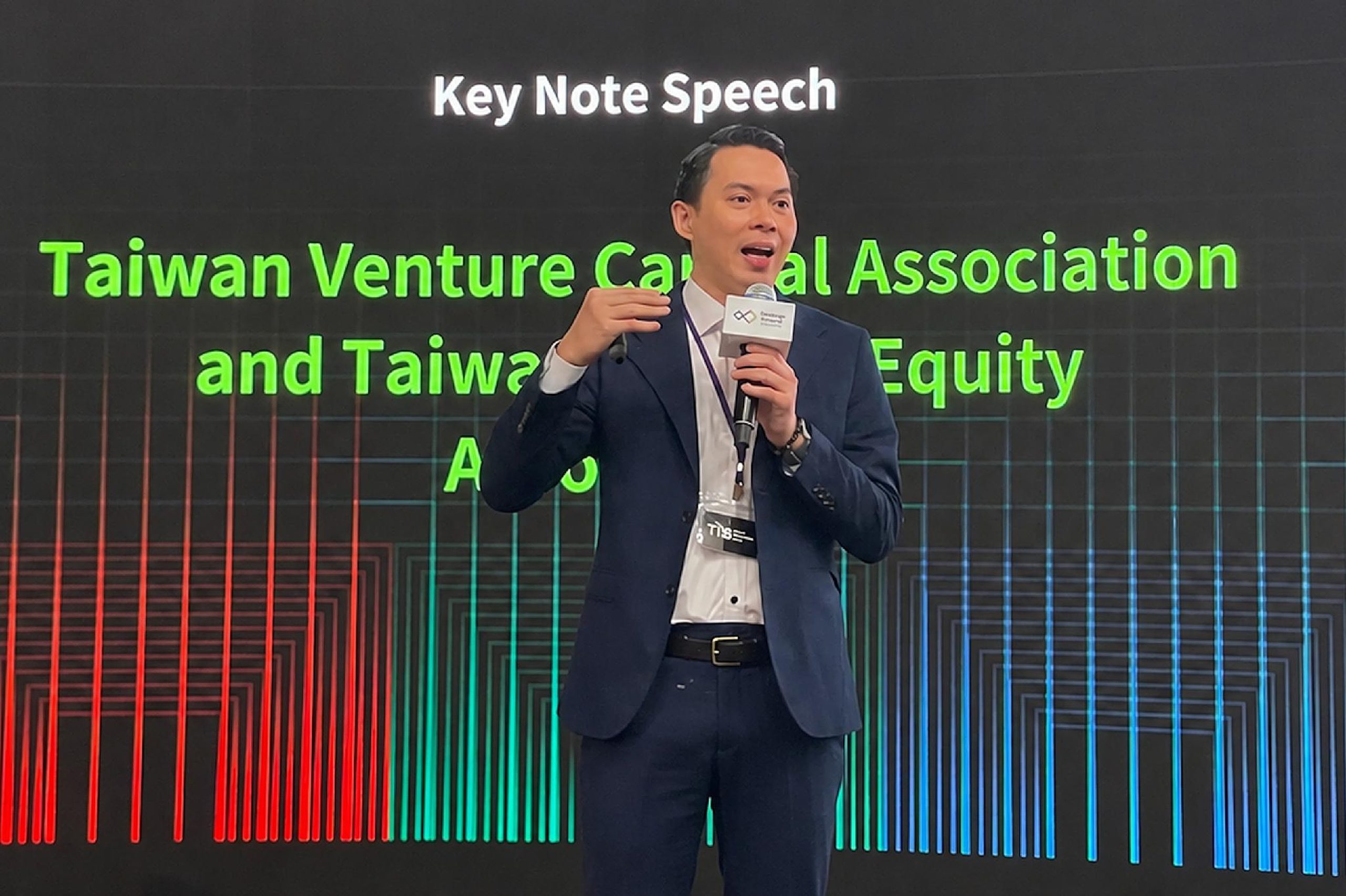
Solid Sie, secretary general of the TVCA, the community of Taiwanese venture capital firms, pointed to the structural problem behind it. In Taiwan it takes an average of 15 years to reach a listing, while a venture fund lives for 10. That gap has made investors hesitate at the early stage. The board is a mechanism for compressing time-to-listing to seven to nine years. On top of that, from this year, investment by Taiwan’s roughly 1,900 listed companies into startups and venture funds has been folded into their ESG assessment.
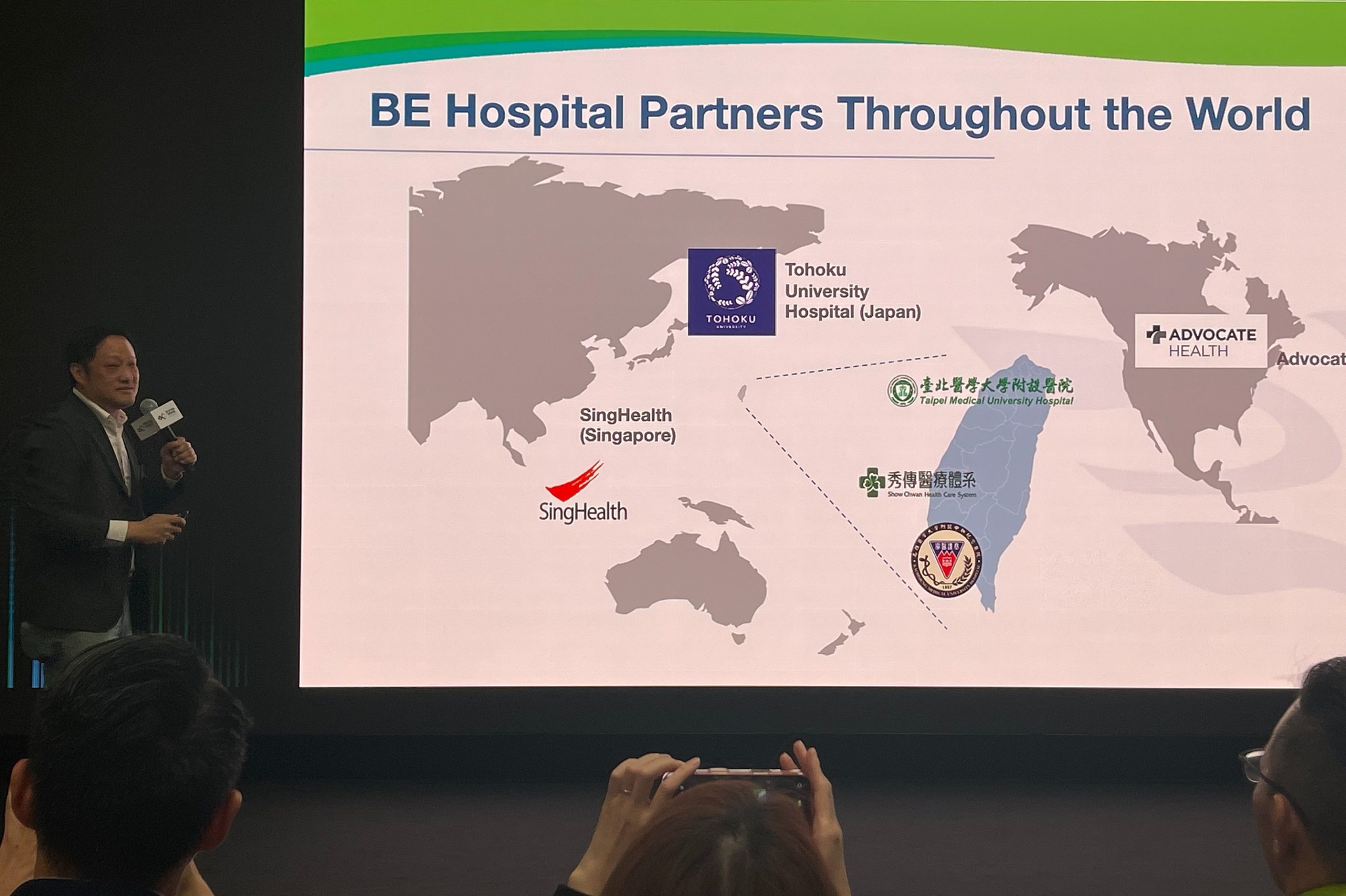
Arthur Chen, founder and managing partner of BE Health Ventures, which specializes in healthcare, also took the stage. He explained that running a clinical trial in Taiwan costs a third of what it does in Japan, and revealed that the firm has opened a Japanese office at a life sciences hub in Nihonbashi.
Earn in Japan, list in Taiwan. That path was laid out officially.
Why the Tokyo Hub outgrew its space
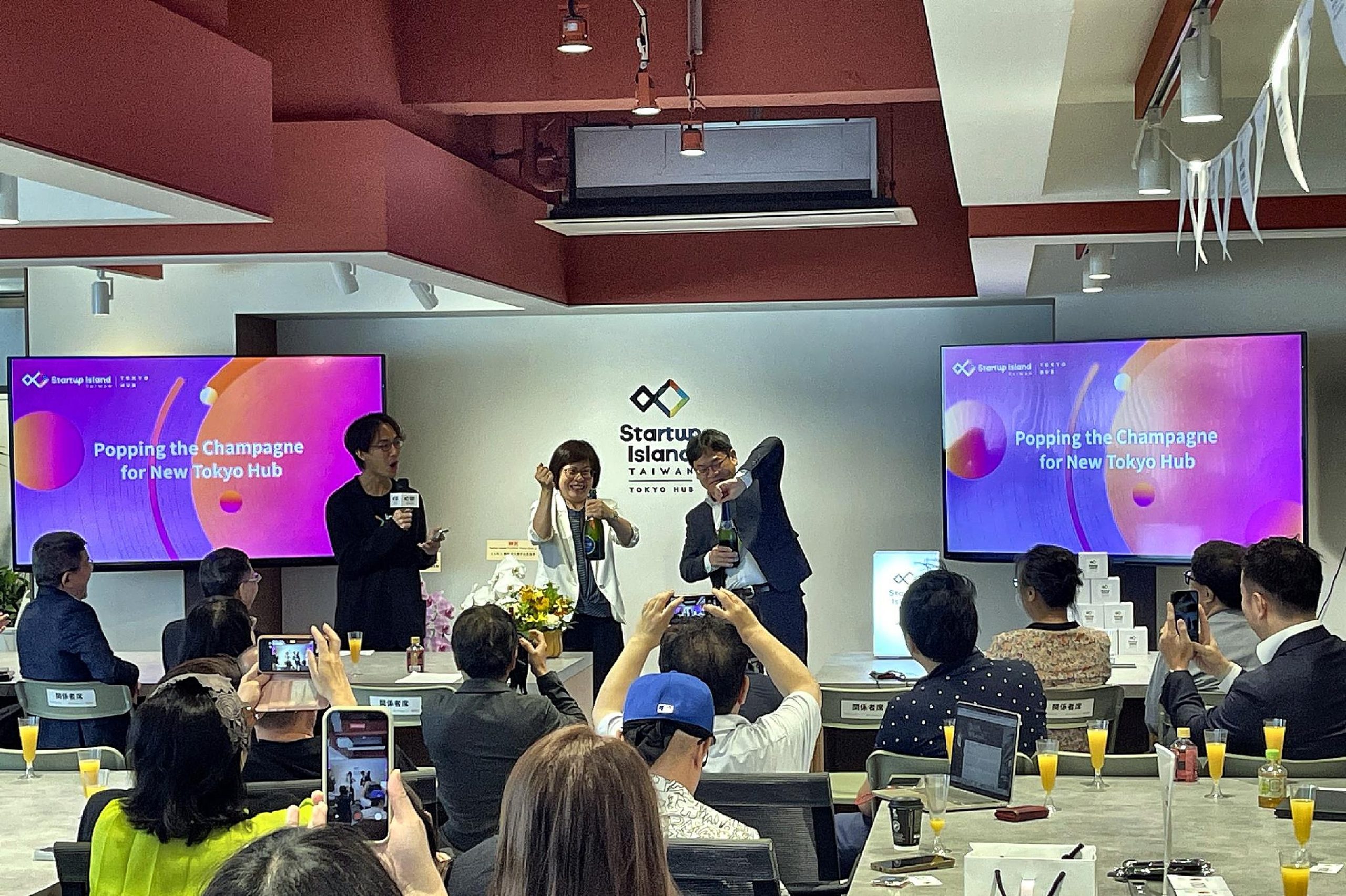
On the morning of Aug. 20, the day after the summit closed, an opening ceremony was held at Startup Island TAIWAN’s Tokyo Hub in Hamamatsucho. The hub has moved to a larger space within the same neighborhood; the new one runs to more than 330 square meters.
It was in 2024 that the Tokyo Metropolitan Government and Startup Island TAIWAN signed their memorandum of understanding. In the two years since, according to Yeh, 20 companies have established a base in Japan with the support from the Tokyo Hub, and six have received grants from TMG programs. Across Taiwan as a whole, more than 500 startups have been supported in connecting to the Japanese market. And the hub outgrew its space.
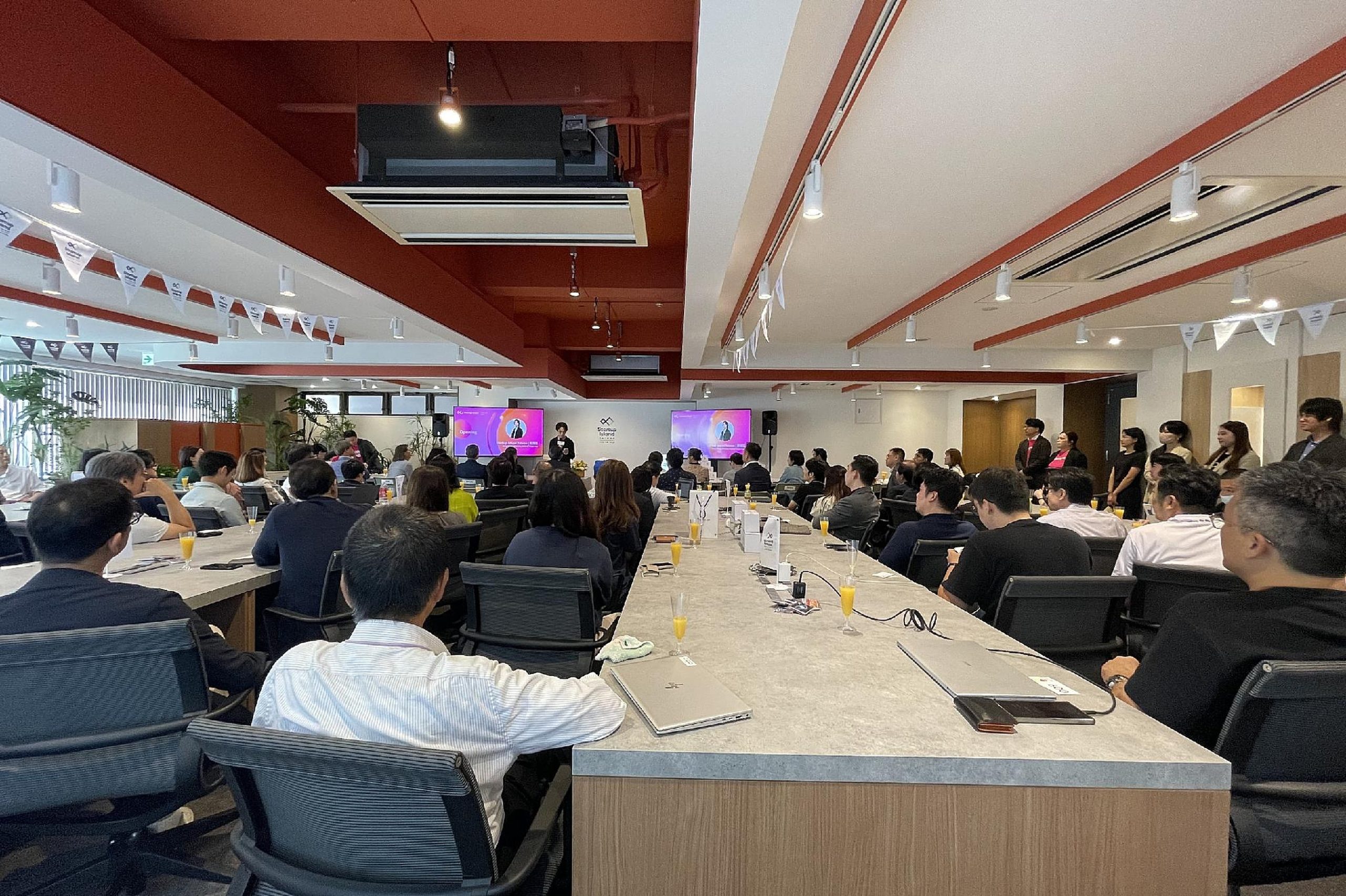
In the same period, Startup Island TAIWAN has also built a hub in Silicon Valley. Taipei, Tokyo, Silicon Valley — the government-led initiative now spans the Pacific with three bases, a footprint that maps almost exactly onto the trilateral alignment this year’s summit put on display.
With years of innovation ties across the Pacific now converging with rising geopolitical risk, the economic-security environment looks set to accelerate Japan-U.S.-Taiwan technology cooperation further still.
This article was published in partnership with Startup Island TAIWAN.