


PROBLEM: Typhoon Bavi swept from the Philippines to China in 72 hours, killing 18 in the Philippines, cutting power across Japan’s southwest and Taiwan, and forcing nearly two million Chinese to evacuate.
POTENTIAL SOLUTION: Used by more than 1,000 organizations in Japan and by Philippine government agencies, Spectee Pro is a Tokyo-built AI service that fuses social posts, cameras, weather and vehicle data to map disasters within minutes.
Currently situated over eastern China, Typhoon Bavi made landfall in China’s eastern Zhejiang province late Saturday with winds of 144 kph, after authorities evacuated nearly 2 million people from its path, about 1.7 million in Zhejiang alone, plus more than 100,000 from both Fujian province and Beijing. By Sunday it had weakened to a severe tropical storm, with no immediate reports of deaths or damage in China.
The rest of its 72-hour trail was heavier. The storm killed 18 people in the Philippines, knocked out power to thousands of households across Japan’s remote southwestern islands, and cut electricity to more than 170,000 households in Taiwan.
A storm like Bavi outruns information as it moves: one weekend, four separate warning systems, four languages, no shared picture.
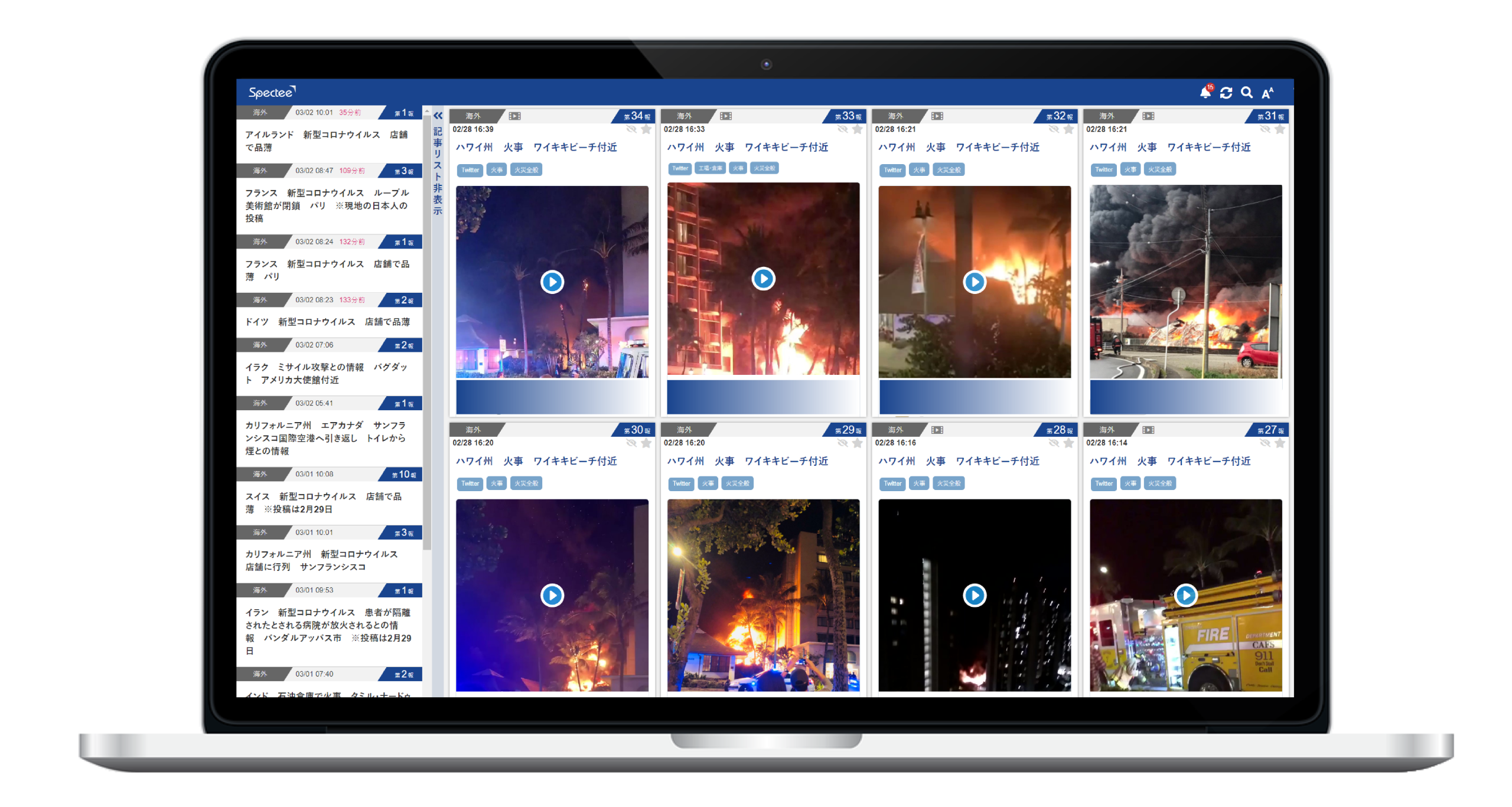
Assembling that fragmented picture in real time is a service provided by Spectee, a Tokyo company founded in 2011. Its main service, Spectee Pro, uses AI to analyze social media posts, weather data, satellite imagery, river and road cameras, and location data from vehicles, then verifies and maps incidents within minutes.
Teaching machines to watch the whole storm
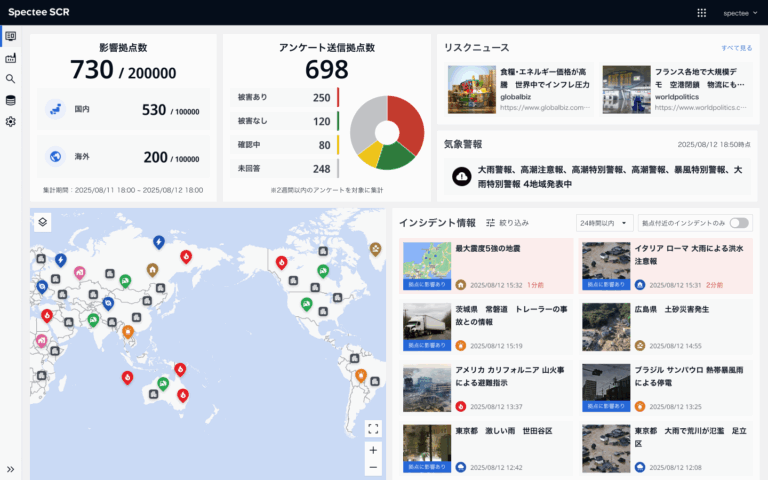
In two of the places in Bavi’s path, Spectee’s infrastructure is already established. In Japan, contracts passed 1,000 in July 2024, spanning municipal governments, broadcasters, infrastructure operators, manufacturers and logistics firms, many of which rely on it for the first report when disaster strikes.
In the Philippines, more than 120 licenses are in use across central and local government agencies with backing from JICA, Japan’s development agency. With Spectee Pro being utilized on a daily basis in these regions, company officials are confident that their system contributed to assisting municipalities and companies in the region, minimizing the damages caused by Bavi.
“One of the strengths of the platform is that it also collects information from overseas, allowing users to gain a broader and more comprehensive picture of the situation,” Spectee’s spokesperson told JStories. “Some Japanese companies use the platform to set alerts around their overseas offices or facilities so they can monitor incidents and disaster risks in the surrounding area.”
Investors closed a 1.8 billion yen (roughly 11 million dollar) funding round at the end of June, and the company shipped its latest update, adding road and river cameras to its supply-chain risk product, on July 8. These developments have shown promising growth in the business itself and alongside their products possibly alluding to more expansions to come in the coming years.
The Tottori anti-misinformation partnership
In May, Spectee announced that the company is partnering with Tottori Prefecture to develop new functionality against rumors and fake information spread on social media during disasters; when a high-impact disaster occurs, widely-circulating posts judged to be of questionable reliability will be flagged with reasons and cautionary notes inside Spectee Pro, for municipalities to use in alerting residents.
The collaboration draws on Tottori’s fake-information response team founded in November 2024, and was prompted in part by a January earthquake after which a video falsely showing large cracks in the Tottori sand dunes spread online.
What the record shows and what it doesn’t
The strongest evidence is that institutions keep paying. A Hokkaido city ran a full drill last year using social posts to visualize evacuations in real time. What’s missing is independent proof of outcomes: no third-party study yet shows the alerts measurably reducing casualties or damage. Adoption is not the same as lives saved.
A US firm known as Dataminr is currently Spectee’s biggest competitor. However, with cross-checked posts against cameras, vehicle data and satellites, combined with a decade of Japanese disaster data. It is safe to say that Spectee has had a long list of past cases to refer to which may potentially be what sets them aside other similar services.
Why it matters: Japan’s disaster-prone geography made it an early adopter of crisis technology, and that decade of refinement is now exported along the typhoon track. Bavi’s weekend is the argument in miniature: the meteorology was shared; the real-time picture of who was flooded, blacked out or stranded was not.