



• Login
Upgrade
JStories
  • 日本語
  • 中文 (中国)
No Result
View All Result
  • Home
  • AI
    • Artificial Intelligence
    • Robotics
    • Mobility
    • FinTech
    • Quantum
  • Earth
    • AgriTech
    • Green Innovation
    • Disaster Tech
    • SpaceTech
    • Materials
  • Life Sciences
    • BioTech
    • HealthTech
    • MedTech
    • AgeTech
  • Society
    • Media
    • EdTech
    • Diversity
    • FemTech
    • Social Impact
  • Lifestyle
    • FoodTech
    • Beauty & Fashion
    • Wellbeing
    • Arts & Music
    • Anime
  • Travel
    • Adventure Travel
    • Luxury Travel
    • Wellness & Medical Tourism
    • Culture
  • Video
  • Deals
    • Venture Capital
    • M&A
    • Events
    • Pitch
    • Growth Support
    • Legal & IP
  • Interview
  • Opinion
  • Home
  • AI
    • Artificial Intelligence
    • Robotics
    • Mobility
    • FinTech
    • Quantum
  • Earth
    • AgriTech
    • Green Innovation
    • Disaster Tech
    • SpaceTech
    • Materials
  • Life Sciences
    • BioTech
    • HealthTech
    • MedTech
    • AgeTech
  • Society
    • Media
    • EdTech
    • Diversity
    • FemTech
    • Social Impact
  • Lifestyle
    • FoodTech
    • Beauty & Fashion
    • Wellbeing
    • Arts & Music
    • Anime
  • Travel
    • Adventure Travel
    • Luxury Travel
    • Wellness & Medical Tourism
    • Culture
  • Video
  • Deals
    • Venture Capital
    • M&A
    • Events
    • Pitch
    • Growth Support
    • Legal & IP
  • Interview
  • Opinion
en English ja 日本語 zh 中文 (中国)
JStories
No Result
View All Result

Evolving electric wheelchairs: From welfare equipment to personal mobility

Emi Takahata by Emi Takahata
07/05/2024
in AI, Artificial Intelligence, Deals, Growth Support, Lifestyle, Mobility, News, Robotics, Venture Capital, Wellbeing
0
Home AI
Share on FacebookShare on Twitter

J-STORIES ー Today, there is a growing effort to use electric wheelchairs as a means of short-distance transportation that can be used not just by the disabled or elderly, but by everyone.

WHILL, a venture company established in 2012, is working on a new mobility system using electric wheelchairs. Under the corporate mission of “making mobility fun and smart for everyone,” the company has been working to improve the usability and comfort of electric wheelchairs, categorizing them as a means of personal mobility.
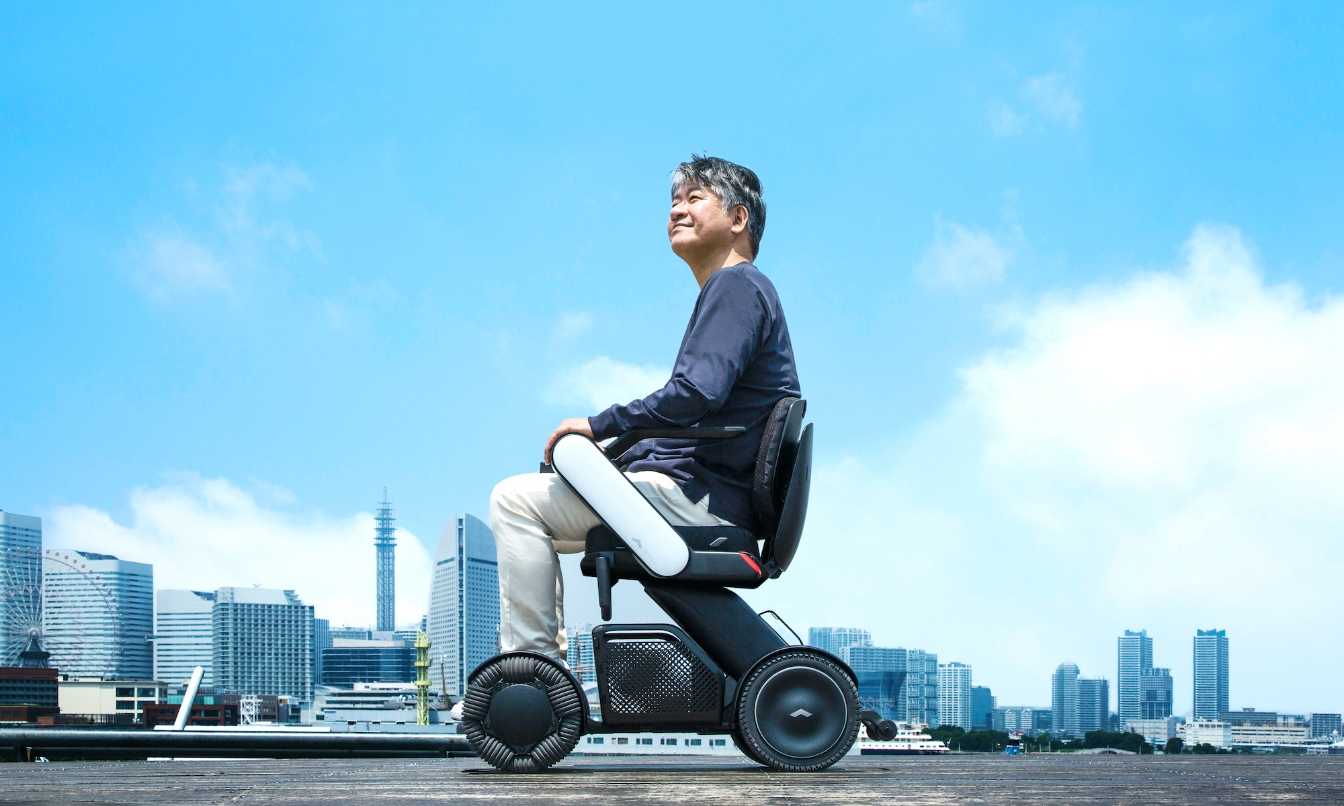
A WHILL Model C2 in use.      Source: WHILL

The company’s electric wheelchair uses the controller on the handles to accelerate, brake, and change direction. The wheelchair moves at a speed of 6 kph, and can safely negotiate 5-cm-high steps. Because of its low top speed, it is considered a “pedestrian” under the Road Traffic Law and users don’t need a driver’s license.

The sophisticated design and arm covers available in various colors are also features not found in ordinary wheelchairs. Some dealers of Toyota Motor Corp. and Honda Motor Co. are already selling these wheelchairs as a means of transportation for elderly people who have given up their driver’s licenses.

In addition to the regular electric wheelchair model WHILL Model C2, the company currently offers two other models: the foldable WHILL Model F, and the WHILL Model S, a scooter type for outdoor use designed to be ridden like a bicycle.
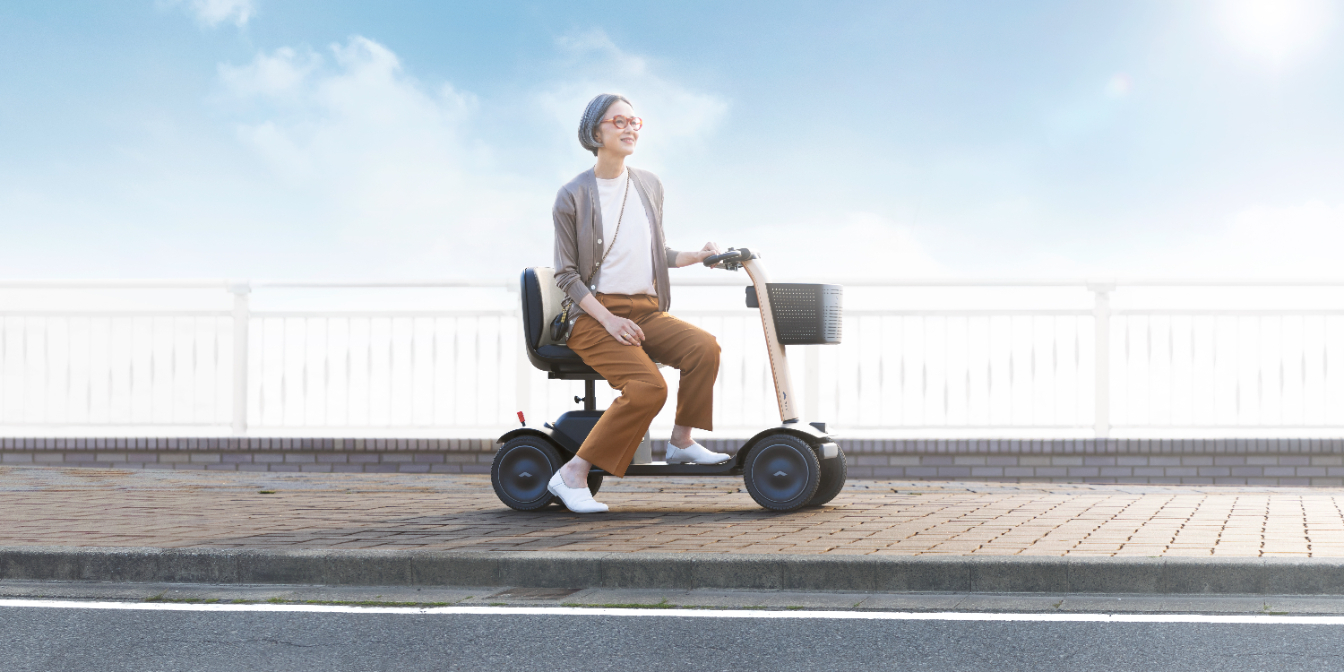
A WHILL Model S in use.     Source: WHILL

The company also offers an automated driving service using their wheelchairs. At Haneda Airport, a new transportation service connecting the company’s electric wheelchairs with autonomous driving began at Terminal 1 on June 14, 2021. The project extended to all areas of Terminal 2 in mid-July of the same year and was also implemented in Terminal 3 in December 2023. In this system, the user rides the WHILL wheelchair and inputs information on a touch panel. After that, the machine automatically drives them to the designated destination.

In December 2022, the first overseas automated driving service started at Winnipeg International Airport in Canada. The same service began at Los Angeles International Airport and Miami International Airport in the U.S. in March 2024. Therefore, through these partnerships, the company aims to expand automated driving services at airports in Japan and overseas.
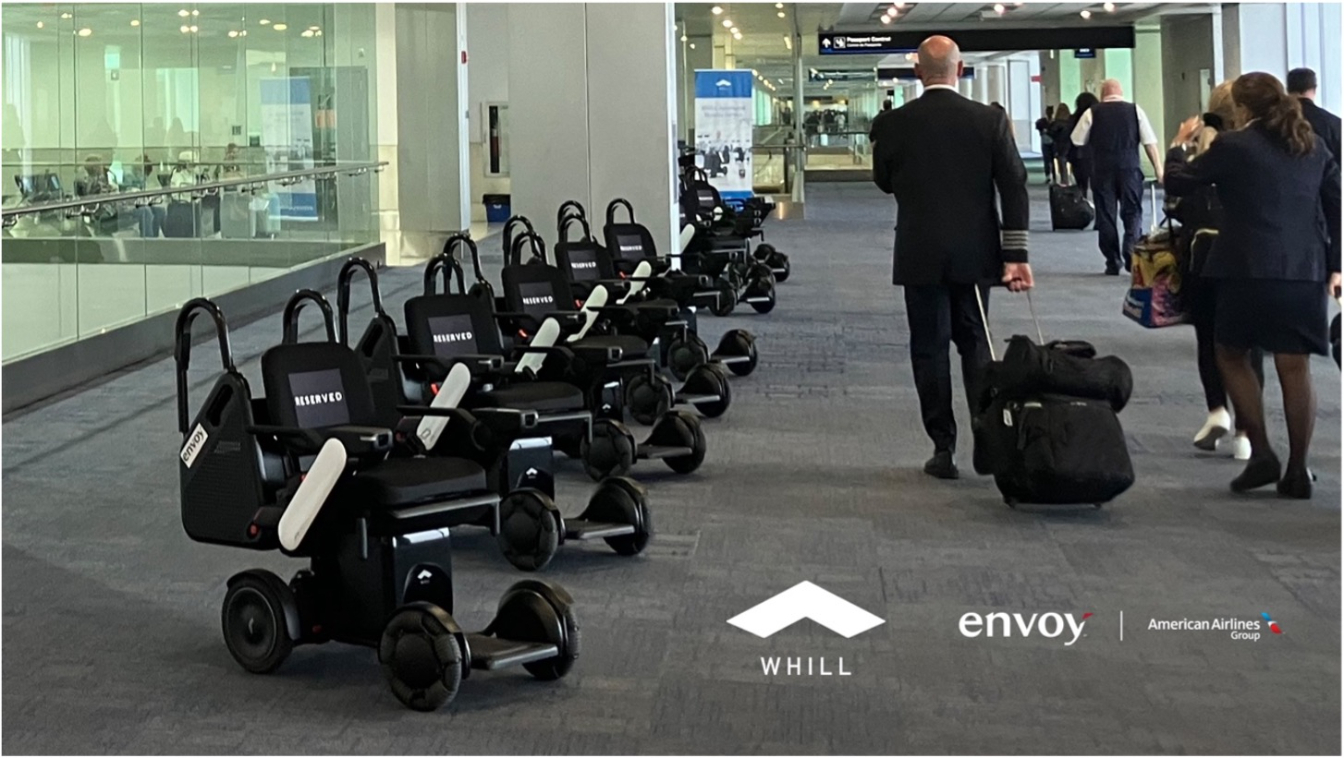
WHILL power chairs are lined up at a U.S. international airport.     Source: WHILL

Other than airports, the company also rents out electric wheelchairs as a means of transportation within tourist areas such as Minato Mirai in Yokohama, Huis Ten Bosch in Nagasaki, Azabudai Hills, and Tokyo Dome City.
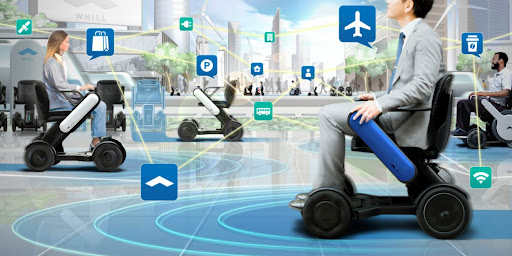
WHILL’s corporate mission is to “make mobility fun and smart for everyone.” The company aims to expand mobility systems with automated driving and collision avoidance features.     Source: WHILL

WHILL collaborated with the travel agency JTB Group in March 2024 and a private travel company, TokudAw, in May to start WHILL wheelchair rental services at tourist spots. The rental services employ WHILL Model F, which can be folded up and used as a second means of transportation after getting out of the car.
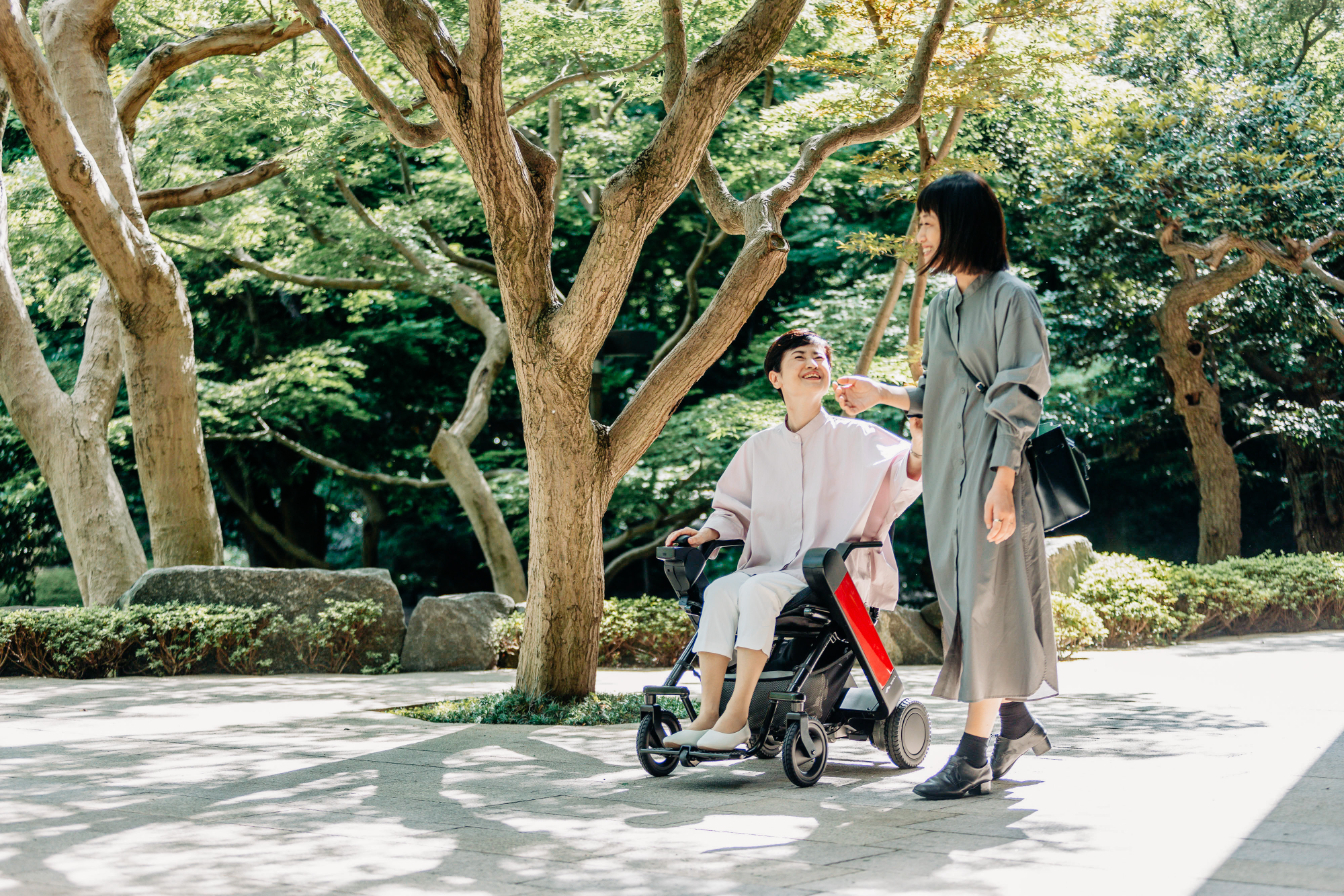
WHILL Model S, which can be used as a second means of transportation in tourist areas, is now available as a rental wheelchair.     Source: WHILL

In May 2022, the company agreed to raise funds from Woven Capital, the investment arm of Woven Planet Group, a subsidiary of Toyota Motor Corp. Woven Planet is responsible for Toyota’s next-generation mobility society initiatives, including automated driving, and as its global investment fund, Woven Capital invests in innovative companies in the mobility field.

This is the first time that Woven Capital has invested in a Japanese company, and WHILL plans to use the funds raised to “strengthen resources with an emphasis on the global expansion of production and business services operations.”
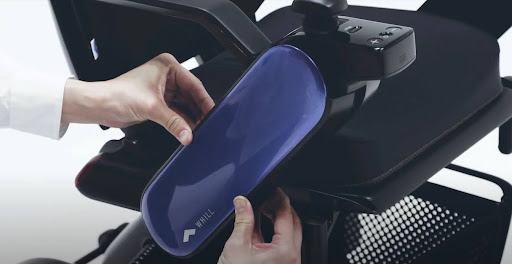
WHILL electric wheelchairs offer various arm cover colors, including blue, black, white, pink, and green. This makes the wheelchair more fashionable and enjoyable to use.      Source: WHILL

WHILL’s public relations manager, Natsuki Niinmen, explained to J-STORIES that through this funding, the company hopes to leverage Woven Planet’s extensive connections and knowledge to grow WHILL’s business.

Regarding the development of electric wheelchair products, he said,

“wheelchairs have improved in terms of technology, but their main design has not changed in over 100 years.” He pointed out that the bias toward a person who uses a wheelchair as someone unable to walk has taken root in the design.

“We want to improve the overall design of electric wheelchairs so that everyone will want to use them, including people with walking disabilities,” she said.

Translated by Tony McNicol

Updated by Mark Goldsmith

Top photo by WHILL

For inquiries about this article, please contact jstories@pacificbridge.jp


Tags: Assistive TechnologyAutonomous DrivingHaneda AirportModel C2Model SPersonal MobilitySmart CitiesToyotaUniversal DesignWHILLWoven Capital
Previous Post

Bringing Tokyo’s traditional crafts into the 21st century

Next Post

A 3D bioprinter that can create transplantable organs from patients’ own cells

Emi Takahata

Emi Takahata

Related Posts

BioTech

Japanese startup Neron develops gut bacteria ‘cocktail’ to ease stress and support mental health

by Kei Mizuno
05/11/2026
AQUIVIO
Pitch

AQUIVIO

by Jstories
05/01/2026
SusHi Tech Tokyo 2026 Opens at Record Scale in Its Fourth Year 
Events

SusHi Tech Tokyo 2026 Opens at Record Scale in Its Fourth Year 

by Randy Wagenheim
04/28/2026
BioTech

Evolutionary artificial protein slated for market debut as early as June 2026

by Yoshiko Ohira
04/17/2026
Ai Heart Japan
Pitch

Ai Heart Japan

by Jstories
04/01/2026
Next Post

A 3D bioprinter that can create transplantable organs from patients' own cells

Leave a Reply Cancel reply

Your email address will not be published. Required fields are marked *

Trending

Greening the desert with trash

by Yui Sawada
03/23/2023
0

J-STORIES - The sight of local Niger women throwing kitchen waste out into the African desert inspired a project that...

Evolutionary artificial protein slated for market debut as early as June 2026

by Yoshiko Ohira
04/17/2026
0

JStories — Severe and hard-to-heal wounds — such as those caused by burns, injuries, pressure ulcers, skin cancer surgery, and...

INTERVIEW | How Japanese musician Grover turned his passion of ‘sound’ into a health-tech startup

by Toshi Maeda
05/02/2025
0

JStories ー For over two decades, Yoshikazu Grover — better known simply as Grover — has been a familiar voice...

World-first “anime character-based therapy” trial to test effectiveness in Japanese young adults

by Lucas Maltzman
01/30/2026
0

JStories – Is sharing personal problems with a virtual anime character easier than face-to-face? In the world’s first clinical trial,...

The world’s first drug that helps patients ‘grow new teeth’

by Ruiko Kokubun
09/22/2023
0

J-STORIES - The conventional way to help people who have lost teeth due to tooth decay or aging has been...

JStories

©Articles and photos published on JStories are protected by Japanese copyright law and international treaties. They cannot be reproduced without the permission of the copyright holders

Explore JStories

  • Home
  • About JStories
  • Company
  • Team
  • Contact
  • Privacy Policy
  • Partner Press Releases

Follow Us

Welcome Back!

Login to your account below

Forgotten Password?

Retrieve your password

Please enter your username or email address to reset your password.

Log In
No Result
View All Result
  • Home
  • AI
    • Artificial Intelligence
    • Robotics
    • Mobility
    • FinTech
    • Quantum
  • Earth
    • AgriTech
    • Green Innovation
    • Disaster Tech
    • SpaceTech
    • Materials
  • Life Sciences
    • BioTech
    • HealthTech
    • MedTech
    • AgeTech
  • Society
    • Media
    • EdTech
    • Diversity
    • FemTech
    • Social Impact
  • Lifestyle
    • FoodTech
    • Beauty & Fashion
    • Wellbeing
    • Arts & Music
    • Anime
  • Travel
    • Adventure Travel
    • Luxury Travel
    • Wellness & Medical Tourism
    • Culture
  • Video
  • Deals
    • Venture Capital
    • M&A
    • Events
    • Growth Support
    • Legal & IP
  • Interview
  • Opinion

©Articles and photos published on JStories are protected by Japanese copyright law and international treaties. They cannot be reproduced without the permission of the copyright holders

Are you sure want to unlock this post?
Unlock left : 0
Are you sure want to cancel subscription?