


• Login
Upgrade
JStories
  • 日本語
  • 中文 (中国)
No Result
View All Result
  • Home
  • AI
    • Artificial Intelligence
    • Robotics
    • Mobility
    • FinTech
    • Quantum
  • Earth
    • AgriTech
    • Green Innovation
    • Disaster Tech
    • SpaceTech
    • Materials
  • Life Sciences
    • BioTech
    • HealthTech
    • MedTech
    • AgeTech
  • Society
    • Media
    • EdTech
    • Diversity
    • FemTech
    • Social Impact
  • Lifestyle
    • FoodTech
    • Beauty & Fashion
    • Wellbeing
    • Arts & Music
    • Anime
  • Travel
    • Adventure Travel
    • Luxury Travel
    • Wellness & Medical Tourism
    • Culture
  • Video
  • Deals
    • Venture Capital
    • M&A
    • Events
    • Pitch
    • Growth Support
    • Legal & IP
  • Interview
  • Opinion
  • Home
  • AI
    • Artificial Intelligence
    • Robotics
    • Mobility
    • FinTech
    • Quantum
  • Earth
    • AgriTech
    • Green Innovation
    • Disaster Tech
    • SpaceTech
    • Materials
  • Life Sciences
    • BioTech
    • HealthTech
    • MedTech
    • AgeTech
  • Society
    • Media
    • EdTech
    • Diversity
    • FemTech
    • Social Impact
  • Lifestyle
    • FoodTech
    • Beauty & Fashion
    • Wellbeing
    • Arts & Music
    • Anime
  • Travel
    • Adventure Travel
    • Luxury Travel
    • Wellness & Medical Tourism
    • Culture
  • Video
  • Deals
    • Venture Capital
    • M&A
    • Events
    • Pitch
    • Growth Support
    • Legal & IP
  • Interview
  • Opinion
en English ja 日本語 zh 中文 (中国)
JStories
No Result
View All Result

Digitally testing sense of smell

Yui Sawada by Yui Sawada
02/23/2023
in BioTech, Life Sciences, News
0
Home Life Sciences BioTech
Share on FacebookShare on Twitter

J-STORIES – Changes to the sense of smell can be an important clue in the diagnosis of not just everyday physical ailments, but also serious neurological illness such as Alzheimer’s and Parkinson’s disease. Yet, it is said that smell has been the least studied of the five human senses.

So far, testing patients’ sense of smell has been a cumbersome analogue process involving aroma impregnated paper and special rooms. Because of that, only a limited number of medical institutions have been able to make such tests available.

The NOS-DX1000 is a new digital olfactometry device from Sony that promises to make smell tests much easier for patients and medics. Due to go on sale to corporate and medical research institutions in March this year, it can be operated via a PC tablet, and only takes 10 minutes to conduct a test versus the 30 minutes required for traditional paper tests. It is small and portable, making olfactory testing available almost anywhere.

A cartridge contained in the device (made and sold by Tokyo company Daiichi Yakuhin Sangyo) supplies five different smells at eight levels of intensity. Special “Tensor Valve” technology developed by Sony Corp., meanwhile, allows the smells to be momentarily presented to the patient. This removes a major drawback of previous systems, which was the need for a special air-conditioned room to prevent the leakage of strong odors used in testing.
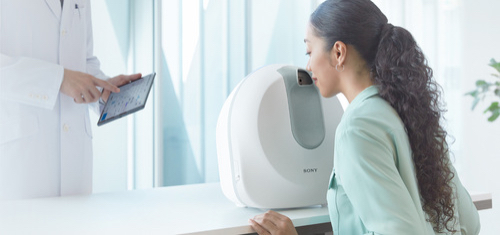
The system can be operated via computer tablet, then the recorded data automatically compared, analyzed and transmitted.     Source: Sony 

Shuji Fujita, who led commercialization of the NOS-DX1000, was also involved with the development and release of a Sony stick-shaped aroma diffuser in 2015. Like the new system, that diffuser also used cartridges.

“We have finally achieved the digitalization of olfactory measurement, a need we became aware of at that time,” he told J-Stories.
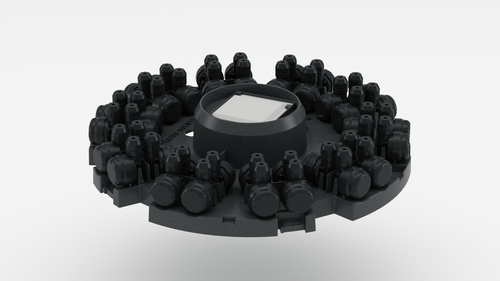
The cartridge in the NOS-DX1000 contains 39 different smells and one odorless “blank”.     Source: Sony

Although Sony plans to sell the device mainly to medical and research institutions, it is already receiving enquiries from other fields, such as food and drink manufacturers. In fact, the device has already been used to compare the aroma of different wines.

Translation by Tony McNicol

Top page photo by Nardavar/Envato

For inquiries about this article, please contact us at jstories@pacificbridge.jp


.

Tags: HealthLivingTechnology
Previous Post

Bright future for photocatalysis

Next Post

The Brief #46 Photocatalytic tech, Digitally testing smell

Yui Sawada

Yui Sawada

Related Posts

BioTech

Japanese startup Neron develops gut bacteria ‘cocktail’ to ease stress and support mental health

by Kei Mizuno
05/11/2026
AQUIVIO
Pitch

AQUIVIO

by Jstories
05/01/2026
BioTech

Evolutionary artificial protein slated for market debut as early as June 2026

by Yoshiko Ohira
04/17/2026
Ai Heart Japan
Pitch

Ai Heart Japan

by Jstories
04/01/2026
AssistMotion Inc.
Pitch

AssistMotion Inc.

by Jstories
04/01/2026
Next Post

The Brief #46 Photocatalytic tech, Digitally testing smell

Leave a Reply Cancel reply

Your email address will not be published. Required fields are marked *

Trending

Greening the desert with trash

by Yui Sawada
03/23/2023
0

J-STORIES - The sight of local Niger women throwing kitchen waste out into the African desert inspired a project that...

Evolutionary artificial protein slated for market debut as early as June 2026

by Yoshiko Ohira
04/17/2026
0

JStories — Severe and hard-to-heal wounds — such as those caused by burns, injuries, pressure ulcers, skin cancer surgery, and...

INTERVIEW | How Japanese musician Grover turned his passion of ‘sound’ into a health-tech startup

by Toshi Maeda
05/02/2025
0

JStories ー For over two decades, Yoshikazu Grover — better known simply as Grover — has been a familiar voice...

The world’s first drug that helps patients ‘grow new teeth’

by Ruiko Kokubun
09/22/2023
0

J-STORIES - The conventional way to help people who have lost teeth due to tooth decay or aging has been...

World-first “anime character-based therapy” trial to test effectiveness in Japanese young adults

by Lucas Maltzman
01/30/2026
0

JStories – Is sharing personal problems with a virtual anime character easier than face-to-face? In the world’s first clinical trial,...

JStories

©Articles and photos published on JStories are protected by Japanese copyright law and international treaties. They cannot be reproduced without the permission of the copyright holders

Explore JStories

  • TOP STORIES
  • About JStories
  • Company
  • Team
  • Contact
  • Privacy Policy
  • Partner Press Releases

Follow Us

Welcome Back!

Login to your account below

Forgotten Password?

Retrieve your password

Please enter your username or email address to reset your password.

Log In
No Result
View All Result
  • TOP STORIES
  • AI
    • Artificial Intelligence
    • Robotics
    • Mobility
    • FinTech
    • Quantum
  • Earth
    • AgriTech
    • Green Innovation
    • Disaster Tech
    • SpaceTech
    • Materials
  • Life Sciences
    • BioTech
    • HealthTech
    • MedTech
    • AgeTech
  • Society
    • Media
    • EdTech
    • Diversity
    • FemTech
    • Social Impact
  • Lifestyle
    • FoodTech
    • Beauty & Fashion
    • Wellbeing
    • Arts & Music
    • Anime
  • Travel
    • Adventure Travel
    • Luxury Travel
    • Wellness & Medical Tourism
    • Culture
  • Video
  • Deals
    • Venture Capital
    • M&A
    • Events
    • Growth Support
    • Legal & IP
  • Interview
  • Opinion

©Articles and photos published on JStories are protected by Japanese copyright law and international treaties. They cannot be reproduced without the permission of the copyright holders

Are you sure want to unlock this post?
Unlock left : 0
Are you sure want to cancel subscription?