


PROBLEM: Heat and drought are draining drinking water supplies around the Mediterranean, pushing Greek islands into emergency declarations and forcing communities to buy seawater treatment they did not previously need.
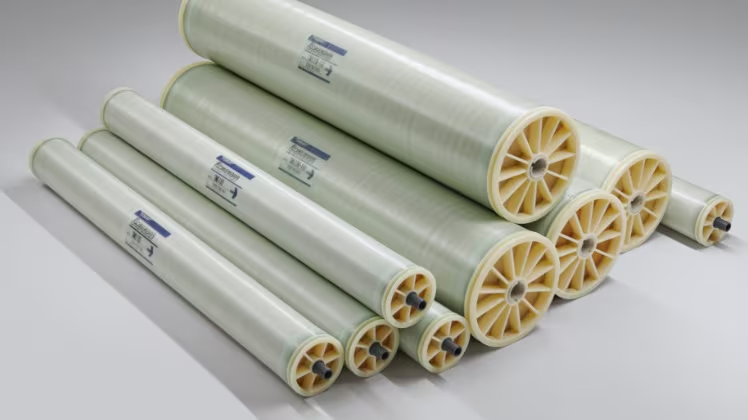
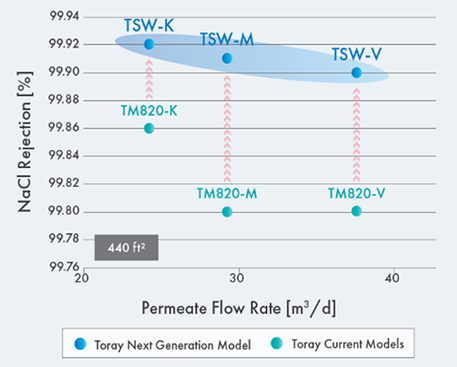
POTENTIAL SOLUTION: Toray Industries’ TSW-K/M/V reverse-osmosis membranes are on sale in October, claiming to cut salt permeability up to 55 percent, which could let new desalination plants treat seawater in a single pass.
Europe’s summer is being measured in reservoirs. Seven Aegean islands have declared states of emergency over water shortages, a status that lets municipalities skip standard tendering and lease mobile desalination units before the dry season peaks. Greece’s environment ministry approved about €15 million for desalination units and grid upgrades on nine islands, with tankers sent where the need is worst. Reservoirs supplying greater Athens have registered historic drops.
The same heat is burning the mainland. Crews were fighting blazes near Porto Germeno, northwest of Athens, on Aug. 2, and roughly 116,000 hectares have burned in Spain and 42,000 in France this season.
Meanwhile, a Tokyo materials maker named Toray, mentioned on June 4th it will begin selling a new line of reverse-osmosis membranes for seawater desalination in October [5].
Toray says its TSW-K/M/V series lowers salt permeability by up to 55 percent compared with its current elements, reaching salt rejection of 99.92 percent [5][6]. Toray claims that it is enough for a newly built plant to treat seawater in a single pass through the filter rather than the conventional two pass [5]. At currently existing two-pass facilities, the company says the membranes can save energy and improve water quality by easing loads on second-pass equipment [5]. The series also targets boron, which resists removal because the molecule is small, and is built for higher chemical resistance so membranes degrade less during cleaning [5][6].
Where the demand is going
Toray is candid about which market it is chasing. As water shortages worsen worldwide, the demand for seawater desalination should grow significantly, particularly in the Middle East. Leading intentions to step up efforts there to improve access to safe, affordable water [5].
That is where the volume already sits. Roughly 5,000 desalination plants operate across the Middle East, more than 400 of them in the Gulf, and Gulf states have invested at least $53.4 billion in the infrastructure since 2006 [7]. Desalinated water supplies about 90 percent of drinking water in Kuwait and Bahrain, around 86 percent in Oman and roughly 70 percent in Saudi Arabia [7]. Toray has run a dedicated Middle East membrane subsidiary for years [8]. The desalination systems market is estimated at about $19.6 billion in 2026, growing toward $29.9 billion by 2031 [9].
Japan itself has no shortage of this kind. With a half-century of polymer chemistry converted into an export business, Toray began making spiral-wound RO elements in 1968.
What the membranes cannot do
The new membranes might be a little too late this year. With the newest iteration shipping in October, and performance figures being claimed and measured by Toray, there is yet to be a guarantee for quality and performance improvement.
Desalination works by pushing seawater against a membrane fine enough to let water molecules through while holding salt back. No membrane catches all of it, so most plants send the water through multiple times.
Toray says its new membranes catch up to 99.92 percent of the salt within one pass, making skipping another pass altogether feasible and safe [5][6]. However, plants already built with two stages would not need rebuilding, as the new membranes would ease the load on the second stage, thus saving energy[5].
The membranes are also designed to trap boron, which slips through ordinary membranes because the molecule is so small [5][6].