




• Login
Upgrade
JStories
  • 日本語
  • 中文 (中国)
No Result
View All Result
  • Home
  • AI
    • Artificial Intelligence
    • Robotics
    • Mobility
    • FinTech
    • Quantum
  • Earth
    • AgriTech
    • Green Innovation
    • Disaster Tech
    • SpaceTech
    • Materials
  • Life Sciences
    • BioTech
    • HealthTech
    • MedTech
    • AgeTech
  • Society
    • Media
    • EdTech
    • Diversity
    • FemTech
    • Social Impact
  • Lifestyle
    • FoodTech
    • Beauty & Fashion
    • Wellbeing
    • Arts & Music
    • Anime
  • Travel
    • Adventure Travel
    • Luxury Travel
    • Wellness & Medical Tourism
    • Culture
  • Video
  • Deals
    • Venture Capital
    • M&A
    • Events
    • Pitch
    • Growth Support
    • Legal & IP
  • Interview
  • Opinion
  • Home
  • AI
    • Artificial Intelligence
    • Robotics
    • Mobility
    • FinTech
    • Quantum
  • Earth
    • AgriTech
    • Green Innovation
    • Disaster Tech
    • SpaceTech
    • Materials
  • Life Sciences
    • BioTech
    • HealthTech
    • MedTech
    • AgeTech
  • Society
    • Media
    • EdTech
    • Diversity
    • FemTech
    • Social Impact
  • Lifestyle
    • FoodTech
    • Beauty & Fashion
    • Wellbeing
    • Arts & Music
    • Anime
  • Travel
    • Adventure Travel
    • Luxury Travel
    • Wellness & Medical Tourism
    • Culture
  • Video
  • Deals
    • Venture Capital
    • M&A
    • Events
    • Pitch
    • Growth Support
    • Legal & IP
  • Interview
  • Opinion
en English ja 日本語 zh 中文 (中国)
JStories
No Result
View All Result

ReBirth wool : Reviving tradition and sustainability in Japan’s textile industry

Emi Takahata by Emi Takahata
08/18/2023
in AgriTech, Beauty & Fashion, Earth, Green Innovation, Lifestyle, News, Wellbeing
0
Home Earth AgriTech
Share on FacebookShare on Twitter

J-STORIES – The central Japan region of Bishu In Gifu Prefecture has a wool-producing heritage to rival Viera in Italy or Yorkshire in Britain. Now, a Gifu-based company is weaving tradition with innovation to create a recycling-based business for the 21st century.

The “ReBirth Wool” project was launched by the Mitsuboshi Group, a Gifu textile and apparel maker that dates back to 1887. The aim is to produce new clothes such as sweaters and scarves from used wool provided by members of the public and reclaimed using a traditional method called “hanmou.”

According to Shingo Iwata, Mitsuboshi’s president, this marks Japan’s first project to “recycle wool with the help of both producer and user.”

Iwata says that the ReBirth Wool project was prompted by an awareness of the environmental challenges facing the fashion industry. Huge amounts of water are needed to make woolen and other textiles, resulting in considerable water pollution and carbon dioxide emissions. Meanwhile, most used garments are burned or end up in landfills. The United Nations Conference on Trade and Development has identified the fashion industry as the world’s second most polluting after oil.
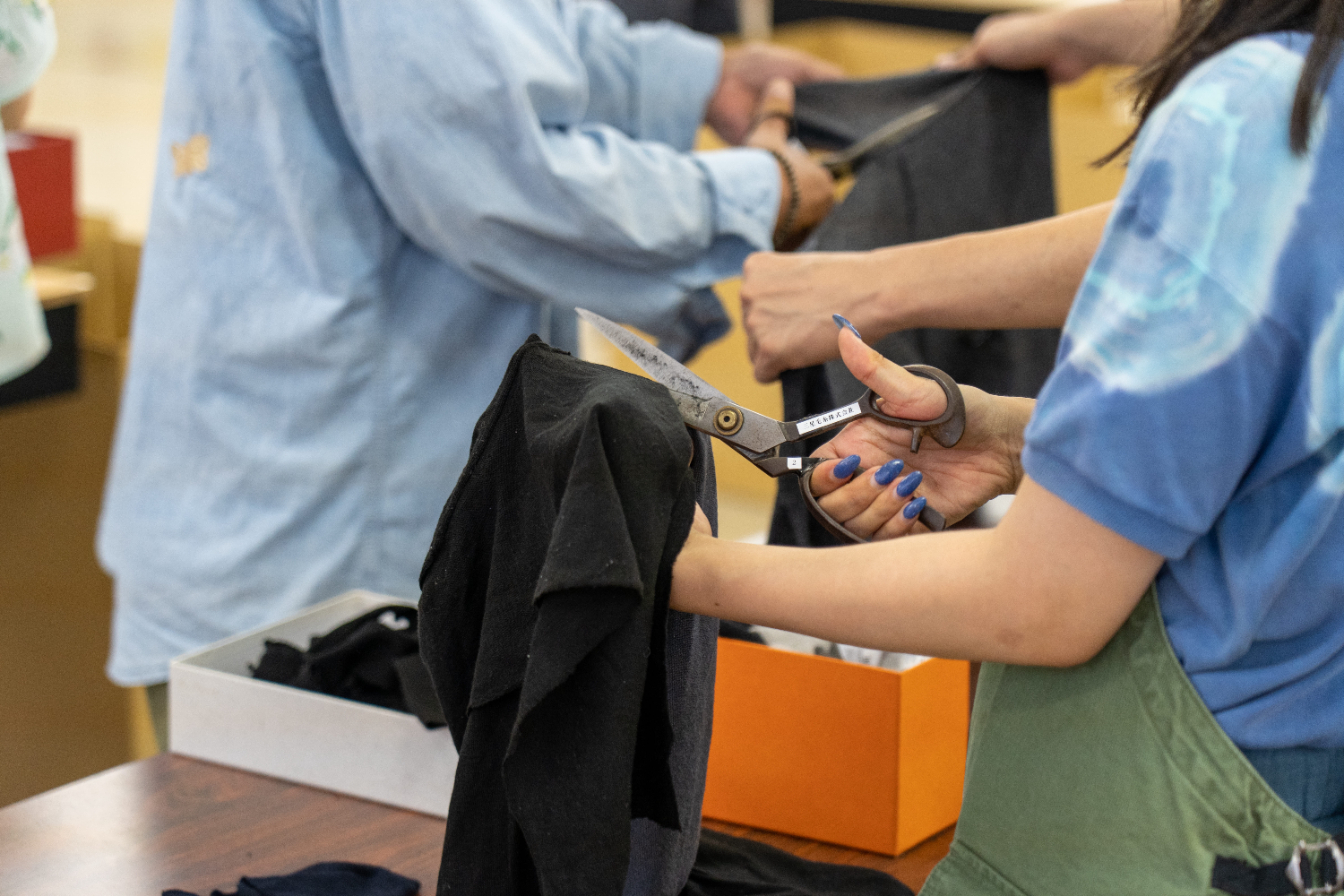
As part of the process to sort and take apart used woolen garments, buttons, tags, and nonwoolen materials are removed.     Source: Mitsuboshi Keito

“This industry is the bad boy when it comes to sustainability,” says Iwata. “Sustainability is no longer a matter of image, but an absolute requirement for the industry’s survival. The biggest problems are overproduction and massive waste.”

The project is organized by group company Mitsuboshi Keito together with eco-startup Ecommit and trading company Itochu. Mitsuboshi has already been using the “hanmou” wool reclamation method for over 60 years. At a time when almost all the wool in Japan was imported, this method was an important way to avoid waste. But this is the first time that customers have been enlisted to help with the reclamation process.

Shingo Iwata is the fifth-generation head of the Mitsuboshi Keito, which was founded in 1887.     Source: Mitsuboshi Keito

On July 18, the companies organized an event where they invited customers to experience the “hanmou” process. The garments were sorted into different colors, then buttons, tags, and nonwoolen materials, such as linings and stitching thread, were removed. Over 400 garments were collected and Mitsuboshi Keito plans to sell garments made from the reclaimed wool from around October this year.

The event’s aims included helping customers understand the difficult and complex process that goes into making woolen garments so that they are less likely to throw them away. Iwata says he hopes that through the ReBirth Wool project customers will take a fresh look at wool as a natural and eco-friendly material.

Translation and editing by Tony McNicol

Top page photo by EwaStudio

For inquires about this article, please contact us at jstories@pacificbridge.jp


Click here for the Japanese version of the article.

Tags: JapanSustainabilitytextiletraditionwool
Previous Post

The energy-free cooling breakthrough redefining thermal comfort

Next Post

INTERVIEW | Longtime startup watcher predicts more ‘unicorns’ in Japan

Emi Takahata

Emi Takahata

Related Posts

世界が渇望する日本発バイオ素材、2026年6月以降に市場投入へ
BioTech

Evolutionary artificial protein slated for market debut as early as June 2026

by Yoshiko Ohira
04/17/2026
Ai Heart Japan
Pitch

Ai Heart Japan

by JStories_Admin
04/01/2026
Assist motion
Pitch

Assist motion

by JStories_Admin
04/01/2026
Aster
Pitch

Aster

by JStories_Admin
04/01/2026
Challenergy
Pitch

Challenergy

by JStories_Admin
04/01/2026
Next Post

INTERVIEW | Longtime startup watcher predicts more 'unicorns' in Japan

Leave a Reply Cancel reply

Your email address will not be published. Required fields are marked *

Videos

The Brief #21 Horizontal Spaceport, AI pig farming

07/21/2022

The Brief #23 Energy from trash, Inclusiveness from language

08/04/2022

The Brief #29 Avatar robots, Solar coating

10/06/2022

Browse by Tags

#Startup Aging Society Ai Alternative Energy biotechnology Climate Change Community Education Event Food foodtech Health Inclusion Infrastructure Innovation Interview J-Stories Japan Japan-Taiwan Innovation Summit Japan startups Japan Tech Labor Living Nature Podcast Recycling Refugees robotics Society Space Startup Ecosystem Startups SusHI Tech Tokyo Sustainability Sustainable Society Taiwan Technology Tokyo Tokyo Innovation Base Tokyo Metropolitan Government Tokyo Updates venture capital video Wealth Zero Waste
JStories

©Articles and photos published on JStories are protected by Japanese copyright law and international treaties. They cannot be reproduced without the permission of the copyright holders

Explore JStories

  • Home
  • About JStories
  • Company
  • Team
  • Contact
  • Privacy Policy
  • Partner Press Releases

Follow Us

Welcome Back!

Login to your account below

Forgotten Password?

Retrieve your password

Please enter your username or email address to reset your password.

Log In
No Result
View All Result
  • Home
  • AI
    • Artificial Intelligence
    • Robotics
    • Mobility
    • FinTech
    • Quantum
  • Earth
    • AgriTech
    • Green Innovation
    • Disaster Tech
    • SpaceTech
    • Materials
  • Life Sciences
    • BioTech
    • HealthTech
    • MedTech
    • AgeTech
  • Society
    • Media
    • EdTech
    • Diversity
    • FemTech
    • Social Impact
  • Lifestyle
    • FoodTech
    • Beauty & Fashion
    • Wellbeing
    • Arts & Music
    • Anime
  • Travel
    • Adventure Travel
    • Luxury Travel
    • Wellness & Medical Tourism
    • Culture
  • Video
  • Deals
    • Venture Capital
    • M&A
    • Events
    • Growth Support
    • Legal & IP
  • Interview
  • Opinion

©Articles and photos published on JStories are protected by Japanese copyright law and international treaties. They cannot be reproduced without the permission of the copyright holders

Are you sure want to unlock this post?
Unlock left : 0
Are you sure want to cancel subscription?