



JStories — As countries around the world seek to expand organic farming while reducing food waste, Japan has set ambitious goals to transform its food system. In one of the country’s key rice-producing regions, Kashiwazaki Eco Creative, a local company based in Niigata Prefecture, is responding to that challenge by creating a circular model that connects fisheries, agriculture, and communities — turning what was once discarded into a valuable resource for healthier soil and better-tasting crops.
As consumer awareness of environmental protection and food safety continues to grow, the Japanese government has been promoting the expansion of organic farming. In May 2021, the Ministry of Agriculture, Forestry and Fisheries formulated the “MIDORI Strategy for Sustainable Food Systems,” which aims to build an environmentally friendly and sustainable food system. The strategy sets a target of expanding organic farming to 25% of Japan’s total cultivated land — approximately 1 million hectares — by 2050.
Riding this policy momentum, Kashiwazaki Eco Creative has been developing an organic fertilizer business rooted in the region’s fishing and farming industries.
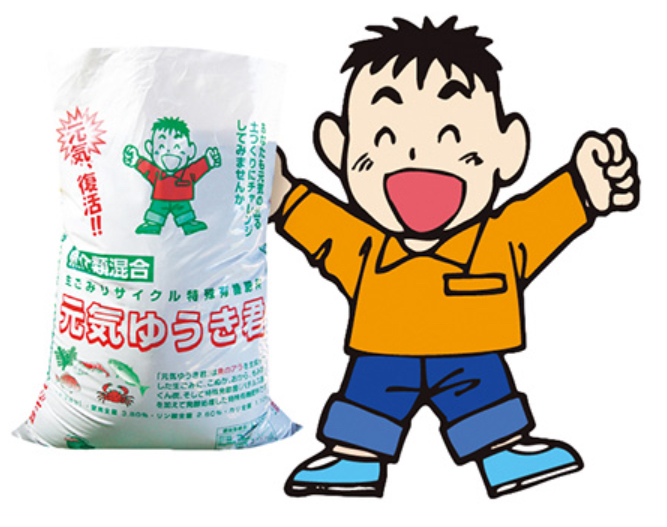
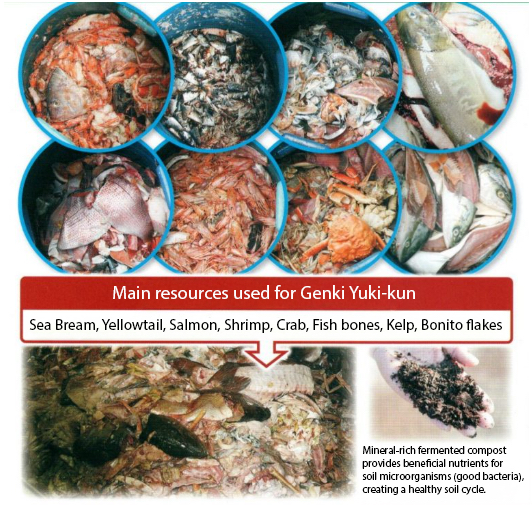
Sold under the name “Genki Yuki-kun,” the fertilizer is produced under the slogan “Soil nourished by fish scraps, and better-tasting agriculture.” It uses large quantities of fish scraps left over after processing at restaurants and supermarkets. By reducing marine waste while enhancing the flavor of agricultural products, the fertilizer has earned a strong reputation for improving soil conditions and producing rich-tasting crops. Its use has now spread beyond Kashiwazaki City to other regions.
Company President Masaru Niki, who leads operations from the headquarters in Kashiwazaki City, is firm in his belief. “If we take better care of fish scraps, Japanese agriculture can change,” he says.
While fish-based fertilizers are produced in other regions, Kashiwazaki Eco Creative does not use external electric heat processing. Instead, the company recycles fish scraps using a proprietary high-temperature fermentation method that reduces environmental impact and carbon dioxide emissions. Fish scraps collected from supermarkets, fish markets, fresh fish stores, hotels, and restaurants — both inside and outside the city — are mixed with rice bran and seaweed. The mixture is then broken down and fermented over roughly 10 hours using naturally occurring environmental microorganisms, followed by a maturation and drying period of about two to three months.
Carrying on Japan’s traditional wisdom of fish-based organic fertilizer
Before chemical fertilizers became widespread, organic fertilizers made from dried sardines (hoshika) and other fish were among the most effective and accessible agricultural inputs in Japan. These fertilizers were especially common in coastal regions with abundant fish catches, and their rich nutrient content historically played a major role in improving crop quality.
“The starting point for us was being inspired by the ‘Rainbow Plan’ in Nagai City, Yamagata Prefecture — an initiative that connects kitchens and agriculture,” Niki says. “We wondered if something similar could be done in Kashiwazaki.”
Launched in northern Japan, the Rainbow Plan is a municipal food-recycling initiative that links household food waste with organic farming. From the outset, Kashiwazaki Eco Creative worked patiently to build trust with the local farming community, carefully explaining organic farming methods and the use of organic fertilizers and gradually establishing a system of cooperation at the community level.

Demonstration experiments conducted in collaboration with Niigata University have shown that crops grown using Genki Yuki-kun contain higher levels of amino acids, a key component of umami. Crops produced by farmers using the fertilizer have also won numerous awards in taste competitions, drawing increasing attention.
“In recent years, even without active sales efforts, the number of farmers using Genki Yuki-kun has been naturally expanding through word of mouth,” says Niki. This trend is especially evident in the Uonuma region of Niigata Prefecture — renowned for its rice production — where many rice farmers now use the fertilizer. Adoption has also spread beyond Niigata to areas such as Gunma and Saga.
Amino acids produced through the breakdown of fish protein serve as a fully organic nutrient source for plants and also provide valuable nourishment for soil microorganisms. According to Niki, continued use of Genki Yuki-kun improves soil quality, making it softer and healthier, while gradually reducing the amount of fertilizer required over time.
The company has also created a local recycling loop in which farmers grow rice and vegetables using the fertilizer and sell their harvests at local supermarkets.
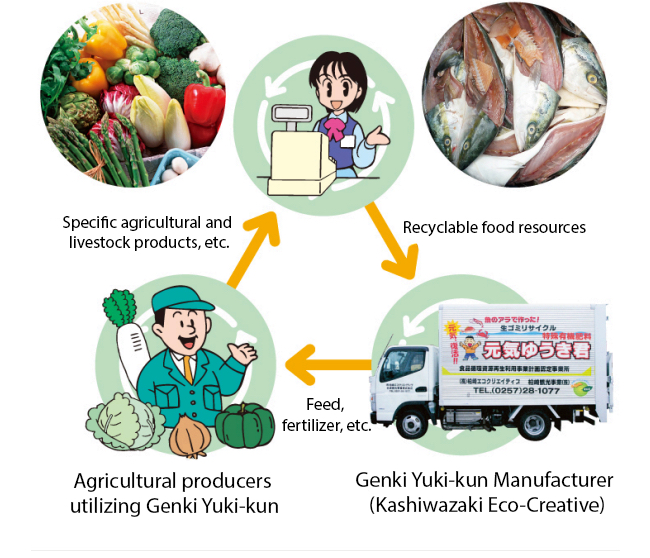
In collaboration with municipal governments, this recycling loop is currently operating in several municipalities across Niigata Prefecture, including Kashiwazaki, Ojiya, Uonuma, Minami-Uonuma, and Tokamachi.
Business potential beyond coastal regions
The largest sources of fish scraps are supermarkets and hotels. In densely populated areas, distribution volumes are higher, generating large quantities of waste. “This model can be developed not only in coastal areas, but by municipalities across Japan,” says Niki, adding that the company has filed patent applications related to its know-how and is eager to expand nationwide.
Introducing the company’s recycling fermentation processing equipment — which converts organic materials such as fish scraps and rice bran into nutrient-rich fertilizer through high-temperature fermentation — requires an investment of approximately ¥17 million. The company aims to sell not only the machinery itself, but also the accompanying technical expertise as a package.
At present, inquiries about site visits are coming in from municipalities and companies, including from Saitama Prefecture, a landlocked region with no coastline. Collaborative initiatives are also emerging in neighboring Nagano Prefecture.
To complete the recycling loop for collecting and processing fish scraps, two permits are required: one for general waste collection and transportation, and another for waste disposal. Creating a system like Kashiwazaki’s — where marine resources enrich soil and crops while supporting people’s health and livelihoods — requires cooperation from local governments and residents alike.
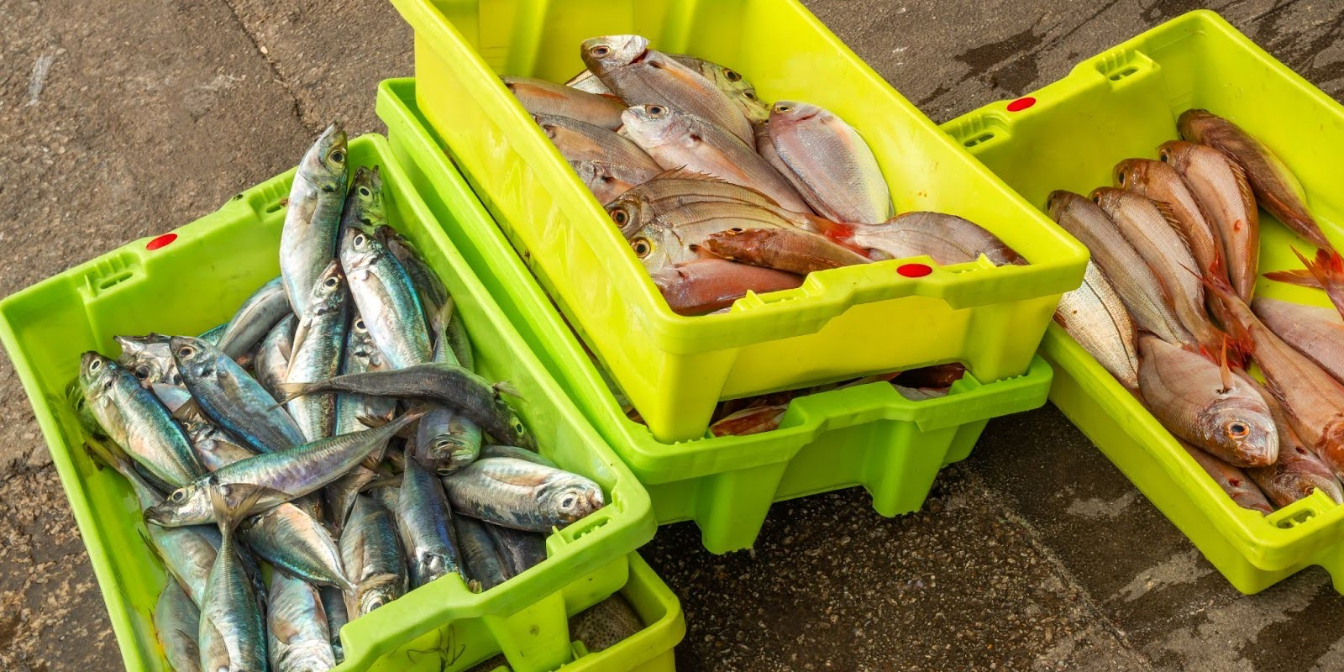
“There is still a serious shortage of organic fertilizer if we are to meet the Ministry of Agriculture’s targets,” Niki points out. “Fish scraps that are currently being incinerated across Japan are, in reality, a hidden treasure. If we can take better care of them, it could spark a major transformation in Japanese agriculture.”
As pressure mounts worldwide to reduce food waste and lower agriculture’s environmental footprint, interest in alternatives to chemical fertilizers is growing. By rethinking how organic waste can be returned to the soil, Kashiwazaki Eco Creative’s model offers insights that could resonate with farming communities well beyond Japan.
Translated by Anita De Michele | JStories
Edited by Mark Goldsmith
Top photo: Envato
For inquiries regarding this article, please contact [email protected]