




PROBLEM: A quarter of the 2026 World Cup matches, taking place across North America, are forecast to be played in heat dangerous enough to threaten the health of players and fans.
POTENTIAL SOLUTION: Japanese firms Liberta, Sumitomo Chemical and Utax make a cooling fabric built on a polymer fiber that self-regulates temperature, sold as everyday wear for people facing extreme heat.
The 2026 World Cup has kicked off, and the biggest opponent may be the weather. A new analysis by the climate research group World Weather Attribution found that roughly a quarter of the tournament’s 104 matches could be played in heat dangerous enough to harm players and fans.
The risk is concrete. Researchers using wet-bulb globe temperature, a measure combining heat, humidity, sun and wind, found that 14 of the 16 host stadiums could exceed the 28-degree-Celsius threshold at which the international players’ union FIFPRO recommends matches be postponed. Heat emergencies have already occurred at recent matches in North America, including a referee who collapsed during a 2024 game in Kansas City.
Stadiums can add shade, hydration stations and cooling breaks. But much of the burden falls on individuals trying to stay cool in the stands or on the training pitch. That is where a Japanese material, developed for the country’s own record summers, is being sold to consumers.
A fabric that regulates its own temperature
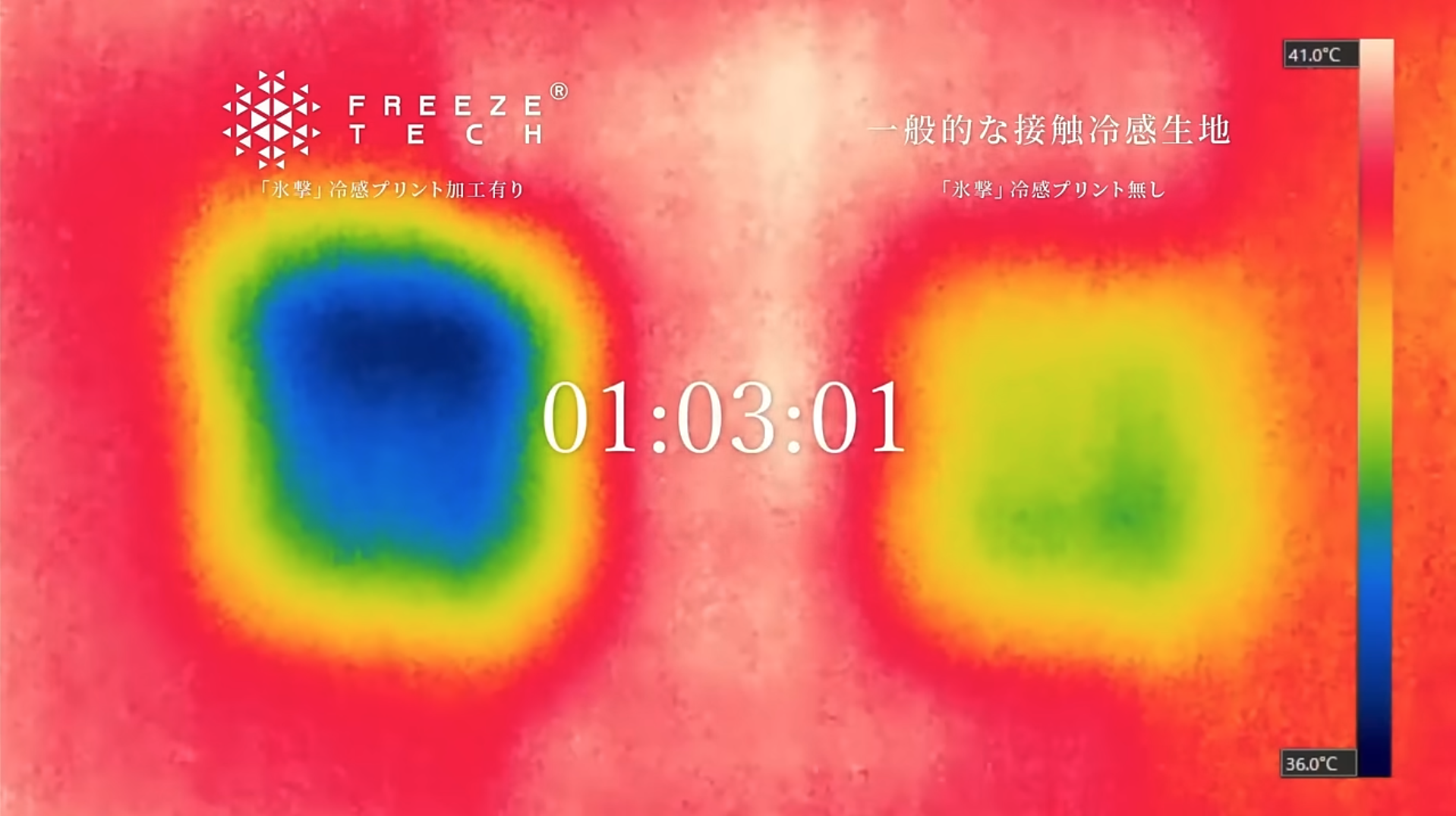
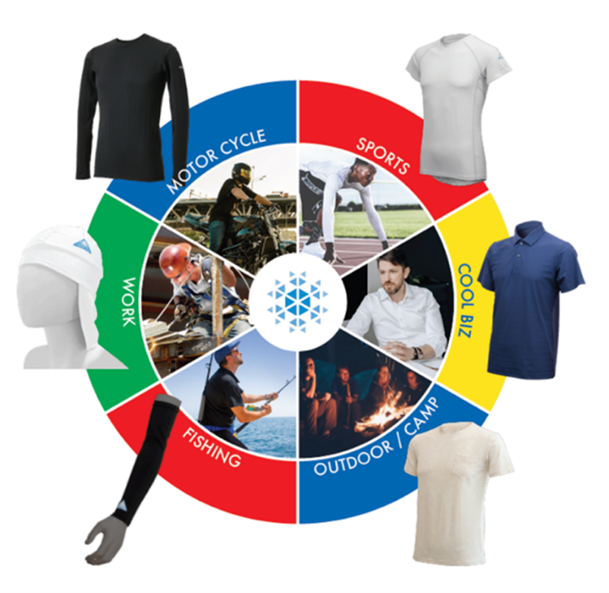
Tokyo-based apparel firm Liberta, chemicals giant Sumitomo Chemical, and printing-technology specialist Utax jointly developed a cooling garment line sold as Hyo-Geki in Japan and Ice Blast abroad.
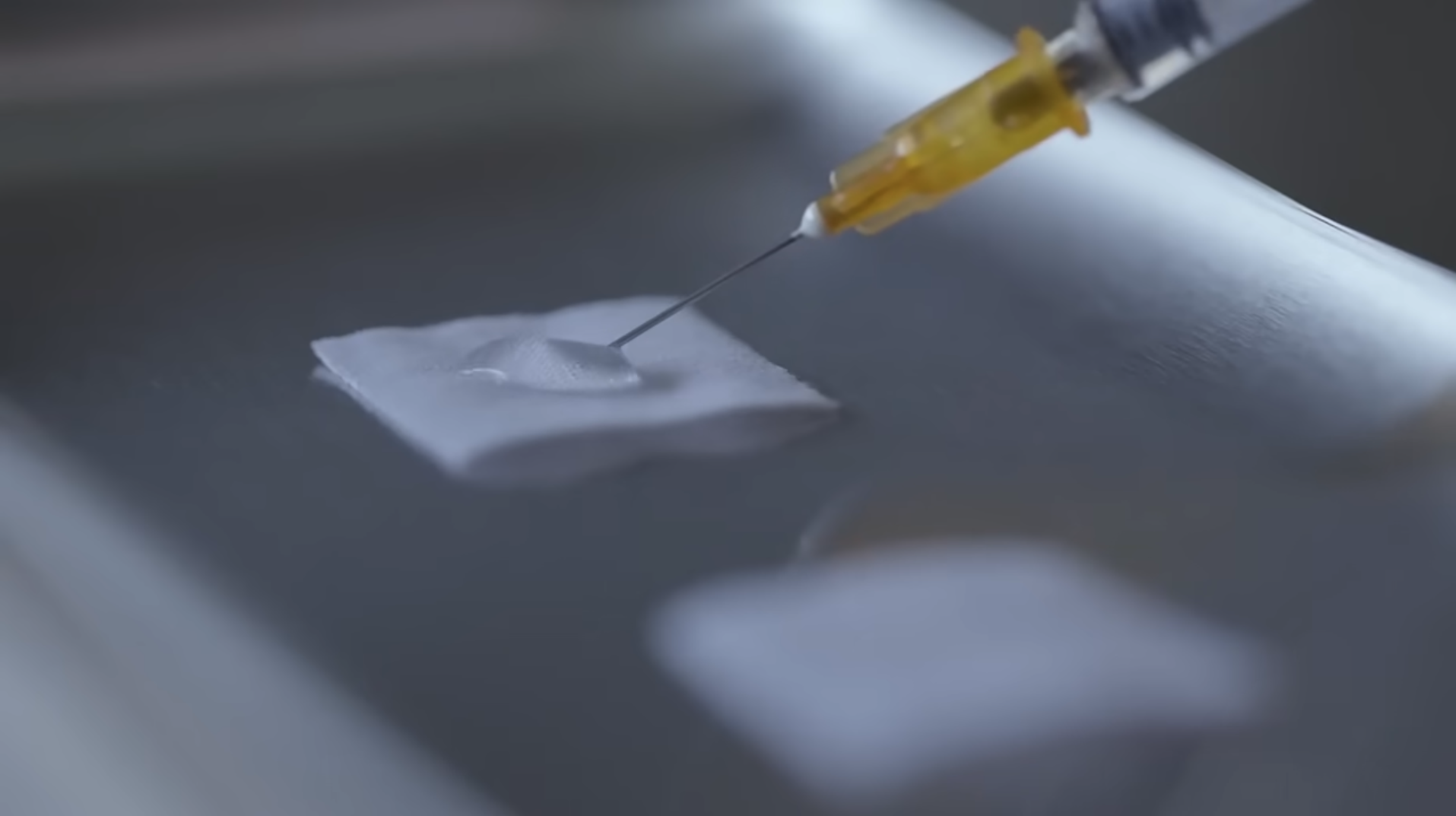
The fabric combines two technologies. Sumitomo Chemical’s Comformer, which the company describes as the first commercially available solid polymer-based temperature-control material of its kind, is woven into the fabric to absorb and release heat as conditions change. Utax adds a “Cool Touch Printing” layer designed to feel cold against the skin.
The aim, according to the companies’ announcement, is to hold the microclimate inside the clothing near what they call the comfort threshold: a temperature of about 32 degrees Celsius, humidity around 50 percent, and gentle airflow. Unlike fan-equipped jackets, the fabric requires no battery or power source.
The line launched in Japan in mid-2024 as an upgrade to Liberta’s earlier Freeze Tech range, with overseas sales planned to follow. Since then, the company has steadily widened both its product range and its real-world footprint. In February 2026, Liberta announced Freeze Tech Air, an electric mini-fan garment designed to be worn together with the Hyo-Geki cooling-print line for a combined effect, with a release set for April 2026. The move pushes the brand into the fan-equipped category it had previously distinguished itself from, positioning the two technologies as complementary rather than competing.
The clearest test of the fabric, though, is on the pitch. Hyo-Geki α has become the official supplier to Yokohama FC, a professional club in Japan’s second-tier J2 League, with the partnership renewed for the 2026/27 season. The two have worked together since 2022 as part of Liberta’s “Heat Rescue Project,” and the club now provides the garments to its players for heat management during training and matches. In a statement, Yokohama FC said the products helped support players’ conditioning through last year’s record-breaking heat. It is a modest but concrete piece of validation: a professional sports team choosing to put the fabric on its athletes during competitive play, in exactly the kind of dangerous heat now facing the World Cup.
A modest tool, not a cure
Cooling fabric is a small answer to a large problem, and the evidence base reflects that. The companies describe the material’s temperature-regulating mechanism and target comfort range, but have not published independent, peer-reviewed data quantifying how much it lowers skin or core body temperature during exercise. For elite athletes, separate research suggests cooling garments can help during rest periods, but the effect of any single product depends heavily on conditions and use.
The market itself is real and growing. The global cooling fabrics market was valued at about $1.83 billion in 2024 and is projected to reach $2.94 billion by 2030, with sports and outdoor apparel the largest segment. Japan accounted for roughly 2.8 percent of that global market in 2024. Demand is rising fastest in Asia, driven by record heat and a maturing market for personal cooling products.
Japan’s three-company partnership is one entrant in a crowded field. Global competitors in performance cooling textiles include the U.S.-based Coolcore and Polartec, and Japan’s own Asahi Kasei, while a parallel domestic industry sells battery-powered fan jackets popular with outdoor workers. The distinguishing claim for Comformer is its passive, power-free temperature regulation. Whether it outperforms rivals in independent testing is not yet publicly documented.
For Japan, the relevance is more than commercial. The country has endured record-breaking summers that pushed its own cooling-wear industry to develop products for daily survival, not just comfort. The World Cup, played across some of North America’s hottest June and July venues, turns that domestic adaptation into a potential export, a reminder that the responses to extreme heat are increasingly being worn, not just built into stadiums.
Go Deeper
The companies report that the fabric is engineered to hold the interior climate of the clothing near a comfort threshold of roughly 32 degrees Celsius, 50 percent humidity and light airflow, using Sumitomo Chemical’s Comformer temperature-control polymer combined with Utax’s Cool Touch Printing. Independent, peer-reviewed measurements of how much the garment reduces skin or core temperature during physical activity have not been published; the performance claims are manufacturer-stated. Broader academic research on cooling vests suggests garments worn during rest periods can improve intermittent exercise performance in the heat, but results vary by product and conditions.
The global cooling fabrics market was valued at approximately $1.83 billion in 2024 and is projected to reach $2.94 billion by 2030, growing at a compound annual rate of about 8.3 percent, with the sports apparel segment accounting for the largest share at nearly 42 percent. Japan represented about 2.8 percent of the global market in 2024, with the Asia-Pacific region growing fastest.
In the competitive landscape, the Liberta–Sumitomo Chemical–Utax partnership competes with established performance-textile makers including Coolcore and Polartec of the U.S. and Asahi Kasei of Japan, as well as a separate domestic category of battery-powered fan jackets widely used by Japanese construction and outdoor workers. Comformer’s stated point of difference is passive, power-free temperature regulation via a solid polymer fiber.
The limitations are real. The cooling effect of any garment is partial and cannot substitute for shade, hydration, rest or schedule changes in genuinely dangerous heat. No independent field data confirm the product’s performance for athletes under match conditions. Cooling fabrics also face known industry constraints, including higher production costs and questions about the durability and longevity of the cooling effect over repeated washing and wear. And a fabric worn by a fan or trainee does nothing for the players on the pitch, whose protection depends on FIFA’s scheduling and cooling-break decisions.
The underlying insight is that adaptation to extreme heat is shifting from infrastructure to the individual. Stadiums take years to retrofit, and many World Cup venues lack air conditioning entirely. A material that regulates temperature passively, needs no power, and can be manufactured at scale represents the kind of distributed, low-tech response that can reach people faster than building works can. It is not a solution to the heat. It is a way to live alongside it.
For inquiries regarding this article, please contact [email protected].