


• Login
Upgrade
JStories
  • 日本語
  • 中文 (中国)
No Result
View All Result
  • Home
  • AI
    • Artificial Intelligence
    • Robotics
    • Mobility
    • FinTech
    • Quantum
  • Earth
    • AgriTech
    • Green Innovation
    • Disaster Tech
    • SpaceTech
    • Materials
  • Life Sciences
    • BioTech
    • HealthTech
    • MedTech
    • AgeTech
  • Society
    • Media
    • EdTech
    • Diversity
    • FemTech
    • Social Impact
  • Lifestyle
    • FoodTech
    • Beauty & Fashion
    • Wellbeing
    • Arts & Music
    • Anime
  • Travel
    • Adventure Travel
    • Luxury Travel
    • Wellness & Medical Tourism
    • Culture
  • Video
  • Deals
    • Venture Capital
    • M&A
    • Events
    • Pitch
    • Growth Support
    • Legal & IP
  • Interview
  • Opinion
  • Home
  • AI
    • Artificial Intelligence
    • Robotics
    • Mobility
    • FinTech
    • Quantum
  • Earth
    • AgriTech
    • Green Innovation
    • Disaster Tech
    • SpaceTech
    • Materials
  • Life Sciences
    • BioTech
    • HealthTech
    • MedTech
    • AgeTech
  • Society
    • Media
    • EdTech
    • Diversity
    • FemTech
    • Social Impact
  • Lifestyle
    • FoodTech
    • Beauty & Fashion
    • Wellbeing
    • Arts & Music
    • Anime
  • Travel
    • Adventure Travel
    • Luxury Travel
    • Wellness & Medical Tourism
    • Culture
  • Video
  • Deals
    • Venture Capital
    • M&A
    • Events
    • Pitch
    • Growth Support
    • Legal & IP
  • Interview
  • Opinion
en English ja 日本語 zh 中文 (中国)
JStories
No Result
View All Result

Citizens help energize food waste

Citizen cooperation feted as key to success of Japan’s largest biomass fuel project

Yui Sawada by Yui Sawada
08/03/2022
in Earth, Green Innovation, News, Social Impact, Society
0
Home Earth
Share on FacebookShare on Twitter

J-STORIES – Residents in a central Japanese city are getting creative with their trash, creating an additional waste category to help manufacture a new energy resource and reduce carbon emissions.

Japanese household garbage is typically separated into four main categories: combustibles, non-combustibles, oversized and recyclables. In the city of Toyohashi, however, local residents also separate out their food waste from other burnables to contribute to the creation of a biomass fuel.

The food waste is combined with other waste to generate power at Toyohashi’s “biomass utilization center,” which is the largest such facility in Japan.

Built in 2017, the facility processes a mixture of sewage and food waste, which is fermented and converted into two products: carbon fuel pellets that are sold mainly to local businesses, and methane, which it uses to generate electricity.
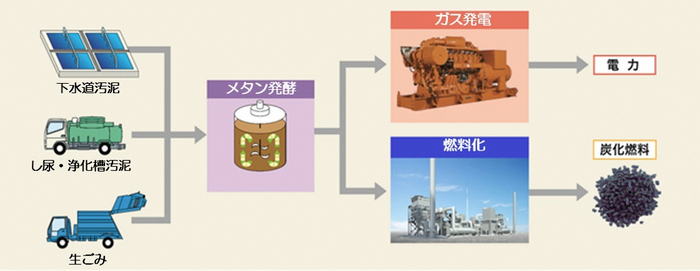
At the plant, sewage and food waste is fermented to produce methane gas and carbon fuel pellets.      Source: Toyohashi City Waterworks & Sewerage Bureau

Toyohashi is well known for its impressive environmental policy history. In 1975, it launched the first “zero garbage” movement in Japan, inspired by efforts to prevent littering at the city’s famous Imo Wetlands.

And in 2017, when the biomass plant went into operation, the city started encouraging its approximately 370,000 residents to separate food waste from combustible garbage, holding over 500 meetings to explain the project and its benefits. According to Taku Masaoka of the Toyohashi City Waterworks & Sewerage Bureau, there are only two other domestic municipalities that process food waste together with sewage, and both are on Japan’s northernmost island of Hokkaido. However, with the Toyohashi’s larger population, the number of residents involved is around six times higher in the city, making it by far the largest such project in Japan.
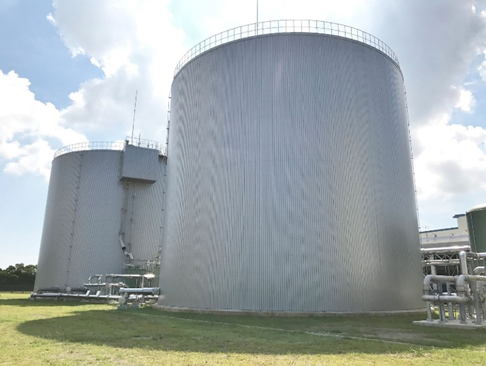
The fermentation tanks are 21 meters in diameter and 18 meters high and can hold 5,000 tons of waste.      Source: Toyohashi City Waterworks & Sewerage Bureau

As with other types of waste in Japan, designated plastic bags are used to collect the food waste, and the city website has details of what food items can and cannot be included. For example, vegetable peelings, used coffee filters and baby food are fine, but not chewing gum or cooking oil.

Masaoka says the success of the project is down to the active cooperation of the city’s residents. While some dislike the smell from the trucks that come to pick up the waste food, there have been no complaints about the need to separate out food scraps, he says.
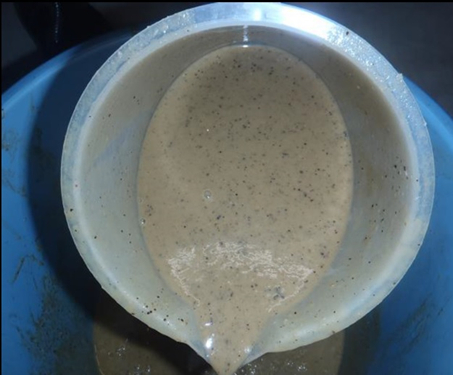
Unwanted items such as shells and glass are removed from the food waste, which are then ground into a paste before being transferred to metal fermentation tanks.      Source: Toyohashi City Waterworks & Sewerage Bureau

The facility generates 6.9 million kilowatt-hours of electricity a year, enough to power 1,890 Japanese homes of average size. All the residue from sewage and other waste is converted into fuel pellets. This means that effectively all the waste becomes either electricity or fuel, so unlike other facilities, nothing is left at the end of the process.

When biomass power generation is considered in place of fossil fuel generation, this leads to a saving of about 14,000 tons of greenhouse gas (CO2) per year, which is equivalent to planting approximately 1 million cedar trees. Additionally, there is an estimated cost saving of around 12 billion yen over 20 years thanks to the consolidation of the sewage and garbage treatment process.

These savings are being used to strengthen the sewage system against natural disasters and also to reduce sewage disposal bills paid by citizens.

Translation and Editing by Tony McNicol

Top page photo by bialasiewicz / Envato

For inquires about this article, please contact us at jstories@pacificbridge.jp


Click here for the Japanese version of the article.



Tags: Alternative EnergySustainable SocietyZero Waste
Previous Post

The Brief #22 Fermented fabric, Online learning for refugees, Vegetable sheets

Next Post

‘One hundred hours’ of Japanese lessons

Yui Sawada

Yui Sawada

Related Posts

AQUIVIO
Pitch

AQUIVIO

by Jstories
05/01/2026
BioTech

Evolutionary artificial protein slated for market debut as early as June 2026

by Yoshiko Ohira
04/17/2026
Ai Heart Japan
Pitch

Ai Heart Japan

by Jstories
04/01/2026
AssistMotion Inc.
Pitch

AssistMotion Inc.

by Jstories
04/01/2026
Aster
Pitch

Aster

by Jstories
04/01/2026
Next Post

'One hundred hours' of Japanese lessons

Leave a Reply Cancel reply

Your email address will not be published. Required fields are marked *

Trending

Greening the desert with trash

by Yui Sawada
03/23/2023
0

J-STORIES - The sight of local Niger women throwing kitchen waste out into the African desert inspired a project that...

Evolutionary artificial protein slated for market debut as early as June 2026

by Yoshiko Ohira
04/17/2026
0

JStories — Severe and hard-to-heal wounds — such as those caused by burns, injuries, pressure ulcers, skin cancer surgery, and...

INTERVIEW | How Japanese musician Grover turned his passion of ‘sound’ into a health-tech startup

by Toshi Maeda
05/02/2025
0

JStories ー For over two decades, Yoshikazu Grover — better known simply as Grover — has been a familiar voice...

The world’s first drug that helps patients ‘grow new teeth’

by Ruiko Kokubun
09/22/2023
0

J-STORIES - The conventional way to help people who have lost teeth due to tooth decay or aging has been...

World-first “anime character-based therapy” trial to test effectiveness in Japanese young adults

by Lucas Maltzman
01/30/2026
0

JStories – Is sharing personal problems with a virtual anime character easier than face-to-face? In the world’s first clinical trial,...

JStories

©Articles and photos published on JStories are protected by Japanese copyright law and international treaties. They cannot be reproduced without the permission of the copyright holders

Explore JStories

  • TOP STORIES
  • About JStories
  • Company
  • Team
  • Contact
  • Privacy Policy
  • Partner Press Releases

Follow Us

Welcome Back!

Login to your account below

Forgotten Password?

Retrieve your password

Please enter your username or email address to reset your password.

Log In
No Result
View All Result
  • TOP STORIES
  • AI
    • Artificial Intelligence
    • Robotics
    • Mobility
    • FinTech
    • Quantum
  • Earth
    • AgriTech
    • Green Innovation
    • Disaster Tech
    • SpaceTech
    • Materials
  • Life Sciences
    • BioTech
    • HealthTech
    • MedTech
    • AgeTech
  • Society
    • Media
    • EdTech
    • Diversity
    • FemTech
    • Social Impact
  • Lifestyle
    • FoodTech
    • Beauty & Fashion
    • Wellbeing
    • Arts & Music
    • Anime
  • Travel
    • Adventure Travel
    • Luxury Travel
    • Wellness & Medical Tourism
    • Culture
  • Video
  • Deals
    • Venture Capital
    • M&A
    • Events
    • Growth Support
    • Legal & IP
  • Interview
  • Opinion

©Articles and photos published on JStories are protected by Japanese copyright law and international treaties. They cannot be reproduced without the permission of the copyright holders

Are you sure want to unlock this post?
Unlock left : 0
Are you sure want to cancel subscription?