


• Login
Upgrade
JStories
  • 日本語
  • 中文 (中国)
No Result
View All Result
  • Home
  • AI
    • Artificial Intelligence
    • Robotics
    • Mobility
    • FinTech
    • Quantum
  • Earth
    • AgriTech
    • Green Innovation
    • Disaster Tech
    • SpaceTech
    • Materials
  • Life Sciences
    • BioTech
    • HealthTech
    • MedTech
    • AgeTech
  • Society
    • Media
    • EdTech
    • Diversity
    • FemTech
    • Social Impact
  • Lifestyle
    • FoodTech
    • Beauty & Fashion
    • Wellbeing
    • Arts & Music
    • Anime
  • Travel
    • Adventure Travel
    • Luxury Travel
    • Wellness & Medical Tourism
    • Culture
  • Video
  • Deals
    • Venture Capital
    • M&A
    • Events
    • Pitch
    • Growth Support
    • Legal & IP
  • Interview
  • Opinion
  • Home
  • AI
    • Artificial Intelligence
    • Robotics
    • Mobility
    • FinTech
    • Quantum
  • Earth
    • AgriTech
    • Green Innovation
    • Disaster Tech
    • SpaceTech
    • Materials
  • Life Sciences
    • BioTech
    • HealthTech
    • MedTech
    • AgeTech
  • Society
    • Media
    • EdTech
    • Diversity
    • FemTech
    • Social Impact
  • Lifestyle
    • FoodTech
    • Beauty & Fashion
    • Wellbeing
    • Arts & Music
    • Anime
  • Travel
    • Adventure Travel
    • Luxury Travel
    • Wellness & Medical Tourism
    • Culture
  • Video
  • Deals
    • Venture Capital
    • M&A
    • Events
    • Pitch
    • Growth Support
    • Legal & IP
  • Interview
  • Opinion
en English ja 日本語 zh 中文 (中国)
JStories
No Result
View All Result

Connecting the Dots for African communities

Yui Sawada by Yui Sawada
11/03/2022
in EdTech, News, Social Impact, Society
0
Home Society EdTech
Share on FacebookShare on Twitter

J-STORIES – Throughout Africa, less than 30 percent of residents have access to the internet, and in rural areas, where the majority of the population lives, connectivity rates are even lower.

Tokyo-based startup Dots for is working to change that, providing more than 50 villages in the West African nations of Benin and Senegal with internet infrastructure.

Founded in 2021, the company has been kitting out villages with Wi-Fi routers equipped with mesh network technology, a kind of distributed communication system. This is similar to a scaled-up version of home wi-fi extender networks and the same technology used to provide ad hoc internet access in emergencies.

 

CEO Carlos Oba says that if the internet had been readily available when he was younger it would have broadened his horizons.      Source: Dots for

The main advantage for remote African villages is that it is extremely low cost, and Dots for hopes to double the number of what it calls “Smart Villages” in the continent by the end of the year.

Residents who connect to the wireless network via their smartphones can also access digital content and services stored on servers located in their community. Dots for CEO Carlos Oba comments that this potentially can make a huge change to the lives of people living in rural areas.
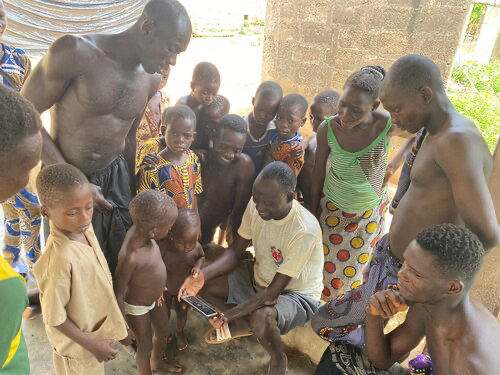
Villagers in Senegal use one of Dots for’s Wi-Fi access points. A single device can be enough to service an entire village.     Source: Dots for

Geography and income levels can make it hard for internet systems to be set up and for people to afford them, meaning they miss out on economic, educational, healthcare and other benefits that the internet can potentially provide.

Dots for’s stated goal is to create a society where 200 million people living in rural areas of Africa can connect to the internet and enjoy its benefits by 2030.

This objective and its potential to change the lives of local people have been recognized by the Japanese government. Dots for has already received support from Japan’s Ministry of Economy, Trade and Industry to expand its work in Benin and Senegal.
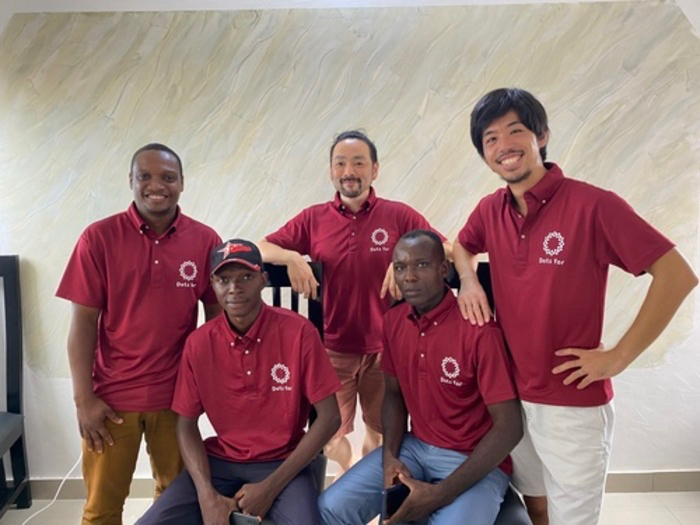
CEO Carlos Oba (center) and COO Sho Nakata (right) with staff from Benin.     Source: Dots for

Language and cultural differences can be a barrier, and sometimes local residents are reluctant to listen to “outsiders.” Consequently, the company has taken on 15 local hands to work on setting up internet access systems, which in turn has enabled the company to gain trust in the communities in which it is operating.

CEO Oba told J-Stories that digital infrastructure to provide information can be the first step toward education, finding employment and increasing income. The ultimate aim, he said, is “to raise the quality of life of people living in rural African villages.”

Translation by Tony McNicol

Top page photo by projectUA/Envato

For inquiries about this article, please contact us at jstories@pacifibridge.jp


.

Tags: EducationInclusionInfrastructureLivingMediaSocietyTehnology
Previous Post

The Brief #32 Eco-friendly flying cars, African “Smart Villages”

Next Post

No space for debris

Yui Sawada

Yui Sawada

Related Posts

AQUIVIO
Pitch

AQUIVIO

by Jstories
05/01/2026
BioTech

Evolutionary artificial protein slated for market debut as early as June 2026

by Yoshiko Ohira
04/17/2026
Ai Heart Japan
Pitch

Ai Heart Japan

by Jstories
04/01/2026
AssistMotion Inc.
Pitch

AssistMotion Inc.

by Jstories
04/01/2026
Aster
Pitch

Aster

by Jstories
04/01/2026
Next Post

No space for debris

Leave a Reply Cancel reply

Your email address will not be published. Required fields are marked *

Trending

Greening the desert with trash

by Yui Sawada
03/23/2023
0

J-STORIES - The sight of local Niger women throwing kitchen waste out into the African desert inspired a project that...

Evolutionary artificial protein slated for market debut as early as June 2026

by Yoshiko Ohira
04/17/2026
0

JStories — Severe and hard-to-heal wounds — such as those caused by burns, injuries, pressure ulcers, skin cancer surgery, and...

INTERVIEW | How Japanese musician Grover turned his passion of ‘sound’ into a health-tech startup

by Toshi Maeda
05/02/2025
0

JStories ー For over two decades, Yoshikazu Grover — better known simply as Grover — has been a familiar voice...

The world’s first drug that helps patients ‘grow new teeth’

by Ruiko Kokubun
09/22/2023
0

J-STORIES - The conventional way to help people who have lost teeth due to tooth decay or aging has been...

World-first “anime character-based therapy” trial to test effectiveness in Japanese young adults

by Lucas Maltzman
01/30/2026
0

JStories – Is sharing personal problems with a virtual anime character easier than face-to-face? In the world’s first clinical trial,...

JStories

©Articles and photos published on JStories are protected by Japanese copyright law and international treaties. They cannot be reproduced without the permission of the copyright holders

Explore JStories

  • TOP STORIES
  • About JStories
  • Company
  • Team
  • Contact
  • Privacy Policy
  • Partner Press Releases

Follow Us

Welcome Back!

Login to your account below

Forgotten Password?

Retrieve your password

Please enter your username or email address to reset your password.

Log In
No Result
View All Result
  • TOP STORIES
  • AI
    • Artificial Intelligence
    • Robotics
    • Mobility
    • FinTech
    • Quantum
  • Earth
    • AgriTech
    • Green Innovation
    • Disaster Tech
    • SpaceTech
    • Materials
  • Life Sciences
    • BioTech
    • HealthTech
    • MedTech
    • AgeTech
  • Society
    • Media
    • EdTech
    • Diversity
    • FemTech
    • Social Impact
  • Lifestyle
    • FoodTech
    • Beauty & Fashion
    • Wellbeing
    • Arts & Music
    • Anime
  • Travel
    • Adventure Travel
    • Luxury Travel
    • Wellness & Medical Tourism
    • Culture
  • Video
  • Deals
    • Venture Capital
    • M&A
    • Events
    • Growth Support
    • Legal & IP
  • Interview
  • Opinion

©Articles and photos published on JStories are protected by Japanese copyright law and international treaties. They cannot be reproduced without the permission of the copyright holders

Are you sure want to unlock this post?
Unlock left : 0
Are you sure want to cancel subscription?