


PROBLEM: AI’s surging, around-the-clock electricity demand is straining power grids worldwide, prompting fresh government action and rare reliability warnings. Meanwhile crowded data centers have no room for conventional silicon solar panels.
SOLUTION: Japan’s flexible, film-type perovskite solar cells, now being installed on data centers and offices, allowing buildings to make clean power on walls and surfaces that rigid panels cannot use.
JStories — Japan’s bendable solar film reaches data centers as AI strains the grid
As AI’s power demand pushes grids to the brink, Japan is putting flexible perovskite solar onto the walls of the very buildings driving the surge.
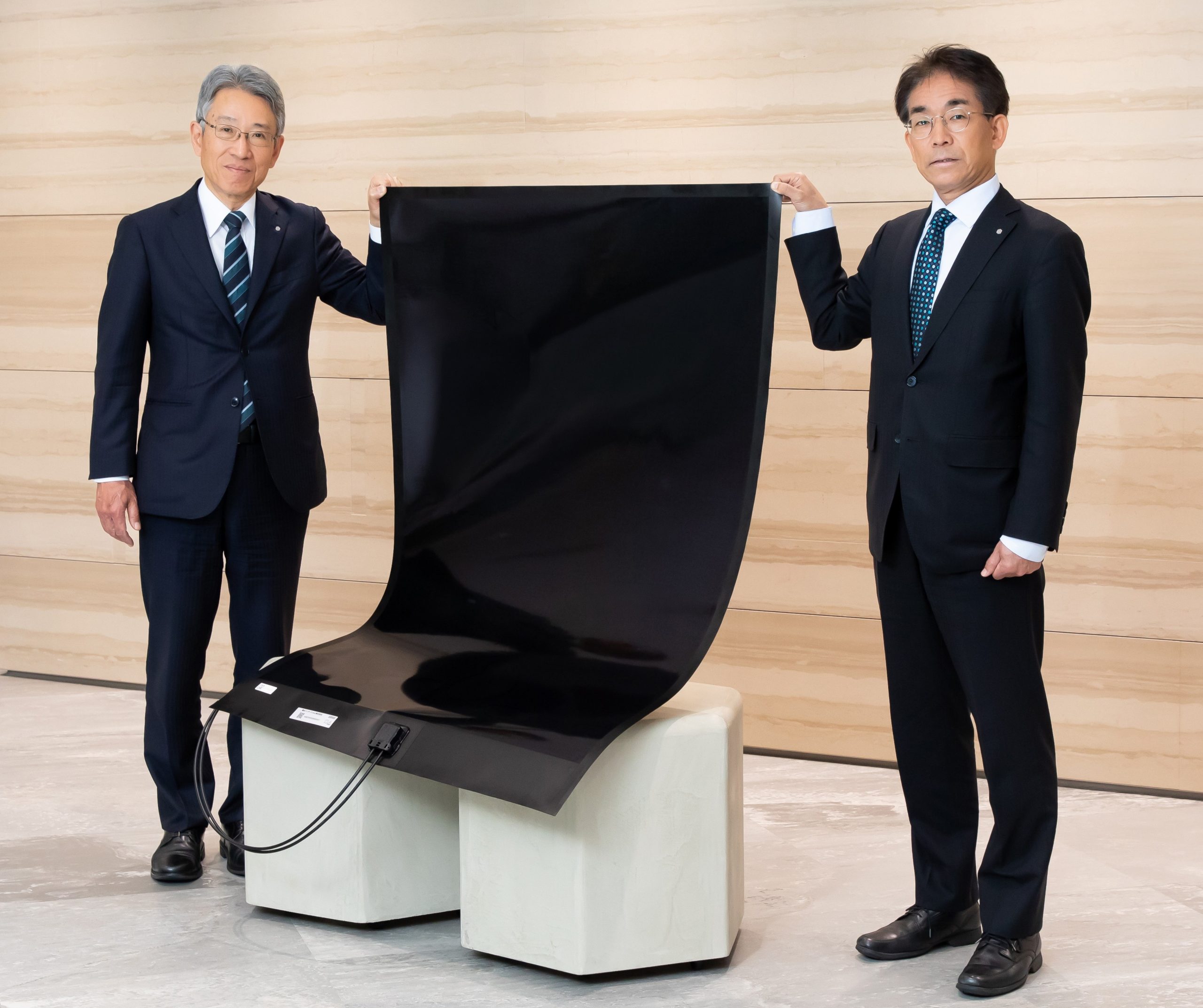
Light, bendable, and installable on walls and curved surfaces where rigid panels cannot go. Film-type perovskite solar cells are arriving on Japanese data centers and offices just as artificial intelligence’s around-the-clock electricity appetite triggers fresh warnings from grid operators worldwide.
AI’s power hunger forces a rethink of where solar can go
The strain that artificial intelligence is placing on the world’s power grids drew another official response this week. The U.S. Department of Energy launched a platform called Agora to simulate how hyperscale AI data centers affect grid stability, describing them as volatile, high-density power loads. It follows a rare, high-level reliability warning from North America’s grid monitor about risks from large data centers, as AI’s demand for nonstop power continues to outpace supply.
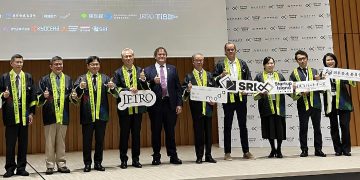
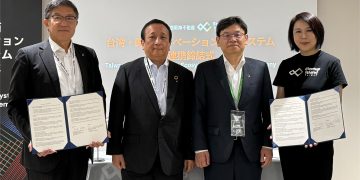
One partial answer is taking shape in Japan. Sekisui Chemical, an Osaka-based manufacturer, launched its “Solafil” film-type perovskite solar business in March 2026. Together with NTT Data, it has begun installing the film with plans to expand to 16 data centers and offices from fiscal 2026. The company is targeting 100 megawatts of annual output by 2027 and gigawatt-scale production by 2030.
The core appeal is simple: because the film is flexible and lightweight, it can be mounted on building walls and other surfaces that conventional silicon panels cannot reach. Sekisui frames this as a way to add renewable power in space-constrained cities. Thus transforming the existing buildings into quiet generators which require no new land.
From pilots to industrial scale — but limitations remain
The technology is crossing from pilot to industrial scale, though Japan’s mass production volumes will remain modest until Sekisui’s commercial line ramps up in 2027. Globally, China’s UtmoLight is already running a fully operational one-gigawatt perovskite line, and UK-based Oxford PV has shipped its first modules to U.S. utilities. Cost estimates currently put manufacturing near $0.57 per watt, with projections falling to $0.29–0.42 at full scale.
Japan’s approach is distinct. Rather than competing on volume, the country is betting on flexible film for surfaces, walls, and curved structures, rather than utility-scale fields. Sekisui has committed approximately ¥90 billion through 2030, and Japan’s Ministry of Economy, Trade and Industry has awarded ¥24.6 billion to Panasonic, Ricoh, and EneCoat for related development.
Perovskite film is not without its challenges, however. It still trails conventional silicon solar in durability, degrading faster under heat, moisture, and UV exposure, and long-term outdoor performance data remains limited. Most formulations contain lead, raising questions around toxicity and disposal. Flexible film is also lower in efficiency and power density than rigid panels, meaning it complements rather than replaces conventional solar. Perovskite film will not, on its own, power an AI data center.
But as data center operators scramble for every available source of electricity, the ability to turn their own walls into generators represents a meaningful, if modest, addition to the supply side of an increasingly strained equation.
For inquiries regarding this article, please contact [email protected].